Spider
Funnel Weaver
Agelenidae
Biology
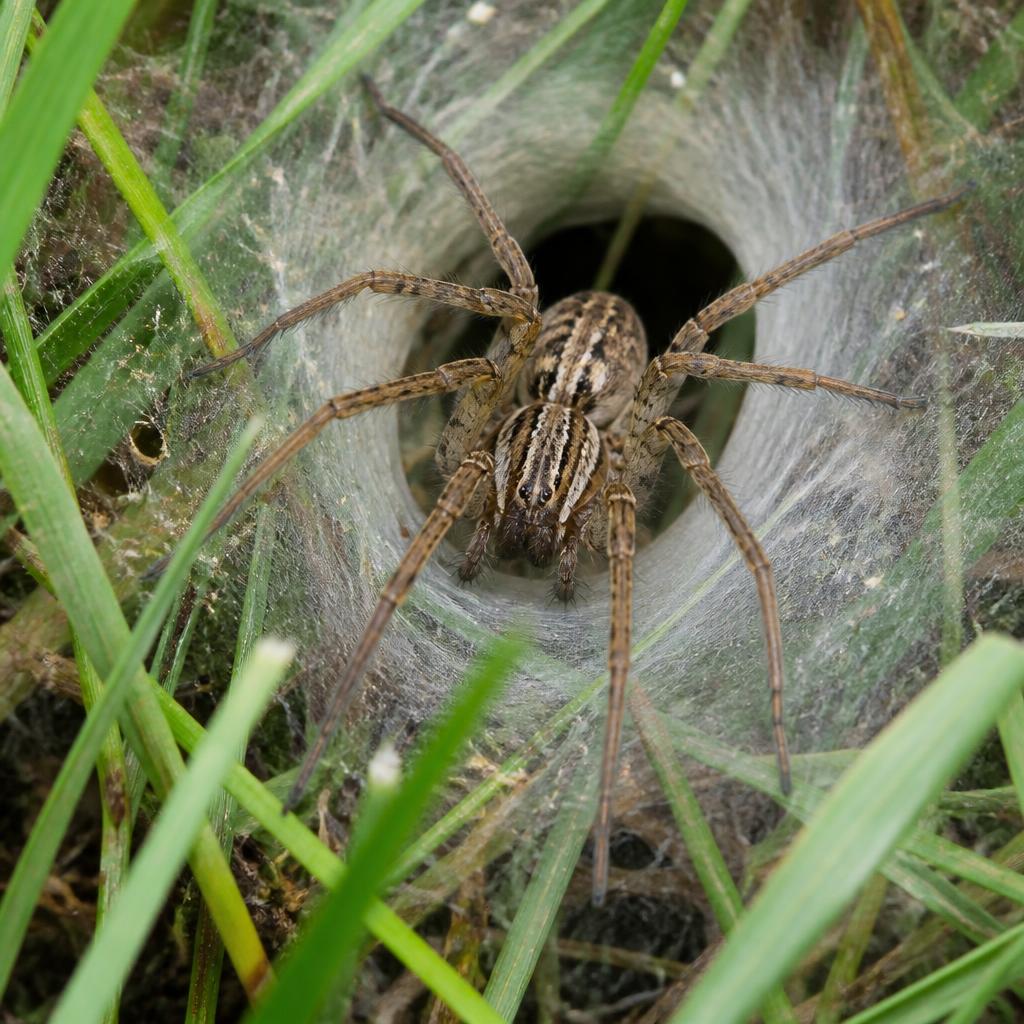
Funnel weavers, family Agelenidae, are medium to large spiders characterized by their sheet-like, non-sticky webs that typically terminate in a funnel-shaped retreat. Spiders in this family, such as those in the genus Eratigena (giant house spiders) or Tegenaria, range from 8-20 mm in body length and are typically brown, gray, or tan with obscure markings. They possess long, hairy legs and prominent spinnerets. The life cycle involves eggs laid in a silken sac, often hidden in the funnel retreat. Development from egg to adult can take one to two years, and adults typically live for several years in suitable conditions.
Behaviour
These spiders are ambush predators, resting within their funnel retreat and rushing out to capture prey that lands or walks across their sheet web. The web is not designed to ensnare prey but rather acts as a trip hazard and a dense platform for the spider to run across. They are incredibly fast runners. Males actively search for females, particularly in late summer and fall, often leading to increased encounters indoors. Funnel weavers are generally non-aggressive, biting only when threatened or cornered, with venom that is not considered medically significant to humans.
Habits
Funnel weavers are common outdoors in tall grasses, dense shrubs, under rocks, and in woodpiles. Indoors, they are frequently found in basements, crawlspaces, garages, and other undisturbed, damp environments. They are attracted to dark, secluded areas where they can construct their webs without disturbance. Conducive conditions for indoor presence include unsealed foundations, open windows/doors, and the availability of insect prey. Their webs can accumulate dust and debris, becoming quite noticeable and a source of complaints in homes and businesses.
Control methods
- 1Seal cracks and gaps in foundations and walls.
- 2Remove dense vegetation near the building.
- 3Vacuum webs and spiders regularly, especially in corners.
- 4Reduce indoor humidity in basements and crawlspaces.
- 5Install screens on windows and doors.
- 6Use sticky traps in areas of activity.
Tailored to Funnel Weaver
IPM Procedure Checklist
Inspection
- Inspect undisturbed corners, voids and stored items
- Identify webs, egg sacs and prey debris
- Note conducive insect prey populations
Identification
- Confirm Funnel Weaver (Agelenidae) — not a look-alike
- Note life stage and risk level: Low
- Capture clear photos and samples for the record
Action Thresholds
- Tolerate low-level activity outside sensitive zones
- Act if activity moves indoors or near food
- Review threshold seasonally with the client
Prevention
- Reduce clutter and seal cracks around the structure
- Switch exterior lights to yellow / sodium to reduce prey
- Install door sweeps and screen vents
Control Methods
- Seal cracks and gaps in foundations and walls.
- Remove dense vegetation near the building.
- Vacuum webs and spiders regularly, especially in corners.
- Reduce indoor humidity in basements and crawlspaces.
Monitoring & Evaluation
- Service monitors on schedule and trend captures
- Re-inspect for Funnel Weaver activity at follow-up
- Adjust tactics based on data; report findings to client