Fly
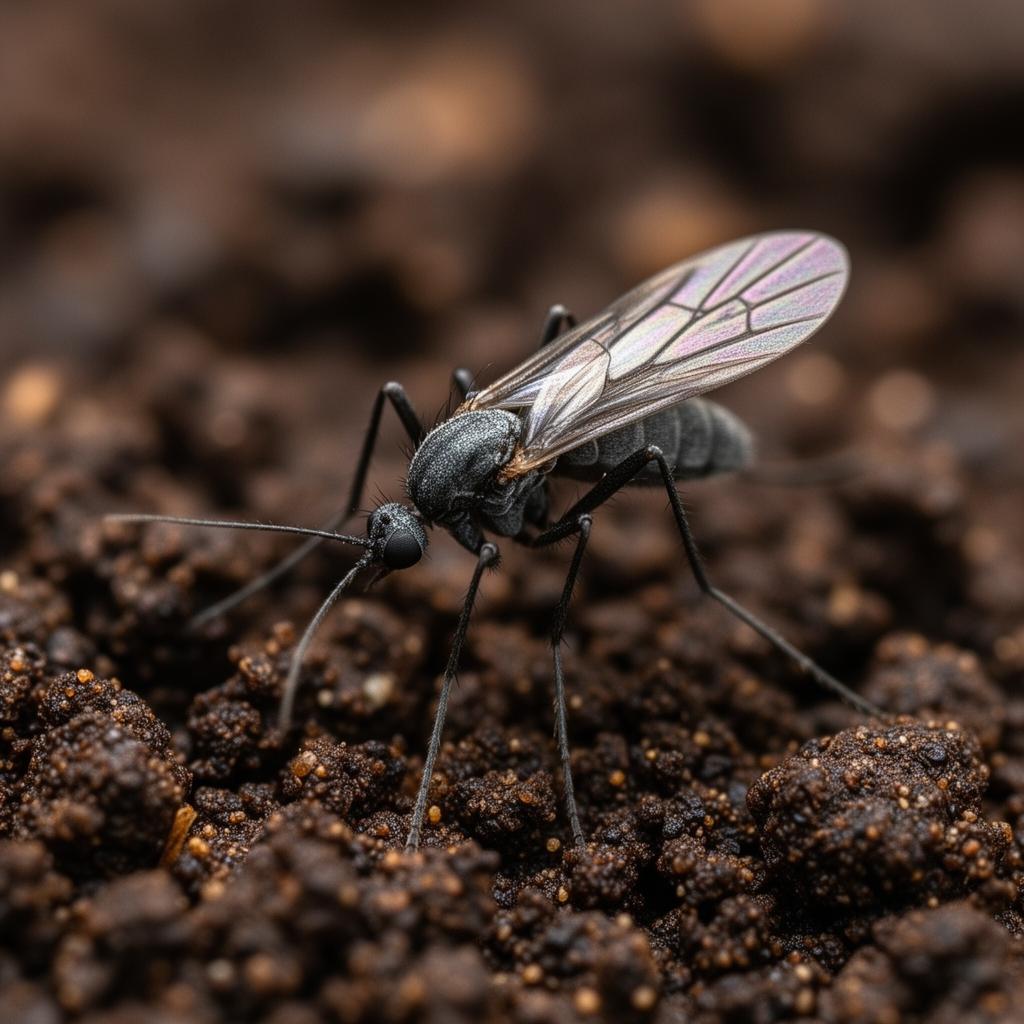
Fungus Gnat
Bradysia spp.
Biology
Fungus gnats (Diptera: Sciaridae) encompass several genera, with Bradysia being the most commonly encountered in structural pest management. Adults are delicate, dark-bodied flies, typically 2–4 mm in length, characterized by their Y-shaped wing venation, long antennae (16 segments), and slender legs; distinguishing them from similar-sized phorid or sphaerocerid flies. The lifecycle, spanning approximately 17–25 days at optimal temperatures (24–27 °C) and high humidity (≥70% RH), consists of egg, four larval instars, pupa, and adult. Females lay 100–300 minute, off-white eggs singly or in small clusters in moist organic substrates, hatching in 3–6 days. The translucent, legless larvae, 4–7 mm long with a distinctive shiny black head capsule, develop over 8–14 days before pupating for 3–7 days in the soil, leading to adult emergence and a lifespan of about one week.
Behaviour
Adult Fungus Gnats are crepuscular to nocturnal, though often observed during daylight hours due to their weak, errant flight patterns, typically remaining within a few feet of breeding sites. They are not known to exhibit complex social structures but aggregate in areas of high humidity and organic decomposition. Dispersal is primarily localized, though adults can be passively transported on plants or through air currents within structures. Pheromones are utilized for sexual attraction, facilitating rapid reproduction in conducive environments. Larvae are detritivores, primarily feeding on fungi, decaying organic matter, and exudates from plant roots; however, under high population densities or resource scarcity, they will actively graze on tender root hairs and seedlings, causing significant damage to horticultural crops. Adults do not feed but serve solely for reproduction and dispersal; they are not known vectors of human pathogens but can be a nuisance and potential contaminant in sterile environments.
Habits
Fungus gnats exhibit a pronounced thigmotactic preference for moist, sheltered microhabitats rich in decomposing organic matter. Indoors, their primary harborage is typically overwatered potted plants, especially those containing peat, compost, or bark-based potting mixes, as well as unmanaged hydroponic systems. Other conducive sites include condensation pans, leaky plumbing, and any water-damaged structural elements promoting fungal growth. Adults are often seen resting on plant foliage, window sills, or flying in lazy, looping patterns near breeding sites; larvae are cryptic, residing entirely within the substrate. Foraging patterns are limited given their weak flight, generally confined to the immediate vicinity of their emergence. Technicians should inspect soil surfaces for larval trails (slime appearance) and adult activity, paying close attention to areas with excessive moisture or poor drainage, as these conditions are prime indicators of active breeding. Look for adult activity near lights or windows, especially at dusk, as indicator points for localized infestations.
Control methods
- 1Allow potting soil to dry between waterings
- 2Top-dress pots with sand or grit to block egg laying
- 3Apply Bti (Bacillus thuringiensis israelensis) drench
- 4Use yellow sticky cards near plants for monitoring
- 5Replace chronically infested potting media
- 6Repair leaks and improve drainage in atriums
Tailored to Fungus Gnat
IPM Procedure Checklist
Inspection
- Locate breeding sites: drains, decaying matter, moist organics
- Use tape-over-drain tests and UV/light traps to confirm
- Map dumpster, grease and floor-drain hot-spots
Identification
- Confirm Fungus Gnat (Bradysia spp.) — not a look-alike
- Note life stage and risk level: Low
- Capture clear photos and samples for the record
Action Thresholds
- Tolerate low-level activity outside sensitive zones
- Act if activity moves indoors or near food
- Review threshold seasonally with the client
Prevention
- Clean drains with enzymatic foam to remove biofilm
- Manage trash, recycling and grease daily
- Screen windows, doors and air curtains at entries
Control Methods
- Allow potting soil to dry between waterings
- Top-dress pots with sand or grit to block egg laying
- Apply Bti (Bacillus thuringiensis israelensis) drench
- Use yellow sticky cards near plants for monitoring
Monitoring & Evaluation
- Service monitors on schedule and trend captures
- Re-inspect for Fungus Gnat activity at follow-up
- Adjust tactics based on data; report findings to client