Fly
Fruit Fly
Drosophila melanogaster
Biology
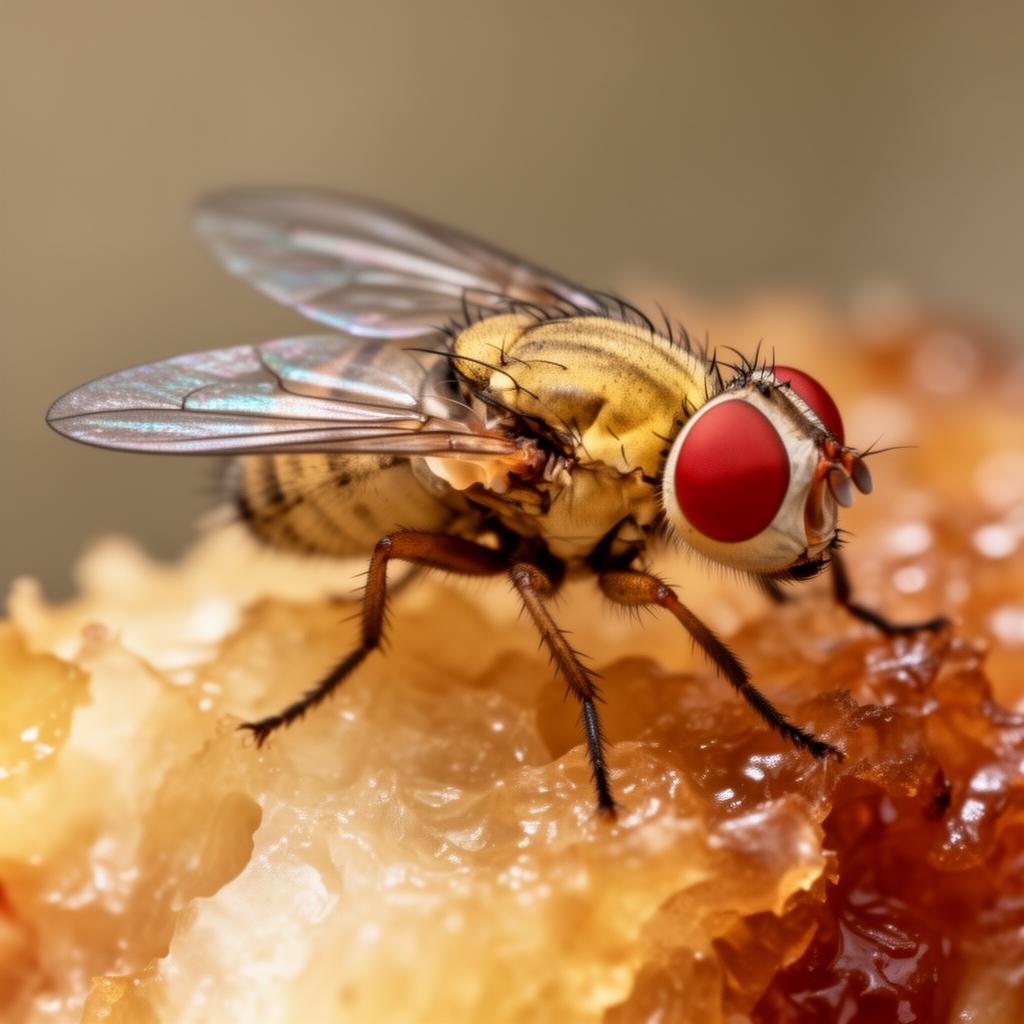
Drosophila melanogaster, commonly known as the common fruit fly, is a small dipteran insect belonging to the Drosophilidae family, typically measuring 2.5-4 mm in length. Its body coloration ranges from tan to yellow-brown, characterized by prominent brick-red compound eyes, although genetic variants exist. The lifecycle, spanning egg, three larval instars, pupa, and adult, is astoundingly rapid, completing in 8-10 days under optimal conditions of 25-28°C and 60-70% relative humidity. Females exhibit high fecundity, depositing approximately 500 oval, off-white eggs, each about 0.5 mm long, over their 30-day adult lifespan. Distinguishing features include the characteristic arista on the antennae and transverse bands on the abdomen.
Behaviour
Drosophila melanogaster exhibits primarily diurnal activity, with peak foraging occurring during daylight hours, although they can be active under artificial light. They are not social insects in a eusocial sense but aggregate readily around food sources, communicating through short-range volatile pheromones and mating rituals. Their feeding ecology is saprophagous, specializing in yeasts and bacteria associated with fermenting sugars found in overripe fruits, vegetables, and other organic matter. While not directly aggressive, their high mobility and feeding habits enable them to mechanically vector spoilage microorganisms like Acetobacter and various yeasts across food surfaces, impacting public health through contamination and fostering secondary infections. Dispersal typically occurs via short flights, but wind currents and transportation of infested goods can facilitate longer-distance travel.
Habits
Fruit flies exhibit a strong preference for damp, fermenting environments for both oviposition and harborage, thriving in kitchens, bars, breweries, and food storage facilities. Prime harborage sites include the slime layers within drains, garbage disposals, recycling bins, mop buckets, and cracks/crevices where fermenting liquids or organic residues accumulate. Foraging patterns are driven by olfactory cues, with flies detecting fermentation byproducts like ethanol and acetic acid from considerable distances. Infestation signs for a pest control technician include the characteristic 'cloud' of small flies hovering around ripe produce, spilled beverages, or trash receptacles. Conducive conditions include poor sanitation, unsealed food waste, overripe or damaged produce left exposed, and stagnant water mixed with organic debris, creating an ideal breeding substrate year-round indoors.
Control methods
- 1Discard overripe produce and store fruit refrigerated
- 2Empty and clean recycle bins, mop buckets and bar mats daily
- 3Set apple-cider-vinegar or commercial vinegar traps
- 4Treat drains with enzyme cleaner — they breed in slime
- 5Inspect for hidden sources: onions, potatoes, beer taps
- 6Use UV light traps in dining and prep areas
Tailored to Fruit Fly
IPM Procedure Checklist
Inspection
- Locate breeding sites: drains, decaying matter, moist organics
- Use tape-over-drain tests and UV/light traps to confirm
- Map dumpster, grease and floor-drain hot-spots
Identification
- Confirm Fruit Fly (Drosophila melanogaster) — not a look-alike
- Note life stage and risk level: Moderate
- Capture clear photos and samples for the record
Action Thresholds
- Trigger action when monitor counts trend up
- Re-evaluate weekly during active season
- Document trigger criteria in the IPM plan
Prevention
- Clean drains with enzymatic foam to remove biofilm
- Manage trash, recycling and grease daily
- Screen windows, doors and air curtains at entries
Control Methods
- Discard overripe produce and store fruit refrigerated
- Empty and clean recycle bins, mop buckets and bar mats daily
- Set apple-cider-vinegar or commercial vinegar traps
- Treat drains with enzyme cleaner — they breed in slime
Monitoring & Evaluation
- Service monitors on schedule and trend captures
- Re-inspect for Fruit Fly activity at follow-up
- Adjust tactics based on data; report findings to client