Rodent
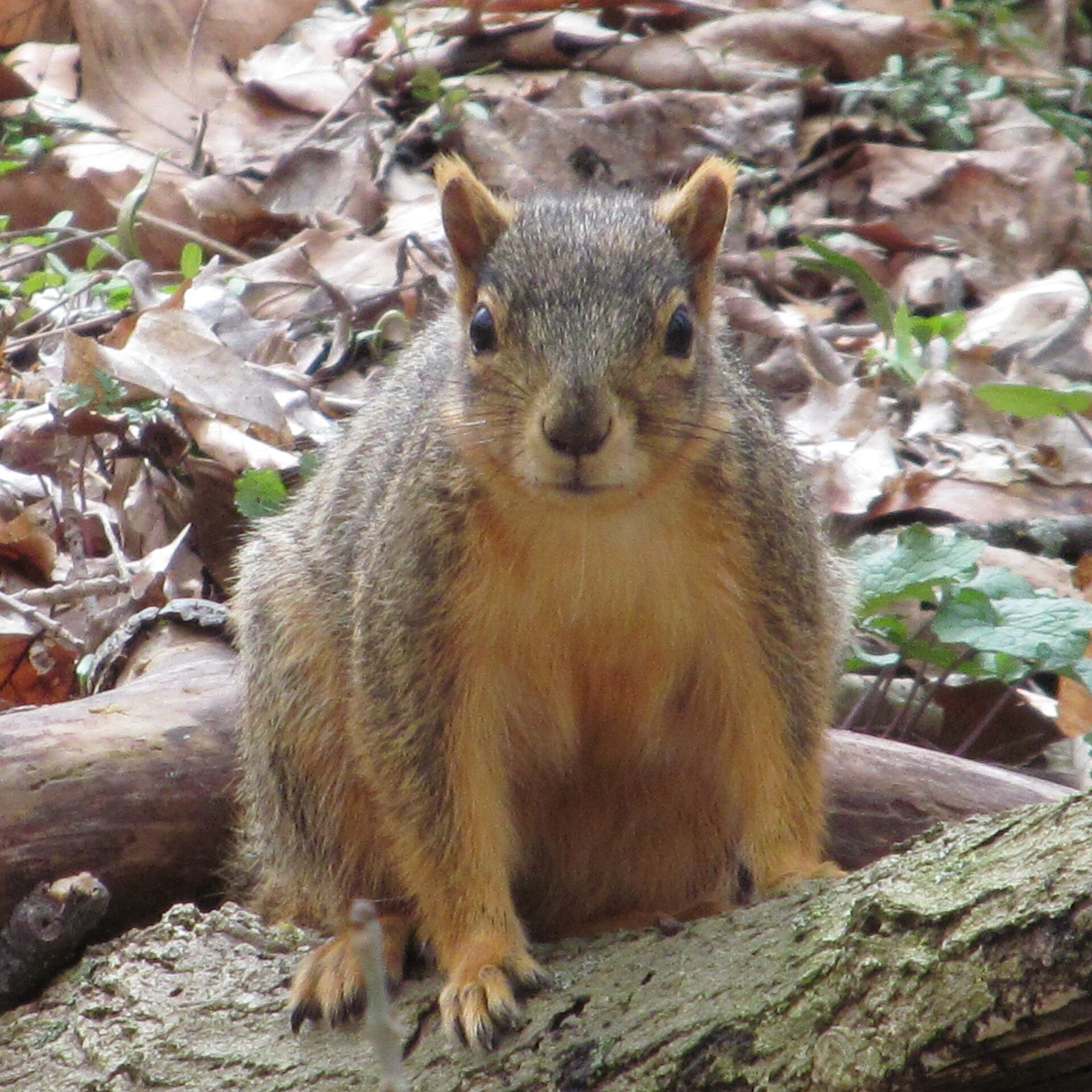
Fox Squirrel
Sciurus niger
Biology
Sciurus niger, the fox squirrel, is the largest species of tree squirrel native to North America, typically weighing 500-1000g and measuring 45-70 cm in total length, including a bushy tail. They exhibit variable pelage, ranging from grizzled gray with rufous undersides to entirely black, often with reddish-brown accents. Fox squirrels are diurnal and primarily arboreal, though they spend considerable time foraging on the ground. They breed twice a year, typically in late winter and late summer, producing litters of 2-5 young after a gestation period of approximately 44-45 days. Young are altricial and weaned around 8-10 weeks of age. Lifespan in the wild averages 2-4 years.
Behaviour
Fox squirrels are generally less arboreal than other tree squirrels, spending more time foraging on the ground for nuts, seeds, fruits, fungi, and insects. They exhibit scatter-hoarding behavior, burying individual food items across their territory, aiding in forest regeneration. These squirrels are often solitary but may tolerate others in proximity. They communicate through vocalizations, tail flicking, and scent marking. When threatened, they typically seek refuge in trees or cavities. In urban environments, they are less wary of humans and can become habituated, leading to increased interactions and potential conflicts. Damage to electrical wiring in structures is a significant concern due to their gnawing behavior.
Habits
Fox squirrels inhabit mature deciduous and mixed forests, particularly those with an open understory and a good supply of nut-producing trees. They construct leaf nests (dreys) in tree crotches or utilize tree hollows and abandoned woodpecker cavities for denning and raising young. In suburban and urban areas, they readily adapt to parks, golf courses, and residential backyards, often exploiting attic spaces, crawl spaces, and chimneys of buildings for harborage, especially during colder months or for nesting. Conducive conditions include ample food sources, mature trees for shelter, and accessible entry points into human structures, often through deteriorated fascia, soffits, or unscreened vents. Their constant gnawing can cause significant structural damage.
Control methods
- 1Seal all entry points with durable materials.
- 2Trim tree branches away from rooflines.
- 3Cover vents and chimneys with screens.
- 4Trap and remove nuisance squirrels.
- 5Use frightening devices or repellents.
- 6Remove attractive food sources from yard.
Tailored to Fox Squirrel
IPM Procedure Checklist
Inspection
- Locate runways, droppings, rub marks and gnaw damage
- Identify entry points (gaps ≥6 mm) and harborage
- Place tracking patches or non-toxic monitors
Identification
- Confirm Fox Squirrel (Sciurus niger) — not a look-alike
- Note life stage and risk level: Moderate
- Capture clear photos and samples for the record
Action Thresholds
- Trigger action when monitor counts trend up
- Re-evaluate weekly during active season
- Document trigger criteria in the IPM plan
Prevention
- Exclude with steel wool, hardware cloth and door sweeps
- Trim vegetation 0.5 m from structure; clear debris
- Secure trash, pet food and stored grain
Control Methods
- Seal all entry points with durable materials.
- Trim tree branches away from rooflines.
- Cover vents and chimneys with screens.
- Trap and remove nuisance squirrels.
Monitoring & Evaluation
- Service monitors on schedule and trend captures
- Re-inspect for Fox Squirrel activity at follow-up
- Adjust tactics based on data; report findings to client