Mammal
Red Fox
Vulpes vulpes
Biology
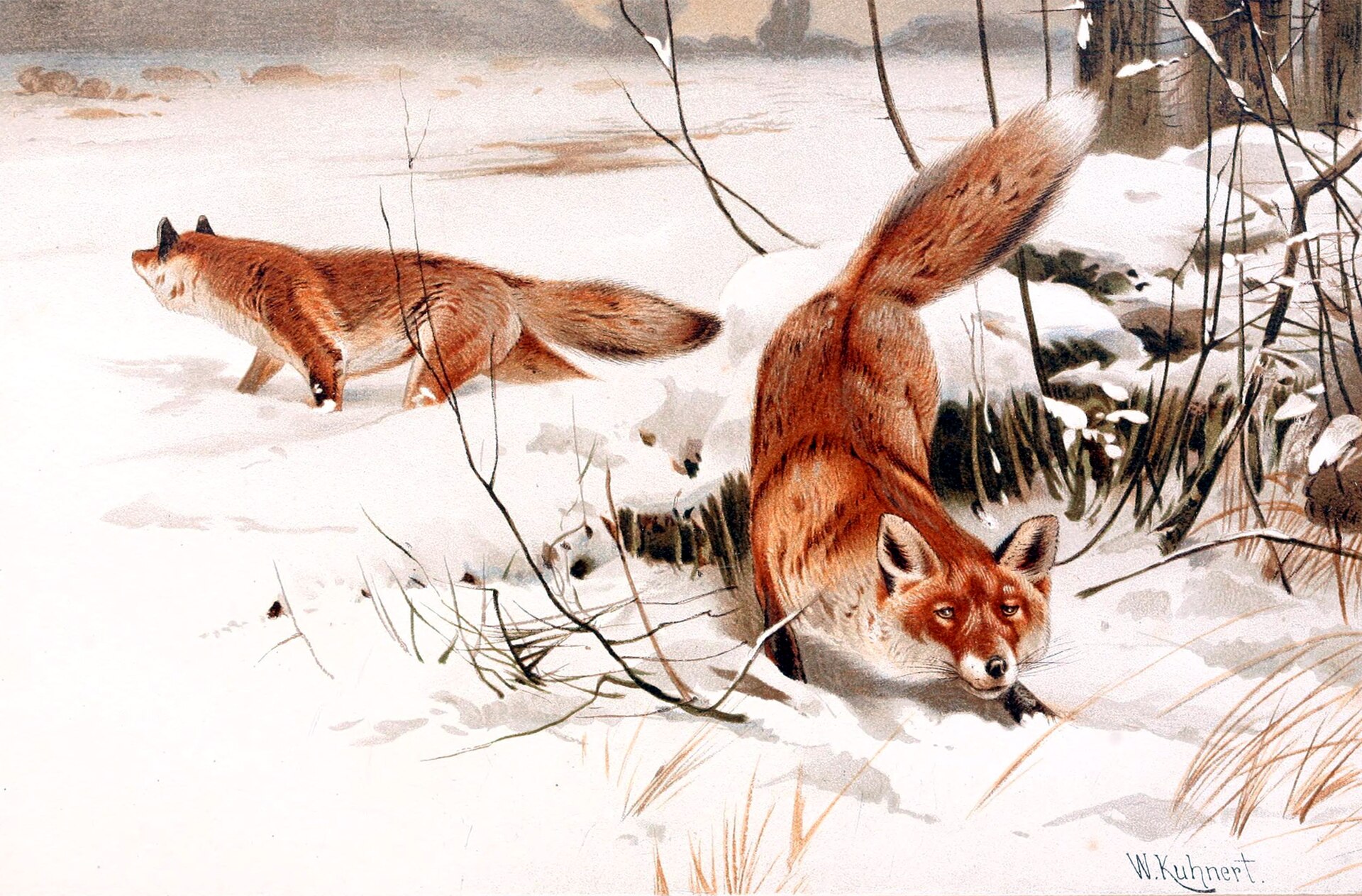
The red fox, Vulpes vulpes (Order Carnivora, Family Canidae), is a medium-sized canid, typically weighing 3.5-11 kg and measuring 90-112 cm in total length, including its prominent bushy tail tipped with white. Its most recognizable feature is its reddish-orange fur, though color variations including black, silver, and cross morphs occur. Breeding usually takes place in January-March, with a gestation period of approximately 51-53 days. Litters average 4-6 kits, which are born altricial, blind, and helpless. Kits are weaned at around 4-6 weeks and emerge from the den at 4-5 weeks. Sexual maturity is attained at about 10 months of age.
Behaviour
Red foxes are highly adaptable and often solitary foragers, though they may form temporary groups during the breeding season. They are primarily nocturnal or crepuscular, especially in human-dominated landscapes, but can be observed during the day in undisturbed areas. Communication involves a wide range of vocalizations, including barks, yips, screeches, and howls, as well as scent marking. They possess excellent senses of hearing and smell, crucial for hunting prey and detecting predators.
Habits
V. vulpes is an opportunistic omnivore, with a diet that includes small mammals (rabbits, rodents), birds, insects, eggs, fruits, berries, and carrion. In urban and suburban areas, they readily exploit anthropogenic food sources such as pet food, garbage, and garden produce. Harbors include underground dens (earths), often repurposed badger or rabbit burrows, dense thickets, and beneath sheds or outbuildings. Conducive conditions include fragmented habitats with a mix of woodlands, open fields, and human development, providing diverse food sources and cover.
Control methods
- 1Remove all outdoor pet food.
- 2Secure garbage cans with tight-fitting lids.
- 3Seal off access points under structures.
- 4Trim dense vegetation around property.
- 5Install motion-activated lighting.
- 6Fence off gardens and poultry enclosures.
Tailored to Red Fox
IPM Procedure Checklist
Inspection
- Survey interior and exterior for evidence and conducive conditions
- Document findings with photos and a site map
- Place monitors to confirm activity
Identification
- Confirm Red Fox (Vulpes vulpes) — not a look-alike
- Note life stage and risk level: Moderate
- Capture clear photos and samples for the record
Action Thresholds
- Trigger action when monitor counts trend up
- Re-evaluate weekly during active season
- Document trigger criteria in the IPM plan
Prevention
- Exclude entry points and harborage
- Improve sanitation and moisture control
- Modify habitat around the structure
Control Methods
- Remove all outdoor pet food.
- Secure garbage cans with tight-fitting lids.
- Seal off access points under structures.
- Trim dense vegetation around property.
Monitoring & Evaluation
- Service monitors on schedule and trend captures
- Re-inspect for Red Fox activity at follow-up
- Adjust tactics based on data; report findings to client