Insect
Formosan Subterranean Termite
Coptotermes formosanus
Biology
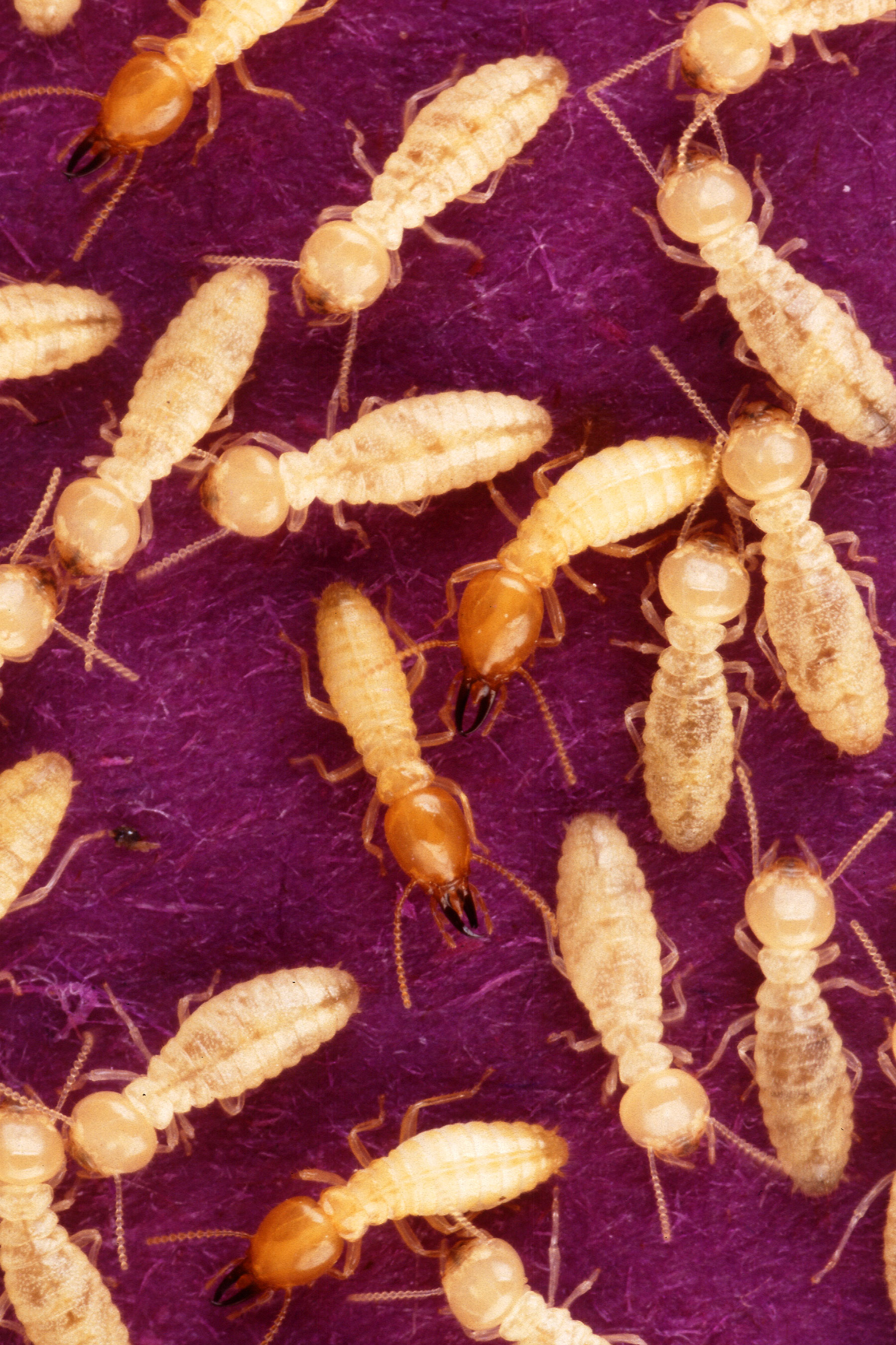
Coptotermes formosanus Shiraki, a member of the family Rhinotermitidae, is a highly destructive subterranean termite. Alates are pale yellow to yellowish-brown, approximately 12-15 mm long with wings. Soldiers have an oval, yellowish-brown head, prominent mandibles, and a fontanelle capable of expelling a defensive secretion. Workers are cream-colored and soft-bodied. A colony can number in the millions, producing extensive carton nests within structures and consuming upwards of 13 pounds of wood per year. Reproductive swarms typically occur from April to July in the evening hours.
Behaviour
Formosan subterranean termites are cryptic, primarily foraging in soil or within wood, making their presence difficult to detect until damage is significant. They construct exploratory foraging tunnels, often referred to as mud tubes, which protect them from desiccation and predators. These termites are highly resilient and capable of exploiting a wide array of cellulose sources, showing a polyphagous feeding strategy. Colony expansion can occur through primary reproductives or through budding, where portions of the colony with secondary reproductives establish new foraging territories.
Habits
Optimal foraging and reproductive conditions for C. formosanus are typically warm, humid environments, with temperatures between 25-30 °C and relative humidity levels exceeding 90%. They commonly infest wooden structures, trees, and shrubs, but have also been known to damage non-cellulose materials such as plaster and asphalt. Nests, known as carton nests, are constructed from soil, wood, and saliva, and are located within walls, attics, or even underground. Conducive conditions include wood-to-soil contact, excessive moisture, and untreated wood near foundations.
Control methods
- 1Implement physical barriers during construction.
- 2Apply liquid termiticides to soil perimeters.
- 3Install baiting systems around the property.
- 4Remove all wood-to-soil contact.
- 5Repair leaking pipes and gutters.
- 6Improve drainage to reduce soil moisture.
Tailored to Formosan Subterranean Termite
IPM Procedure Checklist
Inspection
- Inspect harborage near food, water and warmth
- Check cracks, voids and appliance interiors
- Place sticky monitors at suspected hot-spots
Identification
- Confirm Formosan Subterranean Termite (Coptotermes formosanus) — not a look-alike
- Note life stage and risk level: Severe
- Capture clear photos and samples for the record
Action Thresholds
- Zero-tolerance: act on first confirmed sighting
- Notify client and document the trigger event
- Prioritize health and regulatory risk in the plan
Prevention
- Seal cracks, plumbing penetrations and wall voids
- Eliminate moisture sources and standing water
- Improve sanitation: sealed food storage, grease removal
Control Methods
- Implement physical barriers during construction.
- Apply liquid termiticides to soil perimeters.
- Install baiting systems around the property.
- Remove all wood-to-soil contact.
Monitoring & Evaluation
- Service monitors on schedule and trend captures
- Re-inspect for Formosan Subterranean Termite activity at follow-up
- Adjust tactics based on data; report findings to client