Stored Product Pest
Foreign Grain Beetle
Ahasverus advena
Biology
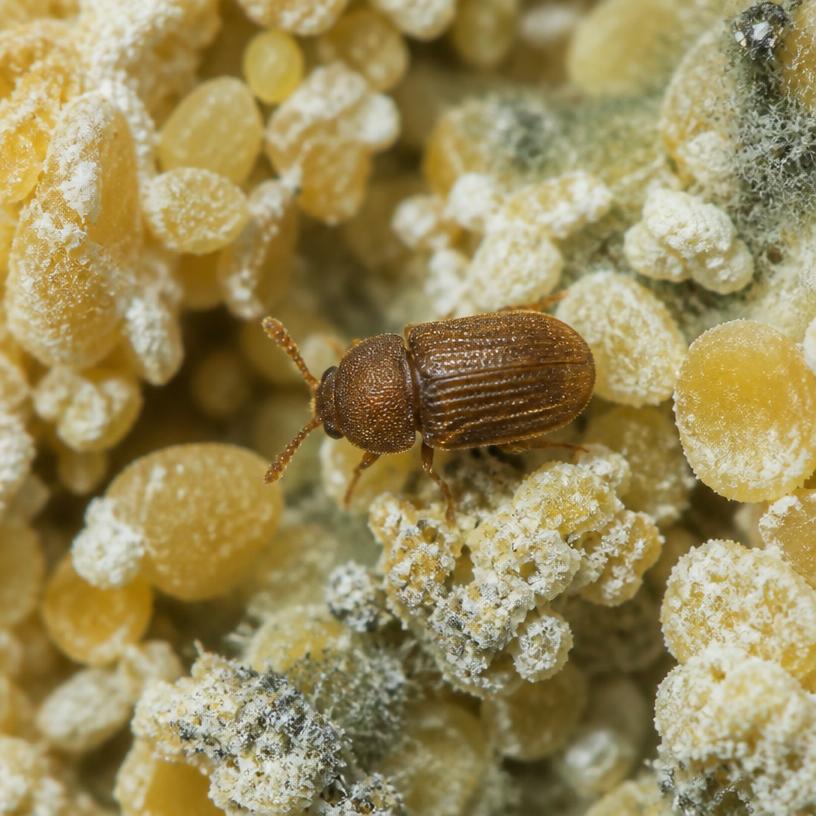
A tiny 2 mm flattened reddish-brown silvanid recognised by a small rounded knob on each front corner of the pronotum and clubbed antennae. It completes a generation in about three weeks under warm, damp conditions.
Behaviour
It is a fungus feeder rather than a true grain feeder, developing on the moulds that grow on damp grain, damp new construction lumber and wet wall voids. Adults fly readily and are strongly attracted to lights, so the first sign is usually swarms at windows in late summer.
Habits
Very common in newly built homes during the first year while framing moisture dries out, and in damp basements, crawl spaces and plumbing leaks. In storage it signals a moisture problem rather than a grain problem. Numbers collapse once the substrate dries.
Control methods
- 1Find and fix the moisture source — leaks, condensation, wet framing
- 2Run dehumidifiers to bring relative humidity below 60%
- 3Ventilate crawl spaces and new construction
- 4Discard mouldy food and packaging
- 5Vacuum adults at windows and light fixtures
- 6Avoid relying on insecticides, which do not fix the cause
- 7Recheck the area after two to three weeks of drying
Tailored to Foreign Grain Beetle
IPM Procedure Checklist
Inspection
- Inspect grain, spices, pet food and dry goods for larvae and webbing
- Deploy pheromone monitors near storage and shelving
- Check spillage in seams, cracks and shelf liners
Identification
- Confirm Foreign Grain Beetle (Ahasverus advena) — not a look-alike
- Note life stage and risk level: Low
- Capture clear photos and samples for the record
Action Thresholds
- Tolerate low-level activity outside sensitive zones
- Act if activity moves indoors or near food
- Review threshold seasonally with the client
Prevention
- Rotate stock FIFO; reject damaged packaging at receiving
- Store products in airtight containers
- Maintain low humidity and clean storage surfaces
Control Methods
- Find and fix the moisture source — leaks, condensation, wet framing
- Run dehumidifiers to bring relative humidity below 60%
- Ventilate crawl spaces and new construction
- Discard mouldy food and packaging
Monitoring & Evaluation
- Service monitors on schedule and trend captures
- Re-inspect for Foreign Grain Beetle activity at follow-up
- Adjust tactics based on data; report findings to client