Fly
Flesh Fly
Sarcophaga bullata
Biology
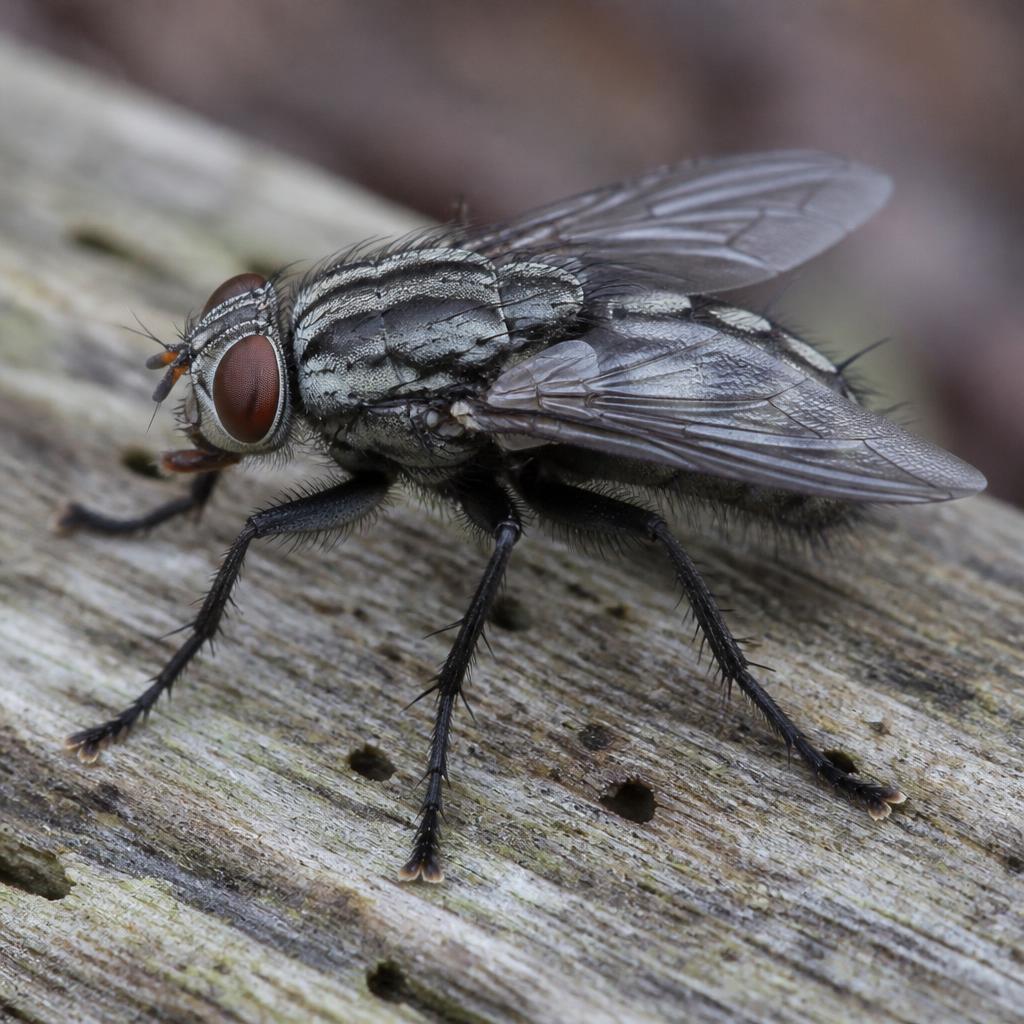
Sarcophaga bullata, a member of the family Sarcophagidae, are robust, medium-sized flies, typically 10-14 mm in length. They are characterized by a greyish thorax with three distinct black longitudinal stripes and a chequered, grey and black abdomen. Unlike many other fly species, Sarcophaga bullata is larviparous, meaning females deposit live larvae rather than eggs directly onto suitable substrates such as carrion, decaying meat, or excrement. Larval development, encompassing three instars, is rapid, typically completed within 3-10 days, depending on temperature and nutrient availability. Pupation occurs in the soil, with the pupal stage lasting from 10-14 days.
Behaviour
Flesh flies are strong fliers and are readily attracted to decaying organic matter, particularly carrion and feces, which serve as oviposition sites. Both males and females are opportunistic feeders, consuming a range of liquid diets, including nectar, sap, and exudates from decaying matter. They exhibit a keen sense of olfaction, enabling them to locate suitable substrates for larval deposition over considerable distances. Flight activity is often observed during warmer periods of the day, exhibiting a direct and purposeful flight pattern. Adults can be found resting on vegetation or walls near food sources.
Habits
Sarcophaga bullata are commonly found in both rural and urban environments where decaying organic matter is present. Their harborage sites primarily revolve around locations offering abundant food sources and suitable substrates for larval development, such as refuse dumps, slaughterhouses, and areas with animal carcasses. Female flies are exceptional at locating fresh carrion. Conducive conditions include inadequate waste disposal, presence of dead animals, and exposed organic refuse. High humidity and elevated temperatures accelerate larval development and overall population growth.
Control methods
- 1Remove carrion and decaying organic matter.
- 2Improve waste management practices.
- 3Exclude flies from structures.
- 4Apply residual insecticides to resting surfaces.
- 5Utilize bait traps.
- 6Maintain general sanitation.
Tailored to Flesh Fly
IPM Procedure Checklist
Inspection
- Locate breeding sites: drains, decaying matter, moist organics
- Use tape-over-drain tests and UV/light traps to confirm
- Map dumpster, grease and floor-drain hot-spots
Identification
- Confirm Flesh Fly (Sarcophaga bullata) — not a look-alike
- Note life stage and risk level: Moderate
- Capture clear photos and samples for the record
Action Thresholds
- Trigger action when monitor counts trend up
- Re-evaluate weekly during active season
- Document trigger criteria in the IPM plan
Prevention
- Clean drains with enzymatic foam to remove biofilm
- Manage trash, recycling and grease daily
- Screen windows, doors and air curtains at entries
Control Methods
- Remove carrion and decaying organic matter.
- Improve waste management practices.
- Exclude flies from structures.
- Apply residual insecticides to resting surfaces.
Monitoring & Evaluation
- Service monitors on schedule and trend captures
- Re-inspect for Flesh Fly activity at follow-up
- Adjust tactics based on data; report findings to client