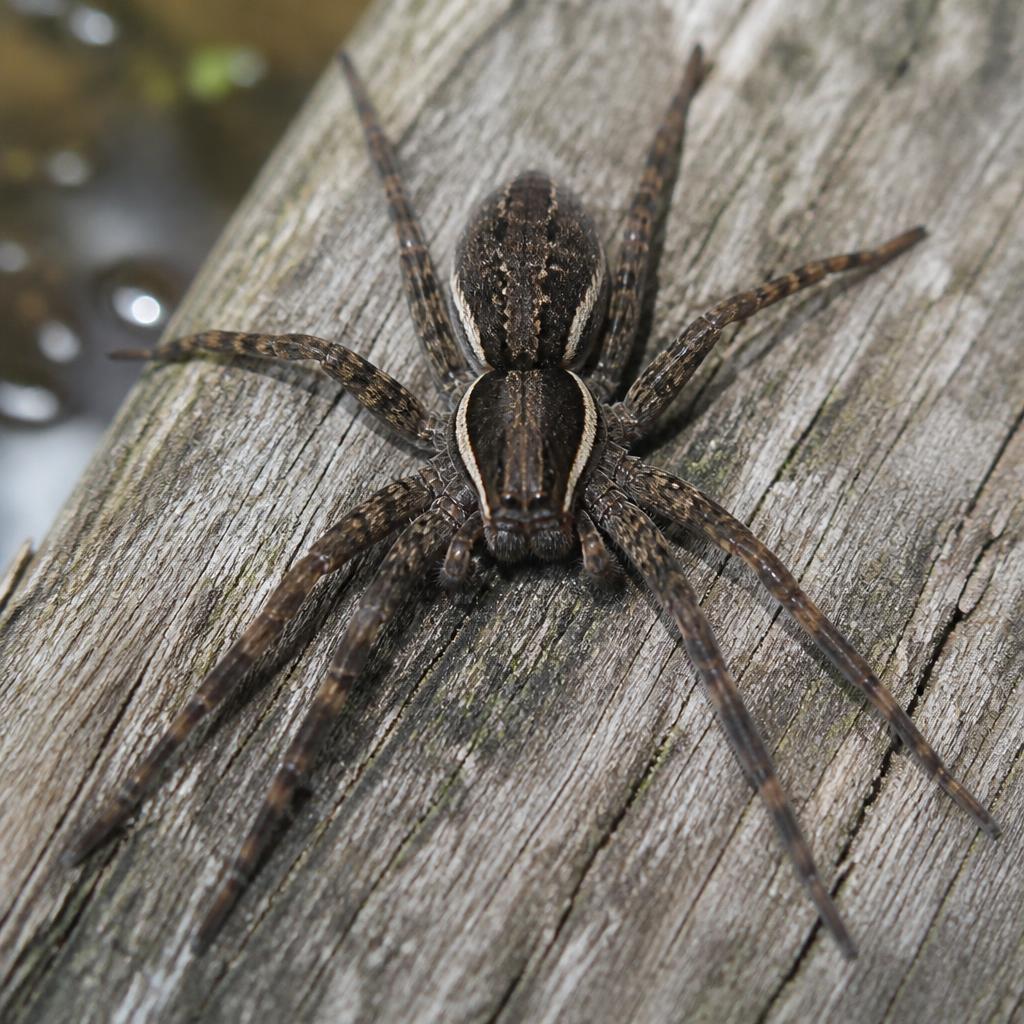
Spider
Dark Fishing Spider
Dolomedes tenebrosus
Biology
Dolomedes tenebrosus is one of the largest North American spiders, with females spanning up to 90 mm across the legs and a 15–26 mm body mottled in brown, grey and black with distinctive chevron and W-shaped abdominal markings and banded legs. Females carry a large spherical egg sac of 500–1,000 eggs in their chelicerae, then build a nursery web in vegetation and stand guard until the spiderlings disperse. Development spans one to two years, with juveniles overwintering under bark and in crevices.
Behaviour
Despite the name, D. tenebrosus is the most terrestrial Dolomedes, often hunting well away from water on tree trunks and wooden structures. It builds no capture web, hunting by ambush and sensing prey vibration, and can run across water and submerge when threatened. Its size makes it alarming indoors, but it is retiring and flees; a defensive bite is possible if handled and produces local pain and swelling comparable to a bee sting with no lasting effect. Prey includes insects, slugs and occasionally small fish or tadpoles.
Habits
Harborage is damp and wooded: under loose bark, dock boards, deck framing, boathouses, woodpiles and stone near ponds, streams and lakes. Waterfront cabins and lakeside homes generate most complaints, with spiders entering through crawlspace vents, gaps under siding and open doors, then appearing on basement walls and in tubs. There is no web to find, so inspection relies on sighting spiders and using sticky monitors. Conducive conditions are wooded, high-moisture lots with debris and unsealed crawlspaces.
Control methods
- 1Seal crawlspace vents, siding gaps and door thresholds
- 2Remove woodpiles, bark mulch and debris near the structure
- 3Reduce moisture and improve drainage around foundations
- 4Large sticky monitors in basements and along sill plates
- 5Live-capture and release indoor specimens where possible
- 6Exterior residual on deck framing and lower siding where pressure is heavy
Tailored to Dark Fishing Spider
IPM Procedure Checklist
Inspection
- Inspect undisturbed corners, voids and stored items
- Identify webs, egg sacs and prey debris
- Note conducive insect prey populations
Identification
- Confirm Dark Fishing Spider (Dolomedes tenebrosus) — not a look-alike
- Note life stage and risk level: Low
- Capture clear photos and samples for the record
Action Thresholds
- Tolerate low-level activity outside sensitive zones
- Act if activity moves indoors or near food
- Review threshold seasonally with the client
Prevention
- Reduce clutter and seal cracks around the structure
- Switch exterior lights to yellow / sodium to reduce prey
- Install door sweeps and screen vents
Control Methods
- Seal crawlspace vents, siding gaps and door thresholds
- Remove woodpiles, bark mulch and debris near the structure
- Reduce moisture and improve drainage around foundations
- Large sticky monitors in basements and along sill plates
Monitoring & Evaluation
- Service monitors on schedule and trend captures
- Re-inspect for Dark Fishing Spider activity at follow-up
- Adjust tactics based on data; report findings to client