All pests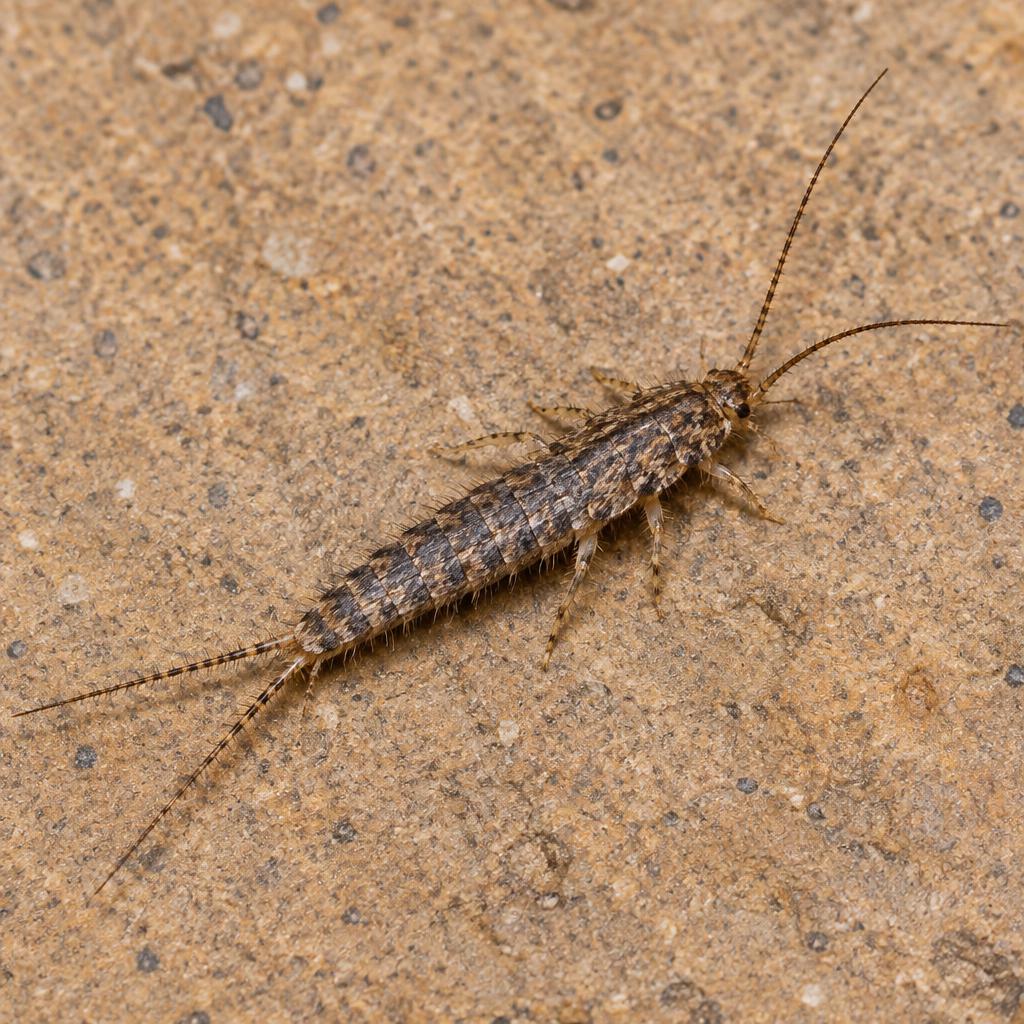 View full procedure
Insect
Firebrat
Thermobia domestica
Low Risk
Biology
Thermobia domestica is a wingless bristletail 10–15 mm long with a mottled grey-brown scaled body, long antennae, and three tail filaments. It thrives at 32–41°C and high humidity, living up to three years and moulting throughout adulthood.
Behaviour
Firebrats are nocturnal and thigmotactic, hiding in tight cracks near heat sources such as boilers, ovens, water heaters, and bakery ovens. They feed on starches, glue, paper sizing, flour, and dried food residues.
Habits
Infestations show as irregular surface grazing on paper and wallpaper, tiny black pepper-like droppings, and shed scales in warm voids. Populations build quietly in mechanical rooms before spreading into pantries.
Control methods
- 1Lower temperature and humidity in boiler and mechanical rooms
- 2Seal cracks and pipe penetrations near heat sources
- 3Store flour, cereals, and pet food in sealed containers
- 4Vacuum harborage cracks and remove cardboard clutter
- 5Place sticky monitors along warm pipe runs to track activity
- 6Apply a labelled crack-and-crevice dust in dry voids
Tailored to Firebrat
IPM Procedure Checklist
Step 1
Inspection
- Inspect harborage near food, water and warmth
- Check cracks, voids and appliance interiors
- Place sticky monitors at suspected hot-spots
Step 2
Identification
- Confirm Firebrat (Thermobia domestica) — not a look-alike
- Note life stage and risk level: Low
- Capture clear photos and samples for the record
Step 3
Action Thresholds
- Tolerate low-level activity outside sensitive zones
- Act if activity moves indoors or near food
- Review threshold seasonally with the client
Step 4
Prevention
- Seal cracks, plumbing penetrations and wall voids
- Eliminate moisture sources and standing water
- Improve sanitation: sealed food storage, grease removal
Step 5
Control Methods
- Lower temperature and humidity in boiler and mechanical rooms
- Seal cracks and pipe penetrations near heat sources
- Store flour, cereals, and pet food in sealed containers
- Vacuum harborage cracks and remove cardboard clutter
Step 6
Monitoring & Evaluation
- Service monitors on schedule and trend captures
- Re-inspect for Firebrat activity at follow-up
- Adjust tactics based on data; report findings to client