Bird
Feral Pigeon
Columba livia
Biology
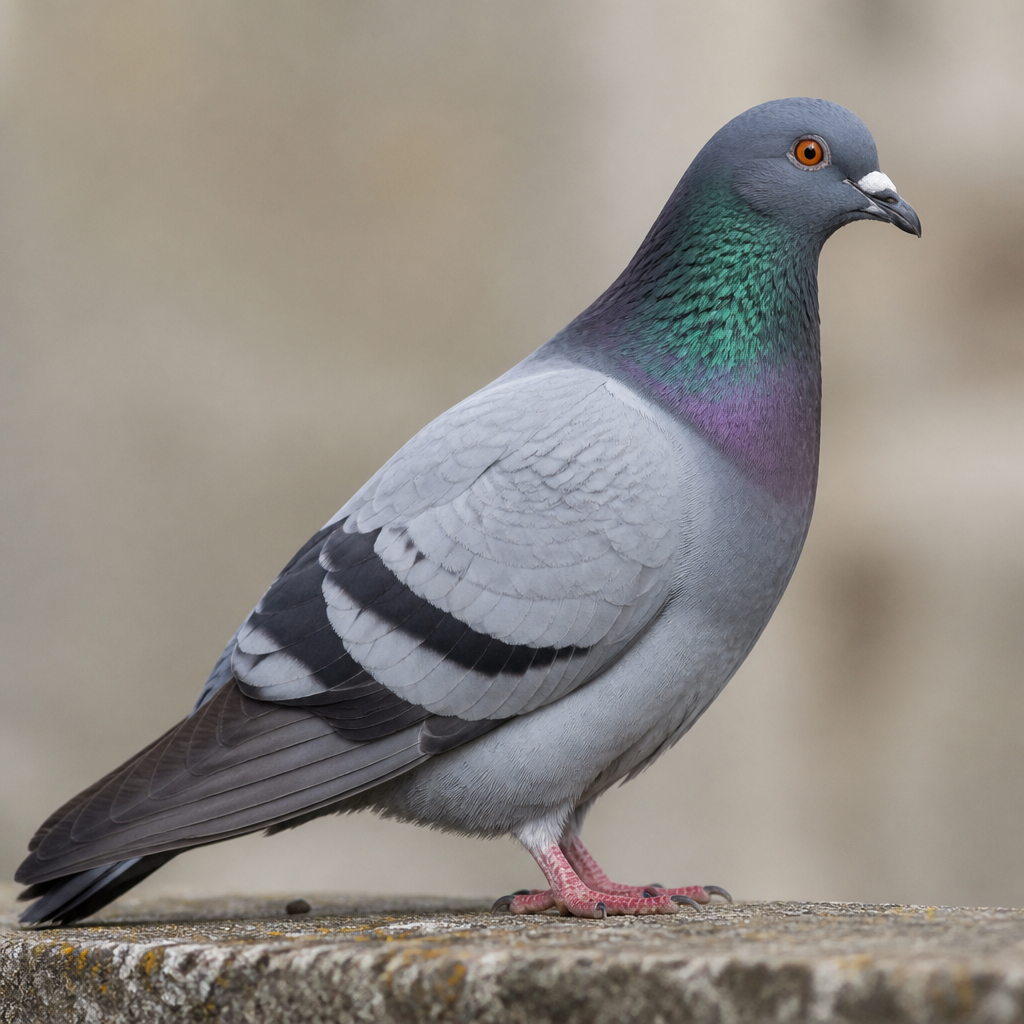
The Feral Pigeon, *Columba livia domestica*, is a descendant of the Rock Dove. Adults are typically 30-35 cm long with a wingspan of 60-70 cm, weighing 280-550 grams. Their plumage is highly variable, but wild-type coloration includes a dark grey body, iridescent green and purple neck plumage, two prominent black wing bars, and a white cere. They reach sexual maturity at 6-7 months and exhibit indeterminate breeding, producing 4-8 clutches per year, each with 1-3 (typically 2) eggs. Incubation lasts 17–19 days, and fledging occurs 30–37 days post-hatch, with offspring often breeding within their first year. While average urban lifespan is 3-5 years, individuals can live up to 15 years under optimal conditions.
Behaviour
Feral pigeons display strong philopatry and colonial social structures, organizing into flocks ranging from a few individuals to several hundred. They are primarily diurnal, foraging and defending territories during daylight hours. Communication involves a variety of cooing vocalizations and visual displays, particularly during courtship and territorial disputes. Their feeding ecology is highly opportunistic, consuming grains, seeds, human refuse, and readily accepting handouts. High populations can cause significant structural damage through guano accumulation, which is highly acidic (pH 3.5-4.5) and accelerates corrosion of building materials like steel, stone, and paint. They are vectors for over 60 diseases transmittable to humans and livestock, including salmonellosis, psittacosis, and cryptococcosis, and host numerous ectoparasites like mites, ticks, and fleas.
Habits
These birds prefer elevated, sheltered locations for roosting and nesting, mimicking their ancestral cliff-dwelling habitats. Ideal urban harborages include building ledges, eaves, attics, ventilation systems, abandoned structures, and bridge girders—anywhere with protection from predators and weather. Foraging typically occurs within a 1-3 km radius of the roost site, following predictable flight paths to food sources like spilled grain around food processing plants, restaurant dumpsters, parks, and outdoor dining areas. Infestations are often indicated by excessive droppings, nesting materials (twigs, grass, rubbish), discarded feathers, and visible bird activity, especially around dawn and dusk. Conducive conditions include readily available food and water sources, numerous undisturbed roosting/nesting sites, and moderate temperatures year-round.
Control methods
- 1Install bird spikes on ledges, beams and signs
- 2Tension wire or netting to exclude roosting areas
- 3Slope guards or gel deterrents on flat surfaces
- 4Remove food sources; secure dumpsters and spill-prone areas
- 5Live trapping with grain bait on rooftops
- 6Sanitize droppings with PPE; never dry-sweep
Tailored to Feral Pigeon
IPM Procedure Checklist
Inspection
- Identify roosting, loafing and nesting sites
- Document droppings, feathers and damage to structure
- Note food and water sources attracting birds
Identification
- Confirm Feral Pigeon (Columba livia) — not a look-alike
- Note life stage and risk level: High
- Capture clear photos and samples for the record
Action Thresholds
- Zero-tolerance: act on first confirmed sighting
- Notify client and document the trigger event
- Prioritize health and regulatory risk in the plan
Prevention
- Install spikes, netting or shock track on ledges
- Remove standing water and accessible food
- Close openings to attics, vents and signage voids
Control Methods
- Install bird spikes on ledges, beams and signs
- Tension wire or netting to exclude roosting areas
- Slope guards or gel deterrents on flat surfaces
- Remove food sources; secure dumpsters and spill-prone areas
Monitoring & Evaluation
- Service monitors on schedule and trend captures
- Re-inspect for Feral Pigeon activity at follow-up
- Adjust tactics based on data; report findings to client