Mammal
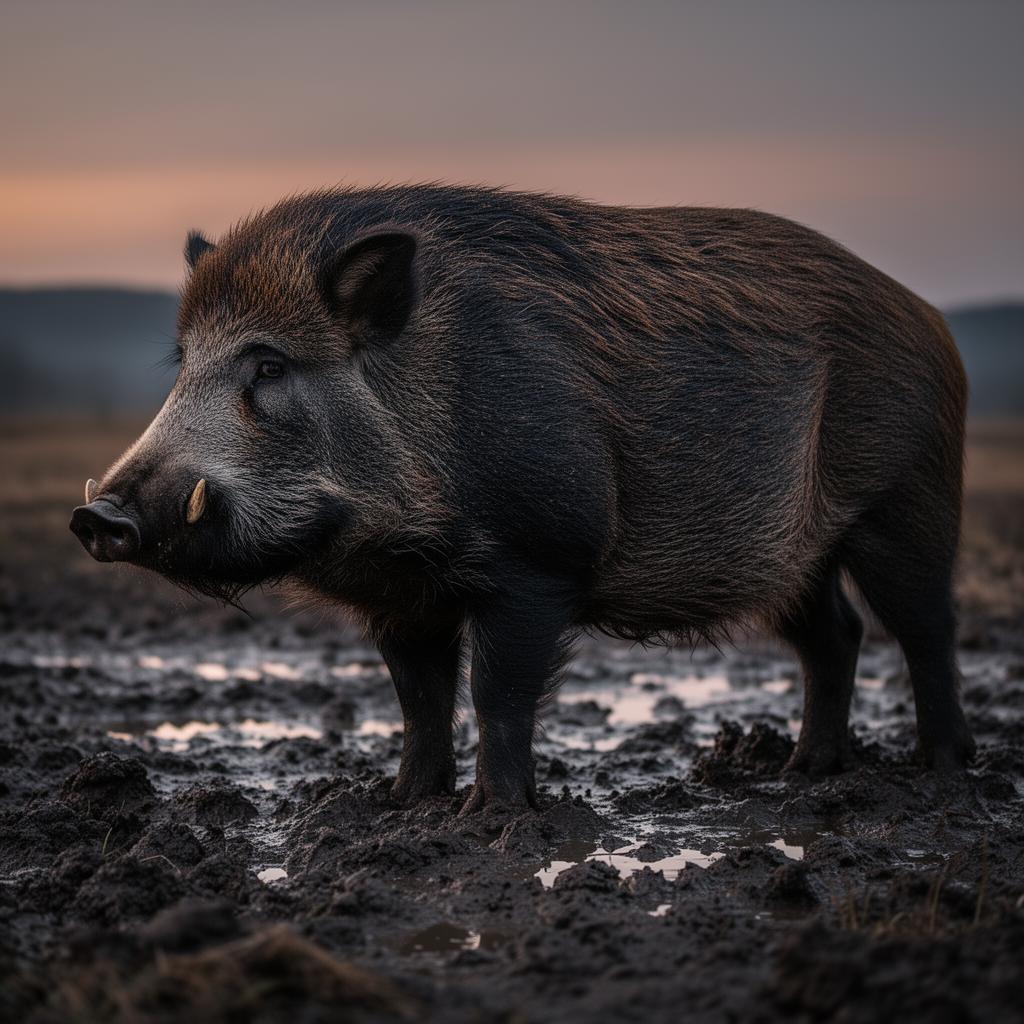
Feral Hog
Sus scrofa
Biology
The feral hog, Sus scrofa (Order Artiodactyla, Family Suidae), is a medium-to-large ungulate, with adults typically weighing 40-150 kg, though larger individuals are reported. They possess a robust build, coarse bristly hair, and can range in color from black to brown, red, or spotted. Both sexes possess continuously growing tusks, which are elongated canine teeth. Sexual maturity can be reached as early as 6-8 months under optimal conditions. Gestation lasts approximately 112-115 days, with sows capable of producing 1-2 litters per year. Litter size averages 4-8 piglets, which are precocial.
Behaviour
Feral hogs are highly intelligent and adaptable animals, typically living in social groups called sounders, consisting of adult females and their offspring. Adult males are often solitary or form small bachelor groups. Their communication involves a range of vocalizations, including grunts, squeals, and woofs. Activity patterns are largely crepuscular and nocturnal, particularly in areas of high human disturbance, though they may forage during the day in undisturbed habitats. They wallow in mud or water to regulate body temperature and control ectoparasites.
Habits
S. scrofa is an omnivorous species with a highly varied diet, consuming roots, tubers, fruits, nuts, invertebrates, small vertebrates, and carrion. Their rooting behavior, characterized by disturbing soil with their snouts, is a primary foraging method and causes significant ecological damage. Harbors include dense undergrowth, wooded areas, and marshy habitats, providing cover and access to water. Conducive conditions include mild climates, abundant food resources, and areas with limited predation pressure, such as agricultural lands and riparian corridors.
Control methods
- 1Implement trapping programs.
- 2Utilize aerial removal where permissible.
- 3Employ trained K9 units for detection.
- 4Install sturdy fencing around agricultural areas.
- 5Remove food attractants.
- 6Promote responsible hunting and harvesting.
Tailored to Feral Hog
IPM Procedure Checklist
Inspection
- Survey interior and exterior for evidence and conducive conditions
- Document findings with photos and a site map
- Place monitors to confirm activity
Identification
- Confirm Feral Hog (Sus scrofa) — not a look-alike
- Note life stage and risk level: Severe
- Capture clear photos and samples for the record
Action Thresholds
- Zero-tolerance: act on first confirmed sighting
- Notify client and document the trigger event
- Prioritize health and regulatory risk in the plan
Prevention
- Exclude entry points and harborage
- Improve sanitation and moisture control
- Modify habitat around the structure
Control Methods
- Implement trapping programs.
- Utilize aerial removal where permissible.
- Employ trained K9 units for detection.
- Install sturdy fencing around agricultural areas.
Monitoring & Evaluation
- Service monitors on schedule and trend captures
- Re-inspect for Feral Hog activity at follow-up
- Adjust tactics based on data; report findings to client