Spider
False Widow
Steatoda grossa
Biology
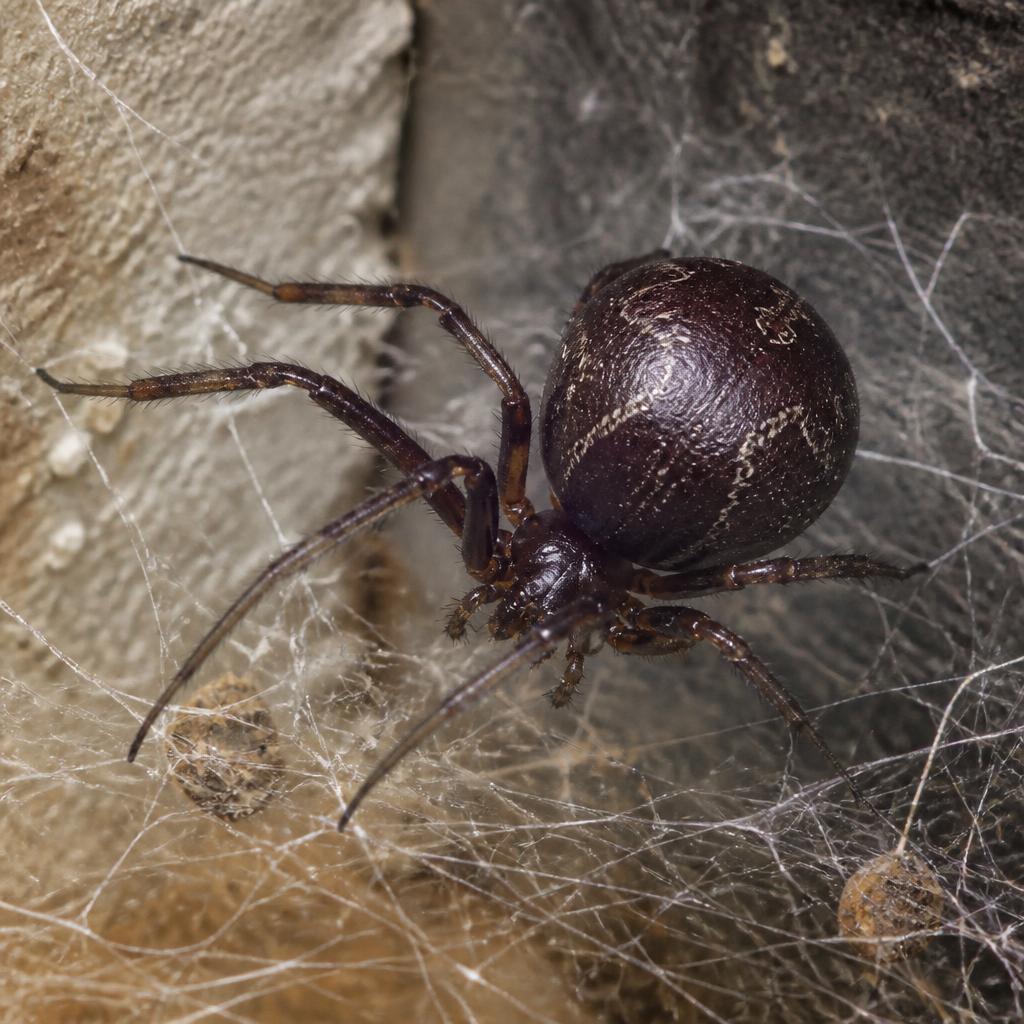
Steatoda grossa, the cupboard or false widow spider, is a theridiid closely related to true widows. Females are 6–10 mm with a shiny, bulbous purplish-brown to near-black abdomen marked with faint cream crescents or chevrons and no hourglass — the key separation from Latrodectus. Males are smaller and more slender with longer legs. Females live two to six years, an unusually long span, and produce several off-white spherical egg sacs of 40–100 eggs; development to adult takes several months and is slowed markedly below 18°C.
Behaviour
False widows build tough, irregular cobwebs with sticky gum-footed lines in the same voids widows favour, and they routinely prey on other spiders — including juvenile black widows — as well as woodlice, ants and beetles. They are sedentary and nocturnal, and bites are rare and typically no worse than a bee sting, causing local pain without systemic latrodectism. Because they are so often mistaken for widows, they are the most common cause of misidentified 'widow' calls, and confirming the absence of an hourglass prevents unnecessary alarm and over-treatment.
Habits
Harborage is strongly indoor and peri-domestic: cupboard corners, under sinks, behind toilets, basement joists, garage shelving, crawlspace corners and beneath exterior siding laps. They persist year-round in heated structures and are very tolerant of dry, dusty voids. Signs are dense sheets of dusty cobweb in low-traffic corners, pale spherical egg sacs suspended in the tangle, and prey remains including other spiders. Conducive conditions are clutter, undisturbed storage and continuous insect prey from lights or damp areas.
Control methods
- 1Vacuum webs, spiders and egg sacs from corners and voids
- 2Confirm identification — no hourglass means it is not a widow
- 3Reduce clutter and store boxes off floors and walls
- 4Seal gaps under sinks and around plumbing penetrations
- 5Control prey insects and reduce interior humidity
- 6Crack-and-crevice residual in garages and basements
Tailored to False Widow
IPM Procedure Checklist
Inspection
- Inspect undisturbed corners, voids and stored items
- Identify webs, egg sacs and prey debris
- Note conducive insect prey populations
Identification
- Confirm False Widow (Steatoda grossa) — not a look-alike
- Note life stage and risk level: Low
- Capture clear photos and samples for the record
Action Thresholds
- Tolerate low-level activity outside sensitive zones
- Act if activity moves indoors or near food
- Review threshold seasonally with the client
Prevention
- Reduce clutter and seal cracks around the structure
- Switch exterior lights to yellow / sodium to reduce prey
- Install door sweeps and screen vents
Control Methods
- Vacuum webs, spiders and egg sacs from corners and voids
- Confirm identification — no hourglass means it is not a widow
- Reduce clutter and store boxes off floors and walls
- Seal gaps under sinks and around plumbing penetrations
Monitoring & Evaluation
- Service monitors on schedule and trend captures
- Re-inspect for False Widow activity at follow-up
- Adjust tactics based on data; report findings to client