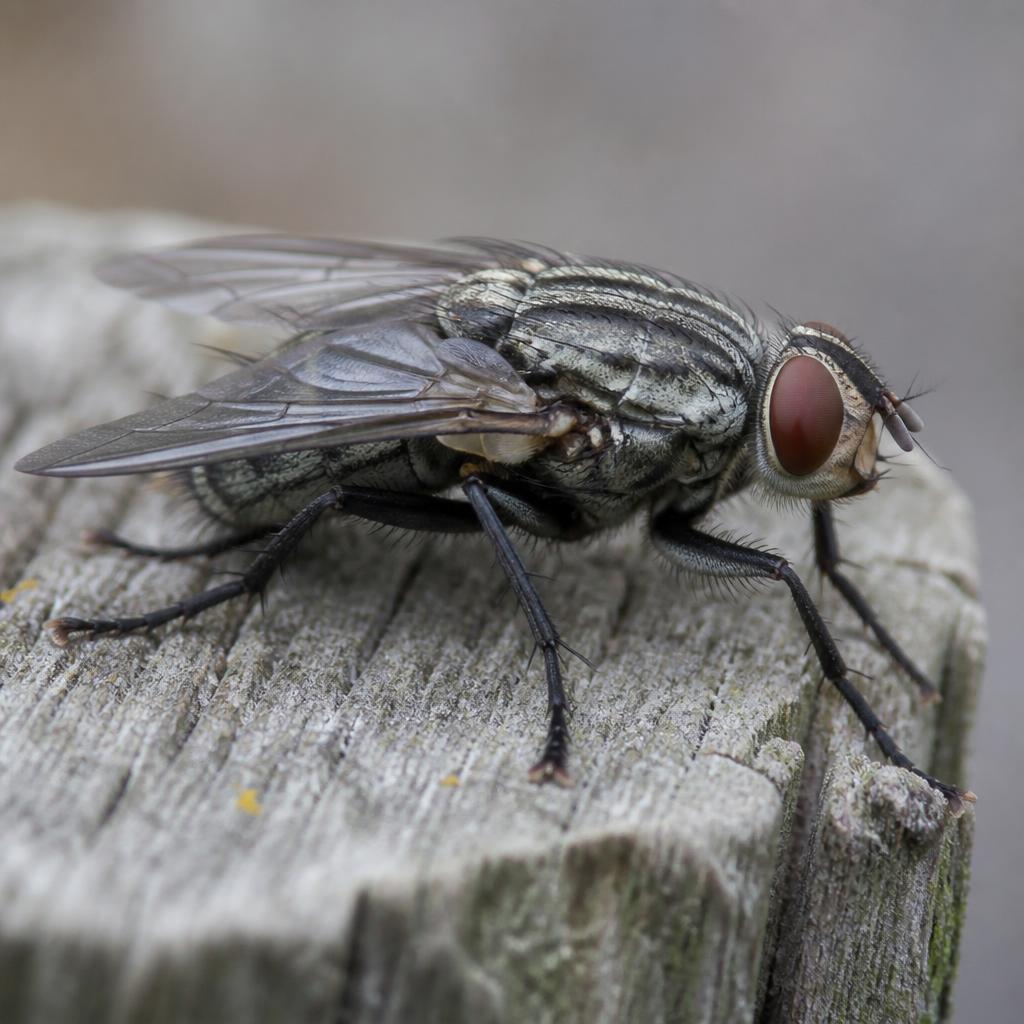
Fly
Face Fly
Musca autumnalis
Biology
Musca autumnalis De Geer (family Muscidae) is a non-biting fly, closely related to the house fly, typically measuring 6-8 mm in length. Adults are dull gray with four dark stripes on the thorax; males have eyes that nearly touch, while females have widely separated eyes. Eggs are laid exclusively on fresh (within 15 minutes of defecation) bovine manure. Larvae, which are creamy white maggots, develop within the manure, feeding on microorganisms. The lifecycle from egg to adult can be as short as 10-20 days, depending on temperature, allowing for multiple generations per season.
Behaviour
Adult face flies primarily feed on animal secretions (mucus, tears, saliva), nectar, and dung liquids. They are strongly attracted to the faces of cattle and horses, clustering around the eyes, nose, and mouth to feed, causing annoyance and potentially vectoring pathogens such as Moraxella bovis (cause of pinkeye). They overwinter as adults in sheltered locations like attics, barns, and wall voids, emerging in spring to seek host animals. They are strong fliers and can travel several miles.
Habits
Face flies are a rural and agricultural pest, primarily associated with pastured cattle and horses. Optimal conditions for reproduction include readily available fresh bovine manure for oviposition and larval development, and warm, humid weather. Conducive conditions for overwintering include unheated buildings, attics, and wall voids that offer protection from cold temperatures. Their reliance on large mammals for feeding and reproduction limits their presence in urban environments lacking livestock.
Control methods
- 1Apply insecticidal ear tags to livestock.
- 2Use pour-on insecticides on host animals.
- 3Implement walk-through fly traps in pastures.
- 4Remove and spread manure to disrupt breeding.
- 5Seal structural openings for overwintering sites.
- 6Encourage natural predators like dung beetles.
Tailored to Face Fly
IPM Procedure Checklist
Inspection
- Locate breeding sites: drains, decaying matter, moist organics
- Use tape-over-drain tests and UV/light traps to confirm
- Map dumpster, grease and floor-drain hot-spots
Identification
- Confirm Face Fly (Musca autumnalis) — not a look-alike
- Note life stage and risk level: Moderate
- Capture clear photos and samples for the record
Action Thresholds
- Trigger action when monitor counts trend up
- Re-evaluate weekly during active season
- Document trigger criteria in the IPM plan
Prevention
- Clean drains with enzymatic foam to remove biofilm
- Manage trash, recycling and grease daily
- Screen windows, doors and air curtains at entries
Control Methods
- Apply insecticidal ear tags to livestock.
- Use pour-on insecticides on host animals.
- Implement walk-through fly traps in pastures.
- Remove and spread manure to disrupt breeding.
Monitoring & Evaluation
- Service monitors on schedule and trend captures
- Re-inspect for Face Fly activity at follow-up
- Adjust tactics based on data; report findings to client