Bat
Evening Bat
Nycticeius humeralis
Biology
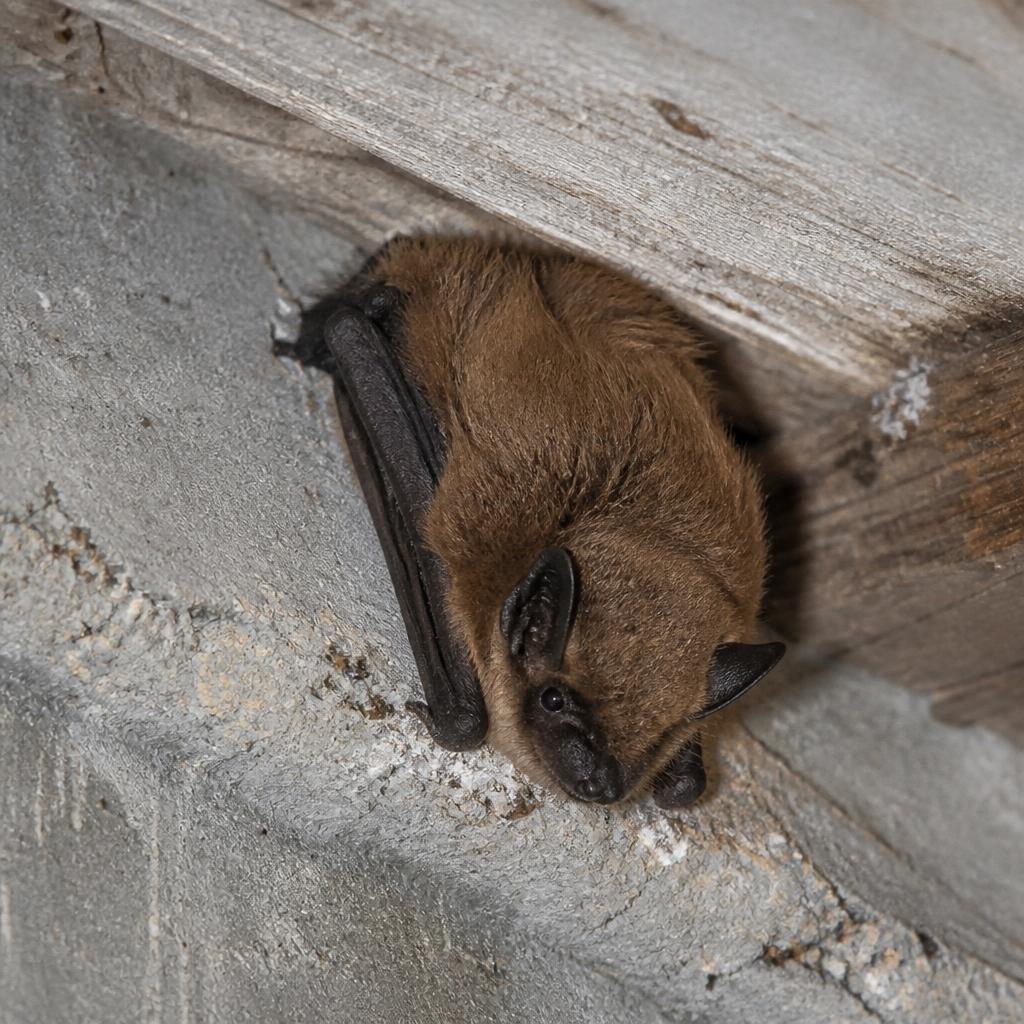
Nycticeius humeralis is a small vespertilionid, 8–10 cm long with a 26–30 cm wingspan and 7–14 g in weight, with dull brown fur, blackish ears and membranes and a short, curved, blunt tragus that separates it from Myotis species. It ranges through the southeastern and midwestern United States. Unusually among North American bats, females regularly bear twins, born in late May to June, and maternity colonies of 30 to several hundred females form in buildings and tree cavities. Northern populations migrate south in autumn rather than hibernating locally.
Behaviour
Foraging begins early, often before full dark, with slow fluttering flight over pastures, forest clearings and water, taking beetles, leafhoppers, moths and flying ants. Colonies are strongly philopatric and females frequently nurse pups other than their own, which is rare among bats. Health significance is the same as other structure-dwelling species: guano accumulation, odour, staining and histoplasmosis potential, plus the standard rabies precaution for any bat found on the ground or inside living space. It does not damage wood or wiring — the damage is contamination and the entry gaps that also admit other pests.
Habits
Roosts are in attics, soffits, behind loose siding and shutters, in barn lofts and under bridges, plus natural tree hollows and loose bark. Signs are small dark guano pellets on siding, sills and porch floors, faint rub marks at gaps, and early-evening emergence at soffit corners. Conducive conditions are lifted siding, gapped soffit returns, open gable vents and unmaintained outbuildings. Because it is migratory in much of its range, buildings may be occupied only from spring through late summer, which widens the safe exclusion window relative to resident species.
Control methods
- 1Confirm the species by tragus shape before planning exclusion
- 2Time exclusion after mid-August or after autumn departure
- 3Install one-way exclusion devices on all active exits
- 4Repair loose siding, soffit returns and gable vent screening
- 5Clean and disinfect guano deposits using PPE and HEPA vacuum
- 6Install bat houses on a nearby sunny wall or pole before exclusion
- 7Re-inspect the following spring to confirm no re-entry
Tailored to Evening Bat
IPM Procedure Checklist
Inspection
- Inspect at dusk to locate active entry/exit points
- Check attics, soffits and chimneys for guano
- Identify maternity colonies before any action
Identification
- Confirm Evening Bat (Nycticeius humeralis) — not a look-alike
- Note life stage and risk level: Moderate
- Capture clear photos and samples for the record
Action Thresholds
- Trigger action when monitor counts trend up
- Re-evaluate weekly during active season
- Document trigger criteria in the IPM plan
Prevention
- Seal gaps ≥6 mm with caulk, mesh and flashing
- Cap chimneys and screen attic vents
- Provide alternative bat houses on the property
Control Methods
- Confirm the species by tragus shape before planning exclusion
- Time exclusion after mid-August or after autumn departure
- Install one-way exclusion devices on all active exits
- Repair loose siding, soffit returns and gable vent screening
Monitoring & Evaluation
- Service monitors on schedule and trend captures
- Re-inspect for Evening Bat activity at follow-up
- Adjust tactics based on data; report findings to client