Stinging Insect
European Hornet
Vespa crabro
Biology
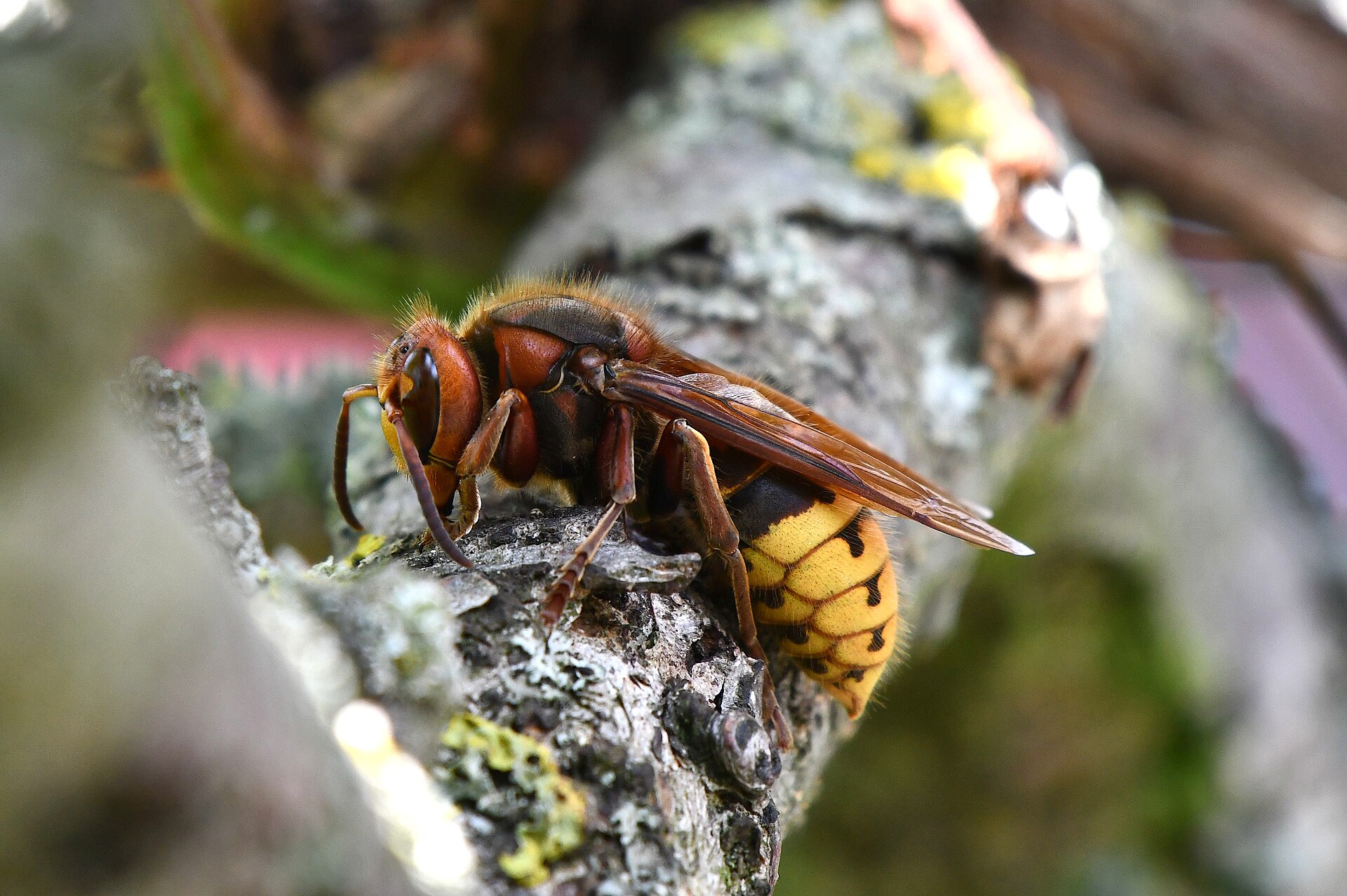
Vespa crabro, commonly known as the European Hornet, is the only true hornet species found in North America. Adults are substantial, typically measuring 25–35 mm in length, characterized by a reddish-brown head and thorax, and a segmented abdomen featuring yellow and black stripes toward the posterior. The queens are slightly larger than workers, reaching up to 40 mm. Colonies are annual, initiated by an overwintered queen in spring, developing through larval and pupal stages within paper-like cells. A colony can grow to house 200–400 workers, with a lifespan for workers typically 4-6 weeks, and queens living up to a year. Optimal colony development occurs in temperate climates, with sensitivity to extreme heat or prolonged cold, requiring stable thermal conditions for brood rearing.
Behaviour
European Hornets are crepuscular and nocturnal, making them distinct among social wasps in North America, and are notably attracted to exterior lighting. They are predatory insects, primarily foraging on a wide range of live insects, including grasshoppers, flies, and large caterpillars, which they chew and feed to their larvae. Adults also supplement their diet with tree sap and ripe fruit, making neat incisions in bark, particularly from lilac, birch, and ash, to access cambium and phloem. While generally less aggressive than yellowjackets when foraging, they become fiercely defensive if their nest is disturbed, delivering a painful sting due to their larger venom sac and smooth stingers, allowing for repeated stinging. Public health impacts arise from potential allergic reactions to their potent venom.
Habits
Nesting preferences for Vespa crabro are typically in sheltered, dark, and often elevated locations, commonly including hollow trees, abandoned beehives, barns, attics, and within wall voids of structures. Foraging patterns extend several hundred meters from the nest, with workers actively seeking protein sources for larvae and carbohydrates for themselves. Infestations are often indicated by the presence of large wasps flying around exterior lights after dusk, or by the audible chewing sounds within wall voids. Conducive conditions include decaying old growth trees for natural harborage and structural defects that allow access to voids. Technicians should look for accumulations of frass beneath active nest entrances, bark damage on trees, and direct observation of distinctively large, reddish-brown and yellow-banded insects.
Control methods
- 1Locate void nests by tracking flight lines at dusk
- 2Apply insecticidal dust at the entrance, not liquid sprays
- 3Seal the void only after activity has fully ceased
- 4Reduce outdoor lighting that attracts night foragers
- 5Inspect attics and barn lofts in early summer
- 6Engage a professional for in-wall colonies
Tailored to European Hornet
IPM Procedure Checklist
Inspection
- Survey interior and exterior for evidence and conducive conditions
- Document findings with photos and a site map
- Place monitors to confirm activity
Identification
- Confirm European Hornet (Vespa crabro) — not a look-alike
- Note life stage and risk level: High
- Capture clear photos and samples for the record
Action Thresholds
- Zero-tolerance: act on first confirmed sighting
- Notify client and document the trigger event
- Prioritize health and regulatory risk in the plan
Prevention
- Exclude entry points and harborage
- Improve sanitation and moisture control
- Modify habitat around the structure
Control Methods
- Locate void nests by tracking flight lines at dusk
- Apply insecticidal dust at the entrance, not liquid sprays
- Seal the void only after activity has fully ceased
- Reduce outdoor lighting that attracts night foragers
Monitoring & Evaluation
- Service monitors on schedule and trend captures
- Re-inspect for European Hornet activity at follow-up
- Adjust tactics based on data; report findings to client