Ant
European Fire Ant
Myrmica rubra
Biology
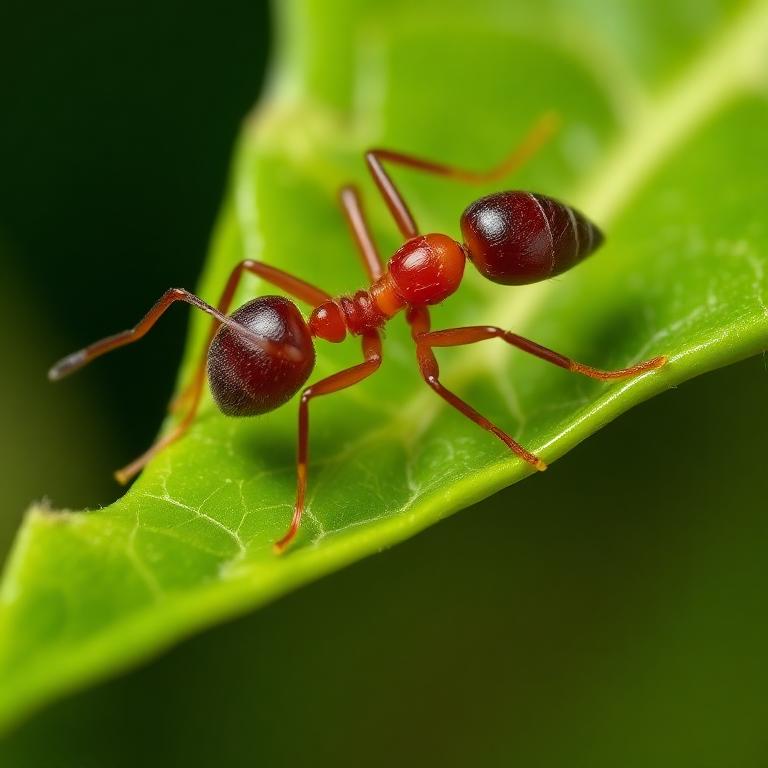
The European fire ant, also called the common red ant, is a reddish-brown Myrmica worker 4–5 mm long with a two-segmented waist, short paired spines on the rear of the thorax, and a functional sting. Introduced populations are strongly polygynous and polydomous, forming interconnected supercolonies that reach very high densities — dozens of nests in a small garden — and spread almost entirely by budding and by human movement of soil, mulch, and nursery stock rather than by mating flights.
Behaviour
Workers are highly aggressive in defence of the nest and swarm onto anything that disturbs the ground surface, gripping with the mandibles and stinging repeatedly. The sting produces immediate burning pain and an itchy welt lasting for days, and systemic allergic reactions occur; heavily infested yards effectively become unusable for children, gardeners and pets. Foraging is generalist — honeydew, live and dead insects, and sweet household foods — and workers are active from early spring through autumn, with peak aggression in warm humid weather.
Habits
Nests are shallow and moist: under stones, logs, boards, mulch, leaf litter, potted plants, at the base of shrubs, and along shaded stream banks and irrigation lines, usually within a few centimetres of the surface with no conspicuous mound. Workers wander indoors under doors and through foundation gaps but rarely nest inside. Conducive conditions are permanently damp shaded soil, heavy mulch and organic debris, and imported soil or nursery stock — the main introduction route. Inspect by lifting surface objects in moist shaded ground; do not probe barehanded.
Control methods
- 1Inspect and quarantine imported soil, mulch and nursery stock
- 2Treat nests directly with a labelled drench under stones, logs and mulch
- 3Reduce irrigation, mulch depth and shaded organic debris
- 4Use both sweet and protein baits and rotate them across the season
- 5Apply a perimeter residual barrier to keep workers off the structure
- 6Warn occupants of sting and allergy risk and flag treated areas
Tailored to European Fire Ant
IPM Procedure Checklist
Inspection
- Follow trails to nests, food and moisture sources
- Inspect wall voids, slab edges and exterior soil
- Place non-repellent monitors at trail crossings
Identification
- Confirm European Fire Ant (Myrmica rubra) — not a look-alike
- Note life stage and risk level: High
- Capture clear photos and samples for the record
Action Thresholds
- Zero-tolerance: act on first confirmed sighting
- Notify client and document the trigger event
- Prioritize health and regulatory risk in the plan
Prevention
- Seal entry cracks, utility penetrations and weep holes
- Eliminate honeydew-producing pests on landscape plants
- Store food in sealed containers and clean spills promptly
Control Methods
- Inspect and quarantine imported soil, mulch and nursery stock
- Treat nests directly with a labelled drench under stones, logs and mulch
- Reduce irrigation, mulch depth and shaded organic debris
- Use both sweet and protein baits and rotate them across the season
Monitoring & Evaluation
- Service monitors on schedule and trend captures
- Re-inspect for European Fire Ant activity at follow-up
- Adjust tactics based on data; report findings to client