Occasional Invader
European Earwig
Forficula auricularia
Biology
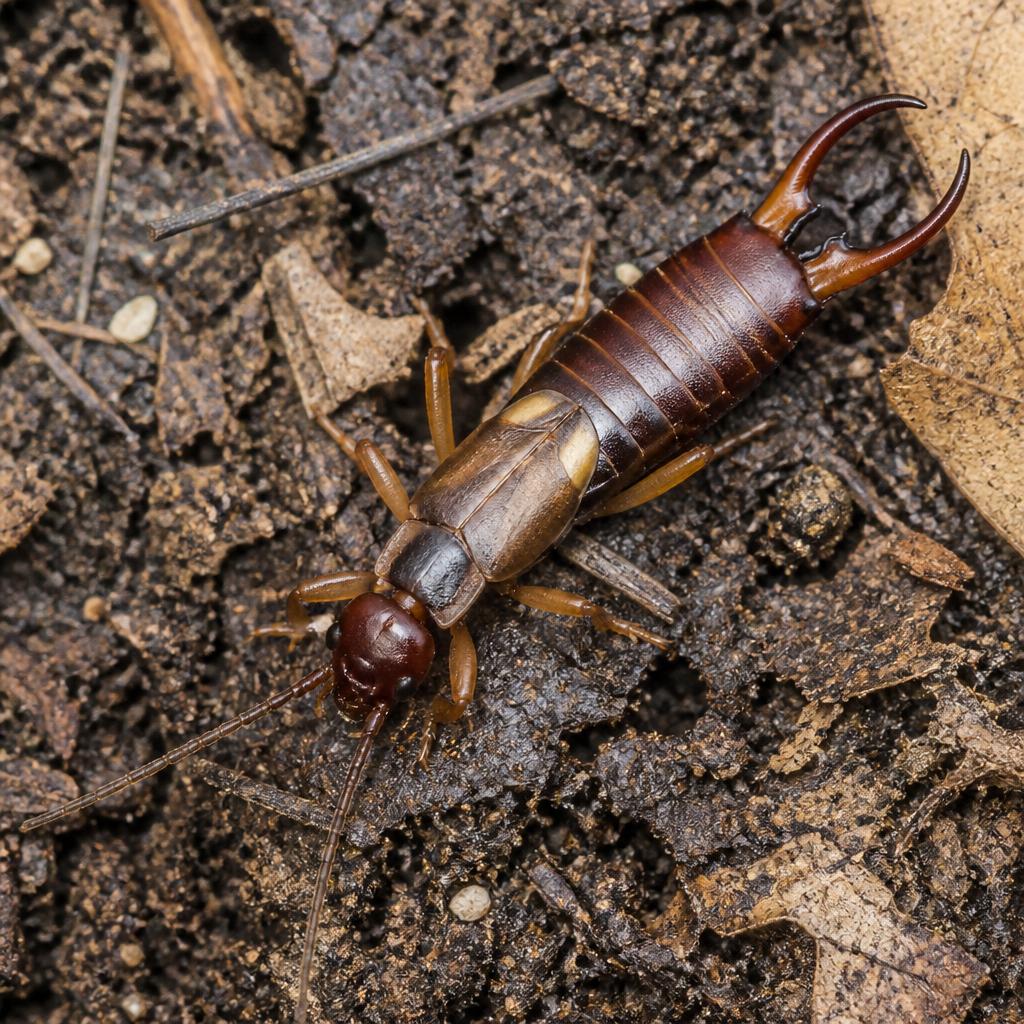
The European earwig, *Forficula auricularia*, is an orthopteran insect belonging to the family Forficulidae. Adults typically measure 10-16 mm in length, displaying a characteristic reddish-brown coloration with lighter yellowish legs and antennae. Sexual dimorphism is evident in the cerci: males possess prominently curved, caliper-like forceps ranging from 4-9 mm, while female cerci are straighter and 3-5 mm long. The lifecycle involves incomplete metamorphosis, progressing through egg, nymphal (typically 4-5 instars), and adult stages, usually completing one generation per year in temperate regions. Females lay 30-60 eggs in subterranean chambers, with incubation lasting 7-10 days under optimal conditions of 18-25°C and high humidity.
Behaviour
Primarily nocturnal, *F. auricularia* exhibits phototaxis for most of its life stages, actively foraging after dusk and seeking concealed, thigmotactic harborages before dawn. While generally solitary for foraging, aggregations can form in suitable diurnal retreats. Communication involves short-range antennal contact and chemical cues in reproductive contexts. Their diet is highly omnivorous, encompassing decaying organic matter, soft-bodied insects like aphids and mites, and a wide array of plant material, making them both agricultural pests and beneficial predators. Defensive behavior includes utilizing their cerci for pinching adversaries or grasping prey, though they are not considered aggressive towards humans and pose no public health threat, occasionally causing minor structural damage by chewing soft wood.
Habits
European earwigs thrive in cool, damp, and dark environments, frequently harboring in leaf litter, mulch, under stones, logs, potted plants, and within the cracks and crevices of building foundations. They exhibit strong thigmotactic tendencies, preferring tight enclosures. Foraging ranges are generally limited to the immediate vicinity of their harborage, typically within a few meters. As 'occasional invaders,' they often migrate indoors during periods of environmental stress, such as drought, heavy rains, or excessive heat, seeking moisture and shelter. Key signs of infestation include aggregations of insects in cracks or voids, particularly in bathrooms, basements, kitchens, and along window sills. Evidence of plant damage or consumption of soft fruits can also indicate their presence outdoors.
Control methods
- 1Remove mulch, leaf litter and debris from foundations
- 2Fix moisture issues — gutters, downspouts, leaks
- 3Seal cracks, door sweeps and weep holes
- 4Set rolled-newspaper or oil traps in garden beds
- 5Apply perimeter residual or granular bait at hotspots
- 6Reduce night lighting near entries to limit attraction
Tailored to European Earwig
IPM Procedure Checklist
Inspection
- Inspect exterior perimeter for entry pathways
- Note moisture, mulch and ground-cover near foundation
- Identify aggregation sites on warm walls
Identification
- Confirm European Earwig (Forficula auricularia) — not a look-alike
- Note life stage and risk level: Low
- Capture clear photos and samples for the record
Action Thresholds
- Tolerate low-level activity outside sensitive zones
- Act if activity moves indoors or near food
- Review threshold seasonally with the client
Prevention
- Seal foundation cracks, weep holes and utility penetrations
- Pull mulch and vegetation back from the structure
- Improve drainage and reduce exterior moisture
Control Methods
- Remove mulch, leaf litter and debris from foundations
- Fix moisture issues — gutters, downspouts, leaks
- Seal cracks, door sweeps and weep holes
- Set rolled-newspaper or oil traps in garden beds
Monitoring & Evaluation
- Service monitors on schedule and trend captures
- Re-inspect for European Earwig activity at follow-up
- Adjust tactics based on data; report findings to client