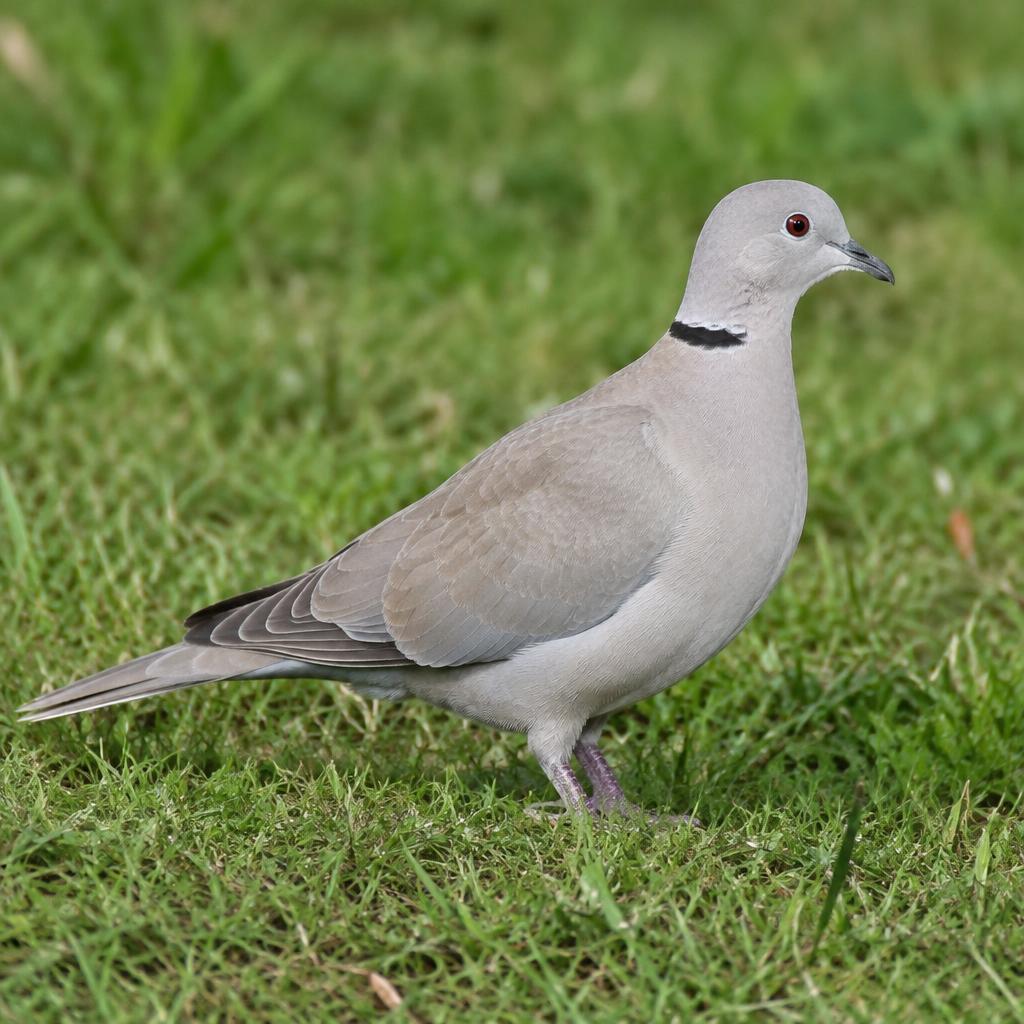
Bird
Eurasian Collared-Dove
Streptopelia decaocto
Biology
Streptopelia decaocto is a medium-sized dove, 30–33 cm, pale gray-buff with a narrow black half-collar on the nape, a squared tail, and dark primary feathers visible in flight. It was introduced to North America and is now established across much of the continent.
Behaviour
These doves are prolific breeders, often raising multiple broods per year. They nest in trees, shrubs, and on building ledges, gutters, and light fixtures. They feed on the ground on seeds, grain, and spilled birdseed.
Habits
Large flocks congregate on lawns, rooftops, and around feeders, leaving accumulations of droppings that can stain surfaces and create slip hazards. Nesting debris can clog gutters and downspouts, and cooing calls may be a nuisance near bedrooms.
Control methods
- 1Reduce or remove ground feeders and spilled seed
- 2Install bird spikes or slope ledges where doves roost
- 3Clean gutters and nesting material regularly
- 4Use fine netting or wire mesh to block nesting niches
- 5Discourage congregation on lawns with targeted habitat modification
- 6Check local regulations before nest removal
Tailored to Eurasian Collared-Dove
IPM Procedure Checklist
Inspection
- Identify roosting, loafing and nesting sites
- Document droppings, feathers and damage to structure
- Note food and water sources attracting birds
Identification
- Confirm Eurasian Collared-Dove (Streptopelia decaocto) — not a look-alike
- Note life stage and risk level: Low
- Capture clear photos and samples for the record
Action Thresholds
- Tolerate low-level activity outside sensitive zones
- Act if activity moves indoors or near food
- Review threshold seasonally with the client
Prevention
- Install spikes, netting or shock track on ledges
- Remove standing water and accessible food
- Close openings to attics, vents and signage voids
Control Methods
- Reduce or remove ground feeders and spilled seed
- Install bird spikes or slope ledges where doves roost
- Clean gutters and nesting material regularly
- Use fine netting or wire mesh to block nesting niches
Monitoring & Evaluation
- Service monitors on schedule and trend captures
- Re-inspect for Eurasian Collared-Dove activity at follow-up
- Adjust tactics based on data; report findings to client