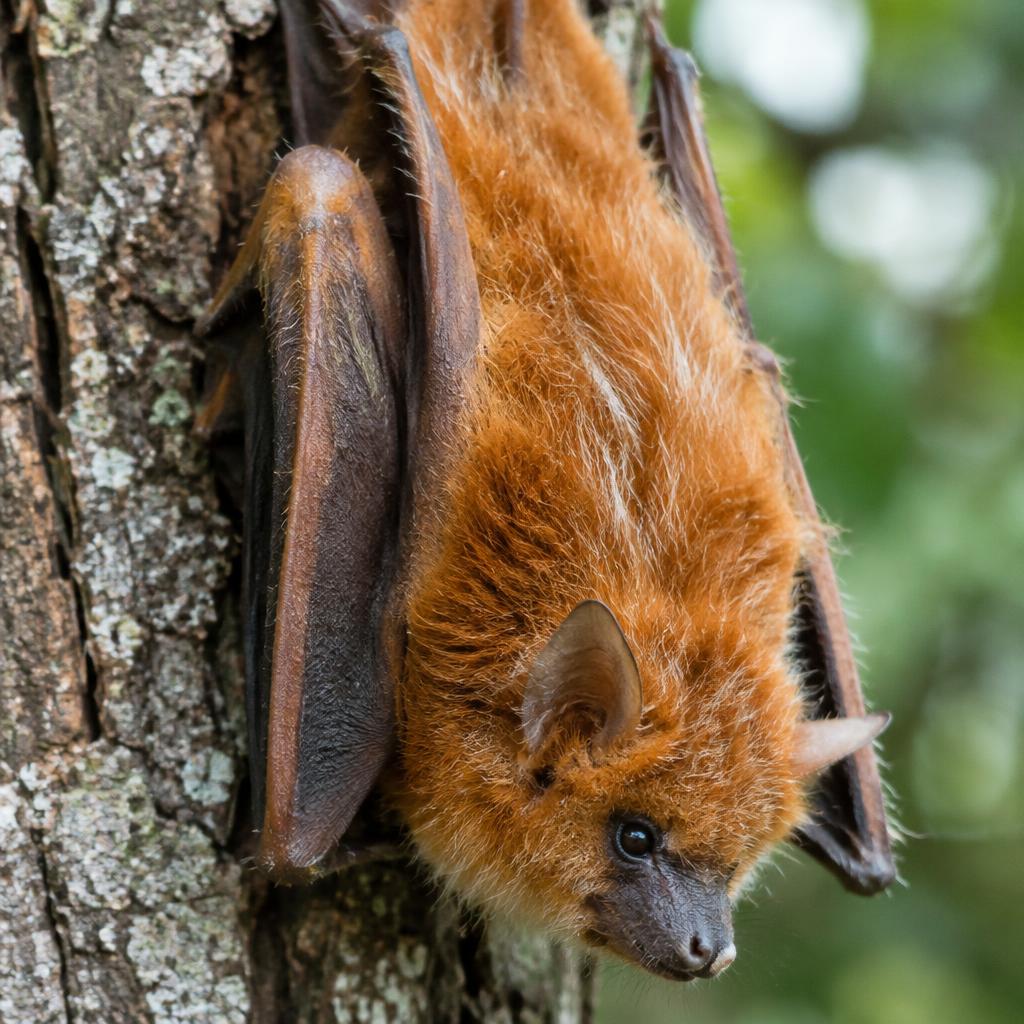
Bat
Eastern Red Bat
Lasiurus borealis
Biology
Lasiurus borealis is a medium-sized migratory tree bat with a 28–36 cm wingspan. Males are bright rusty-orange; females are duller with white-tipped fur. They give birth to 1–4 pups in summer, hanging in foliage where the leaves resemble their fur.
Behaviour
Eastern red bats are solitary, nocturnal hunters that prefer forest edges, parks, and suburban corridors. They feed on moths, flies, and beetles and are often seen foraging around streetlights. They roost in tree canopies and are not cave-dependent.
Habits
Most human encounters are single bats resting on tree trunks, fences, or low branches during the day, sometimes mistaken for dead leaves. They may briefly enter garages or covered patios while chasing prey but do not form indoor colonies.
Control methods
- 1Leave roosting bats in trees undisturbed when possible
- 2Provide an exit route at dusk for accidental indoor visitors
- 3Seal gaps around garage doors and soffits
- 4Reduce outdoor insect-attracting lighting
- 5Do not handle; contact wildlife rehabilitator if grounded
- 6Use humane one-way exclusion only after confirming no pups are present
Tailored to Eastern Red Bat
IPM Procedure Checklist
Inspection
- Inspect at dusk to locate active entry/exit points
- Check attics, soffits and chimneys for guano
- Identify maternity colonies before any action
Identification
- Confirm Eastern Red Bat (Lasiurus borealis) — not a look-alike
- Note life stage and risk level: Low
- Capture clear photos and samples for the record
Action Thresholds
- Tolerate low-level activity outside sensitive zones
- Act if activity moves indoors or near food
- Review threshold seasonally with the client
Prevention
- Seal gaps ≥6 mm with caulk, mesh and flashing
- Cap chimneys and screen attic vents
- Provide alternative bat houses on the property
Control Methods
- Leave roosting bats in trees undisturbed when possible
- Provide an exit route at dusk for accidental indoor visitors
- Seal gaps around garage doors and soffits
- Reduce outdoor insect-attracting lighting
Monitoring & Evaluation
- Service monitors on schedule and trend captures
- Re-inspect for Eastern Red Bat activity at follow-up
- Adjust tactics based on data; report findings to client