Insect
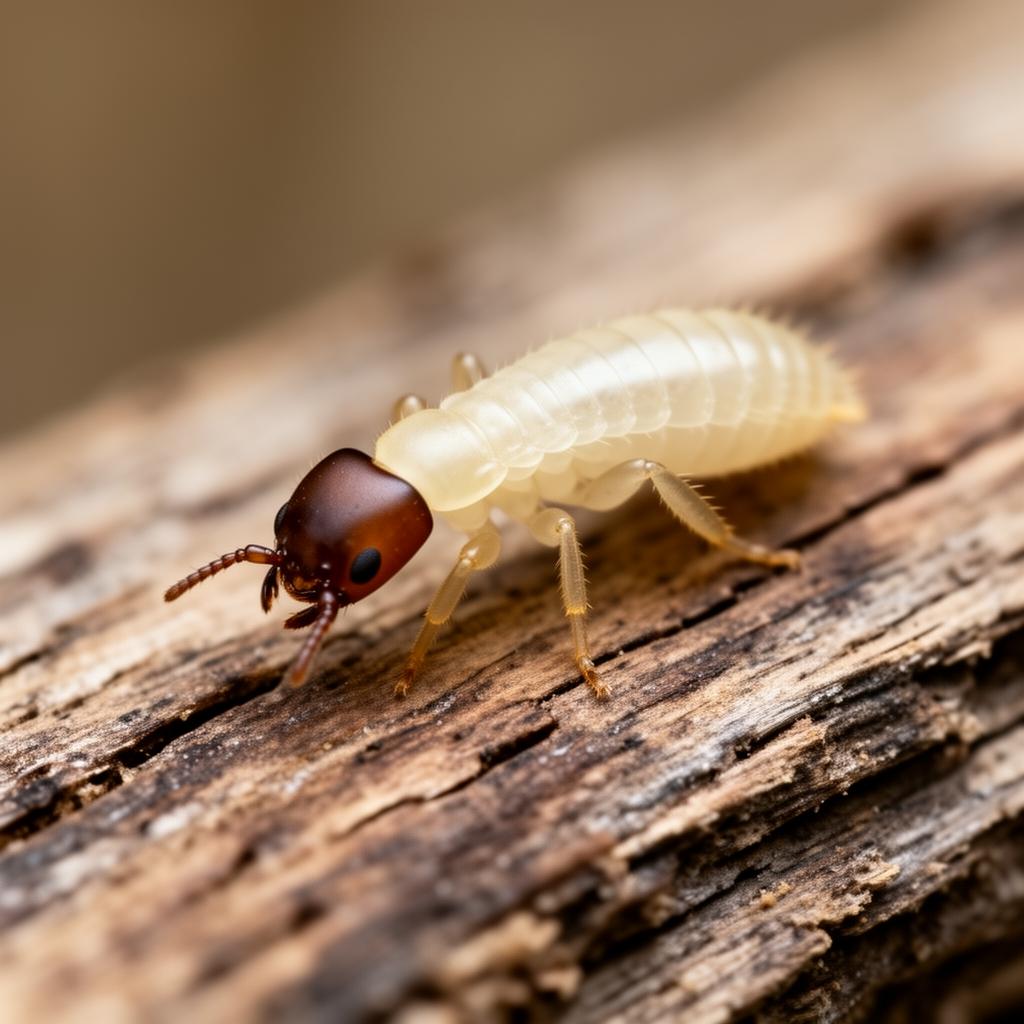
Drywood Termite
Incisitermes minor
Biology
Drywood termites (Incisitermes minor), members of the order Blattodea, infraorder Isoptera, are a 'lower' termite species, meaning they retain flagellated protozoa in their hindgut for cellulose digestion. Alates (winged reproductives) measure 10-12 mm, including wings, with a dark brown to black body and translucent, smoky wings; soldiers are 8-10 mm with large, toothed mandibles and a reddish-brown, cylindrical head. Colony development is slow, taking 5-7 years to reach a mature size of 2,000-3,000 individuals, but they can live for over 15 years. Optimal environmental conditions for Incisitermes minor are typically 25-35°C (77-95°F) with low relative humidity, as they are entirely wood-dwelling and intolerant of high moisture. Eggs hatch in 30-90 days, and nymphs undergo 6-10 instars over several months to a year before maturing into workers, soldiers, or reproductives.
Behaviour
Incisitermes minor exhibits a pseudo-social structure, lacking a true worker caste; all tasks are performed by nymphs, which remain totipotent. Communication primarily occurs through chemical cues, including trail and aggregation pheromones, though they do not forage in soil or construct mud tubes. During dispersal flights, typically occurring on warm, sunny days following a temperature increase, alates are poor fliers and tend to be carried by wind, resulting in localized infestations. Their feeding ecology exclusively involves consuming cellulose from dry timber, creating irregular galleries across the wood grain, which can compromise structural integrity over extended periods. When disturbed, soldiers will use their powerful mandibles defensively, though they pose no direct threat to humans; the primary structural impact stems from the insidious damage to wooden components within structures.
Habits
Drywood termites prefer to harbor in sound, solid wood, including structural timbers, furniture, and dead tree limbs, and are entirely alates-dispersed, meaning they do not re-infest from soil. Foraging patterns are contained entirely within the infested wood, with nymphs excavating galleries that often traverse the wood grain, creating distinct 'kick-out' holes approximately 1 mm in diameter for frass expulsion. Seasonal activity for swarming typically peaks during late summer and fall in their range, generally ceasing in colder months, indicating new colony establishment rather than internal wood foraging. Conducive conditions include exposed, untreated wood, especially in attics, eaves, and subfloors, and areas with minimal ventilation. A pest management professional should look for accumulations of distinct, hexagonal, hard fecal pellets (frass) near or below kick-out holes, blistering or hollow sounds from infested wood, and discarded alate wings on windowsills or spiderwebs, which signify current or past swarming events.
Control methods
- 1Locate kick-out holes and frass piles for inspection
- 2Spot-treat galleries with borate or foam termiticide
- 3Whole-structure fumigation for widespread colonies
- 4Replace heavily damaged structural members
- 5Heat or microwave treatment for localized galleries
- 6Borate-treat exposed wood during construction
Tailored to Drywood Termite
IPM Procedure Checklist
Inspection
- Inspect harborage near food, water and warmth
- Check cracks, voids and appliance interiors
- Place sticky monitors at suspected hot-spots
Identification
- Confirm Drywood Termite (Incisitermes minor) — not a look-alike
- Note life stage and risk level: Severe
- Capture clear photos and samples for the record
Action Thresholds
- Zero-tolerance: act on first confirmed sighting
- Notify client and document the trigger event
- Prioritize health and regulatory risk in the plan
Prevention
- Seal cracks, plumbing penetrations and wall voids
- Eliminate moisture sources and standing water
- Improve sanitation: sealed food storage, grease removal
Control Methods
- Locate kick-out holes and frass piles for inspection
- Spot-treat galleries with borate or foam termiticide
- Whole-structure fumigation for widespread colonies
- Replace heavily damaged structural members
Monitoring & Evaluation
- Service monitors on schedule and trend captures
- Re-inspect for Drywood Termite activity at follow-up
- Adjust tactics based on data; report findings to client