Stored Product Pest
Drugstore Beetle
Stegobium paniceum
Biology
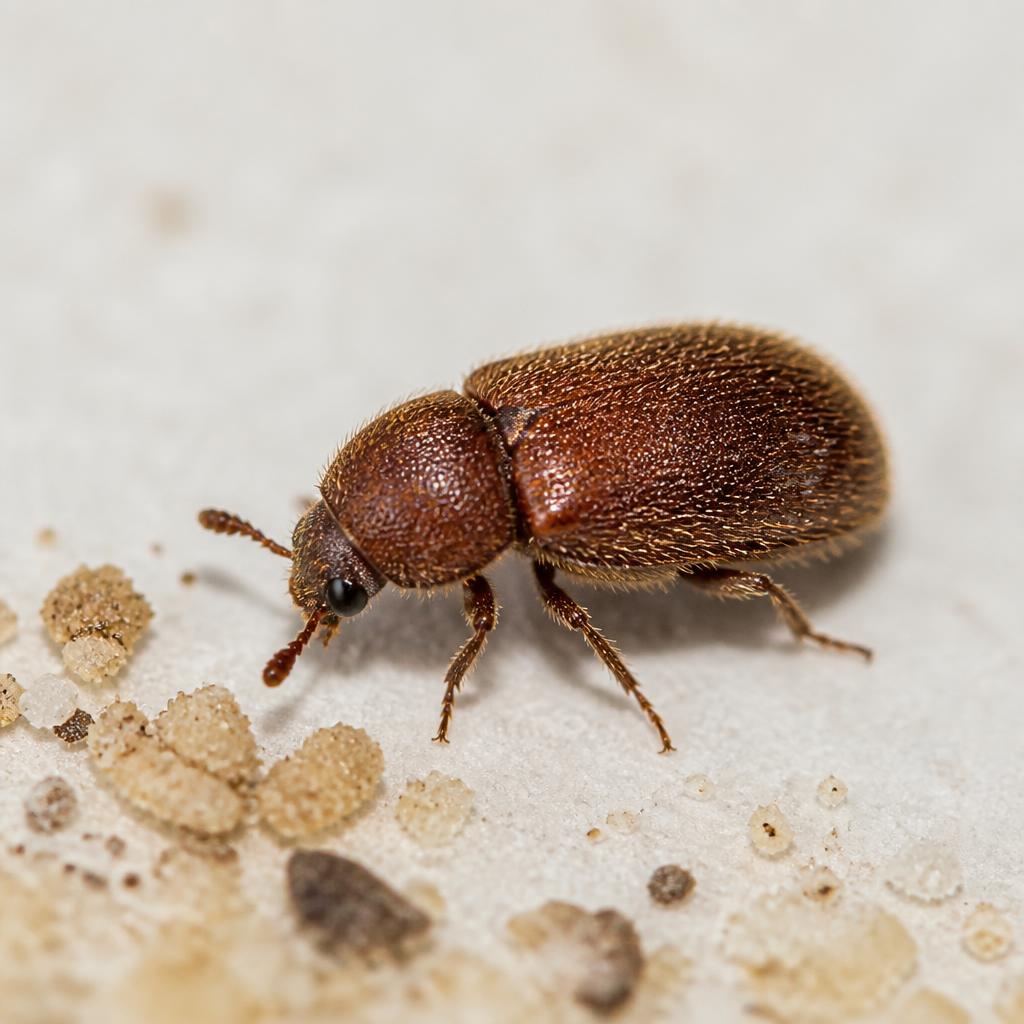
The drugstore beetle, Stegobium paniceum (Linnaeus), is a member of the family Ptinidae (formerly Anobiidae), order Coleoptera. Adults are typically 2.25-3.5 mm long, unicolorous reddish-brown, possessing a distinctly humped prothorax, deeply punctate striae on the elytra, and conspicuous clubbed antennae. The life cycle, from egg to adult, averages 40-50 days under optimal conditions (30-32°C, 60-90% RH), but can extend to 7 months or more in cooler environments. Females lay 20-100 eggs singly in suitable food sources, with larval development progressing through 3-5 instars before pupation within a silken cocoon incorporating food particles. Larvae are C-shaped, cream-colored, and densely covered with fine hairs, reaching up to 4 mm in length.
Behaviour
Stegobium paniceum adults are primarily crepuscular and nocturnal, showing positive phototaxis, often congregating around windows or light sources. Dispersal occurs through both flight and passive transport, with strong flight capabilities enabling infestation spread throughout structures or into new facilities over considerable distances. Communication relies on pheromone signaling, with females producing a sex pheromone to attract males. Larvae are internal feeders, creating galleries and tunnels within their food substrate. Unlike many stored product pests, S. paniceum possesses symbiotic yeasts that produce B vitamins, allowing it to thrive on nutritionally deficient materials; this broad dietary niche contributes to its pest status across an exceptionally wide range of commodities, from pharmaceuticals to dried plant materials.
Habits
Drugstore beetles exhibit a preference for harborage in dark, undisturbed areas within food storage facilities, pantries, warehouses, and retail establishments. Their foraging range is determined by commodity availability and environmental conditions, with adults actively seeking new food sources via flight or crawling. Infestations commonly originate from contaminated incoming goods. Technicians inspecting for S. paniceum should look for adult beetles, especially near light sources, and signs of damage in susceptible products, including small round exit holes (approximately 1-2 mm in diameter) and larval tunneling. Conducive conditions include poor sanitation, spillage, prolonged storage of susceptible materials, and elevated temperatures and humidity, which accelerate development and population growth.
Control methods
- 1Pheromone monitors in pantries
- 2Discard infested product and clean shelves
- 3Store dry goods in airtight containers
- 4Freeze new product 4 days at -18°C if suspect
- 5Vacuum shelf cracks and seams
- 6Targeted residual in voids around pantry
Tailored to Drugstore Beetle
IPM Procedure Checklist
Inspection
- Inspect grain, spices, pet food and dry goods for larvae and webbing
- Deploy pheromone monitors near storage and shelving
- Check spillage in seams, cracks and shelf liners
Identification
- Confirm Drugstore Beetle (Stegobium paniceum) — not a look-alike
- Note life stage and risk level: Moderate
- Capture clear photos and samples for the record
Action Thresholds
- Trigger action when monitor counts trend up
- Re-evaluate weekly during active season
- Document trigger criteria in the IPM plan
Prevention
- Rotate stock FIFO; reject damaged packaging at receiving
- Store products in airtight containers
- Maintain low humidity and clean storage surfaces
Control Methods
- Pheromone monitors in pantries
- Discard infested product and clean shelves
- Store dry goods in airtight containers
- Freeze new product 4 days at -18°C if suspect
Monitoring & Evaluation
- Service monitors on schedule and trend captures
- Re-inspect for Drugstore Beetle activity at follow-up
- Adjust tactics based on data; report findings to client