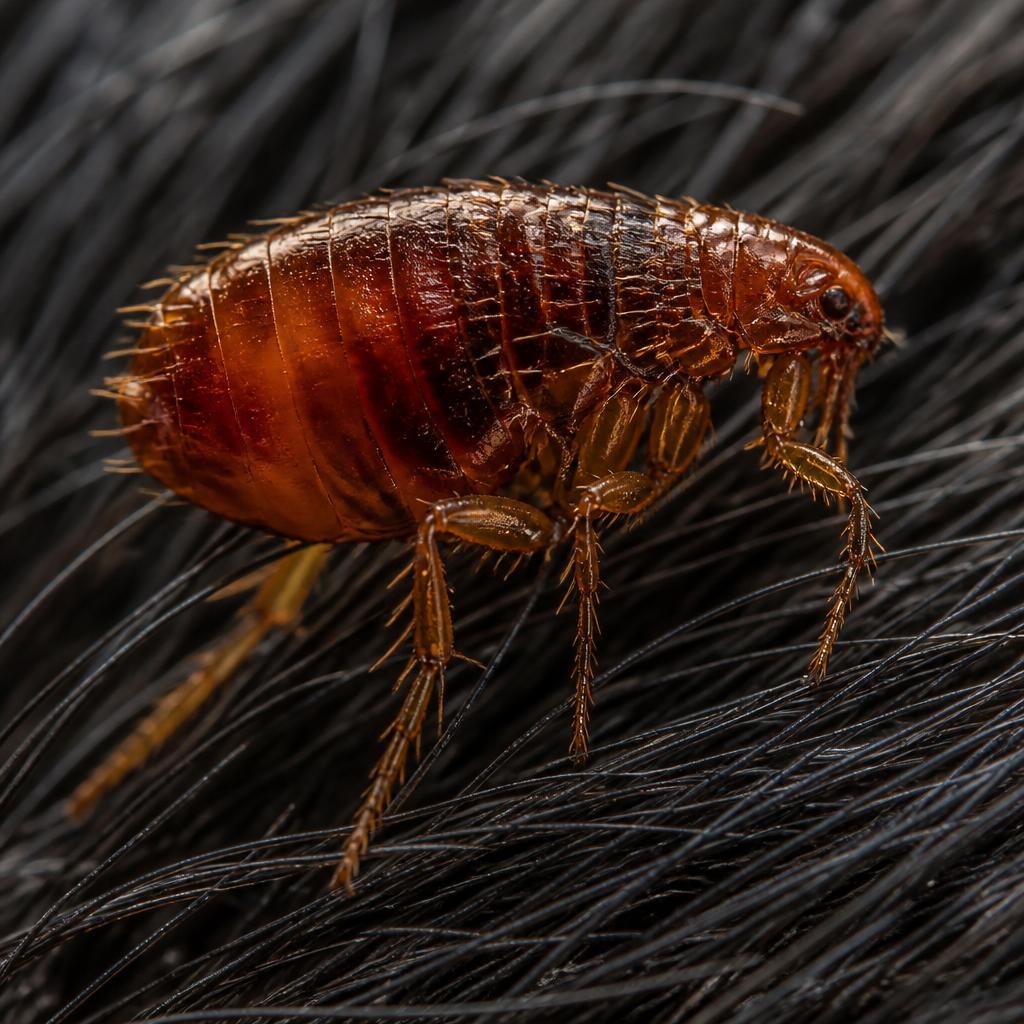
Blood Feeder
Dog Flea
Ctenocephalides canis
Biology
*Ctenocephalides canis* closely resembles the cat flea and is routinely misidentified as it; in North America it is genuinely uncommon, and confirmed records usually come from dogs with outdoor or kennel exposure. Adults are 1–4 mm, reddish-brown and laterally compressed, separated from the cat flea by a more rounded (rather than sloped) head, a shorter first genal spine, and eight rather than seven notches on the hind tibia — differences that require magnification. The life cycle mirrors the cat flea: egg, three larval instars, cocooned pupa, adult, completed in three to four weeks under warm humid conditions.
Behaviour
Adults feed frequently on canid hosts and remain on the animal, while eggs drop into kennel bedding, run surfaces, and soil. Larvae feed on adult flea faeces and organic debris in shaded, humid substrate. The species is a competent intermediate host of *Dipylidium caninum* and can transmit *Dipetalonema reconditum*; heavy infestations on puppies cause measurable anaemia. Bites on people are the same intensely itchy ankle-level papules produced by the cat flea, and flea allergy dermatitis in sensitised dogs is the more serious clinical outcome.
Habits
Concentrations occur in dog runs, kennels, doghouses, garages, and shaded soil where dogs lie, and in bedding that is never laundered. Conducive conditions are outdoor kenneling, packed dirt runs, unlaundered bedding, contact with foxes and other wild canids, and no veterinary preventative. Inspection is the same as for the cat flea — flea comb and flea-dirt smear test — with slide-mounted specimens or a hand lens needed to confirm the species rather than assume it.
Control methods
- 1Confirm species under magnification before reporting dog flea
- 2Veterinary on-animal preventative for every dog on the property
- 3Strip, hot-wash or discard kennel and doghouse bedding
- 4Treat runs, kennel floors and shaded soil with an IGR plus adulticide
- 5Rake and remove organic debris where larvae develop
- 6Deworm pets for tapeworm alongside flea control
- 7Re-treat at 10–14 days for emerging adults
Tailored to Dog Flea
IPM Procedure Checklist
Inspection
- Survey interior and exterior for evidence and conducive conditions
- Document findings with photos and a site map
- Place monitors to confirm activity
Identification
- Confirm Dog Flea (Ctenocephalides canis) — not a look-alike
- Note life stage and risk level: Moderate
- Capture clear photos and samples for the record
Action Thresholds
- Trigger action when monitor counts trend up
- Re-evaluate weekly during active season
- Document trigger criteria in the IPM plan
Prevention
- Exclude entry points and harborage
- Improve sanitation and moisture control
- Modify habitat around the structure
Control Methods
- Confirm species under magnification before reporting dog flea
- Veterinary on-animal preventative for every dog on the property
- Strip, hot-wash or discard kennel and doghouse bedding
- Treat runs, kennel floors and shaded soil with an IGR plus adulticide
Monitoring & Evaluation
- Service monitors on schedule and trend captures
- Re-inspect for Dog Flea activity at follow-up
- Adjust tactics based on data; report findings to client