All pests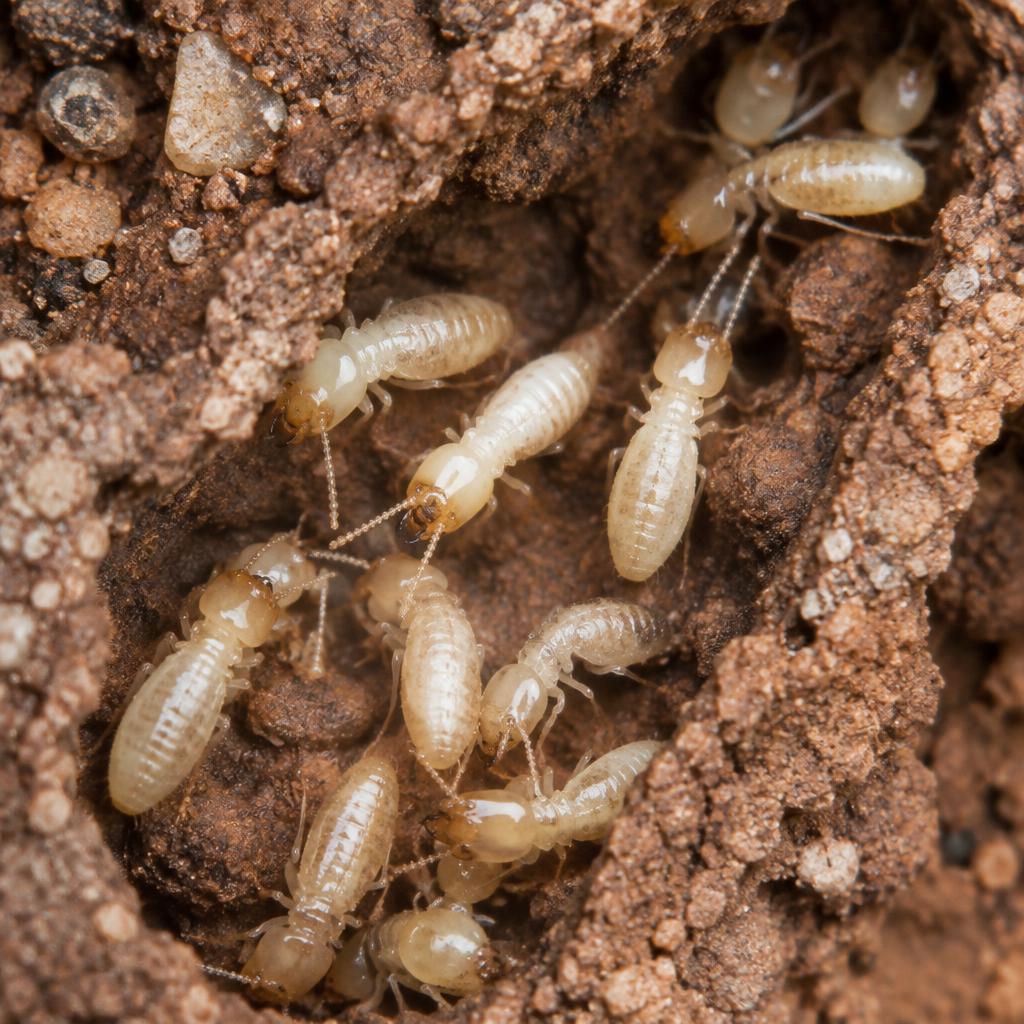 View full procedure
Termite
Desert Subterranean Termite
Heterotermes aureus
High Risk
Biology
Heterotermes aureus is a small subterranean termite with pale cream workers 4–6 mm long and soldiers bearing long narrow rectangular heads. Colonies are diffuse and forage widely through arid soils.
Behaviour
Workers build thin mud tubes on foundations, stucco, and desert landscaping, and forage year-round in warm desert climates. Alates swarm at dusk after summer monsoon rains.
Habits
Damage shows as blistered paint, hollow-sounding wood, mud-packed galleries, and drop tubes hanging from ceilings or joists. It readily attacks fence posts, door frames, and structural wood in contact with soil.
Control methods
- 1Arrange a professional inspection and soil termiticide treatment
- 2Break wood-to-soil contact at posts, fences, and door frames
- 3Maintain a clear inspection gap at the foundation
- 4Fix plumbing leaks and correct drainage against the slab
- 5Install and monitor in-ground termite baiting stations
- 6Remove buried form boards, stumps, and scrap lumber
Tailored to Desert Subterranean Termite
IPM Procedure Checklist
Step 1
Inspection
- Survey interior and exterior for evidence and conducive conditions
- Document findings with photos and a site map
- Place monitors to confirm activity
Step 2
Identification
- Confirm Desert Subterranean Termite (Heterotermes aureus) — not a look-alike
- Note life stage and risk level: High
- Capture clear photos and samples for the record
Step 3
Action Thresholds
- Zero-tolerance: act on first confirmed sighting
- Notify client and document the trigger event
- Prioritize health and regulatory risk in the plan
Step 4
Prevention
- Exclude entry points and harborage
- Improve sanitation and moisture control
- Modify habitat around the structure
Step 5
Control Methods
- Arrange a professional inspection and soil termiticide treatment
- Break wood-to-soil contact at posts, fences, and door frames
- Maintain a clear inspection gap at the foundation
- Fix plumbing leaks and correct drainage against the slab
Step 6
Monitoring & Evaluation
- Service monitors on schedule and trend captures
- Re-inspect for Desert Subterranean Termite activity at follow-up
- Adjust tactics based on data; report findings to client