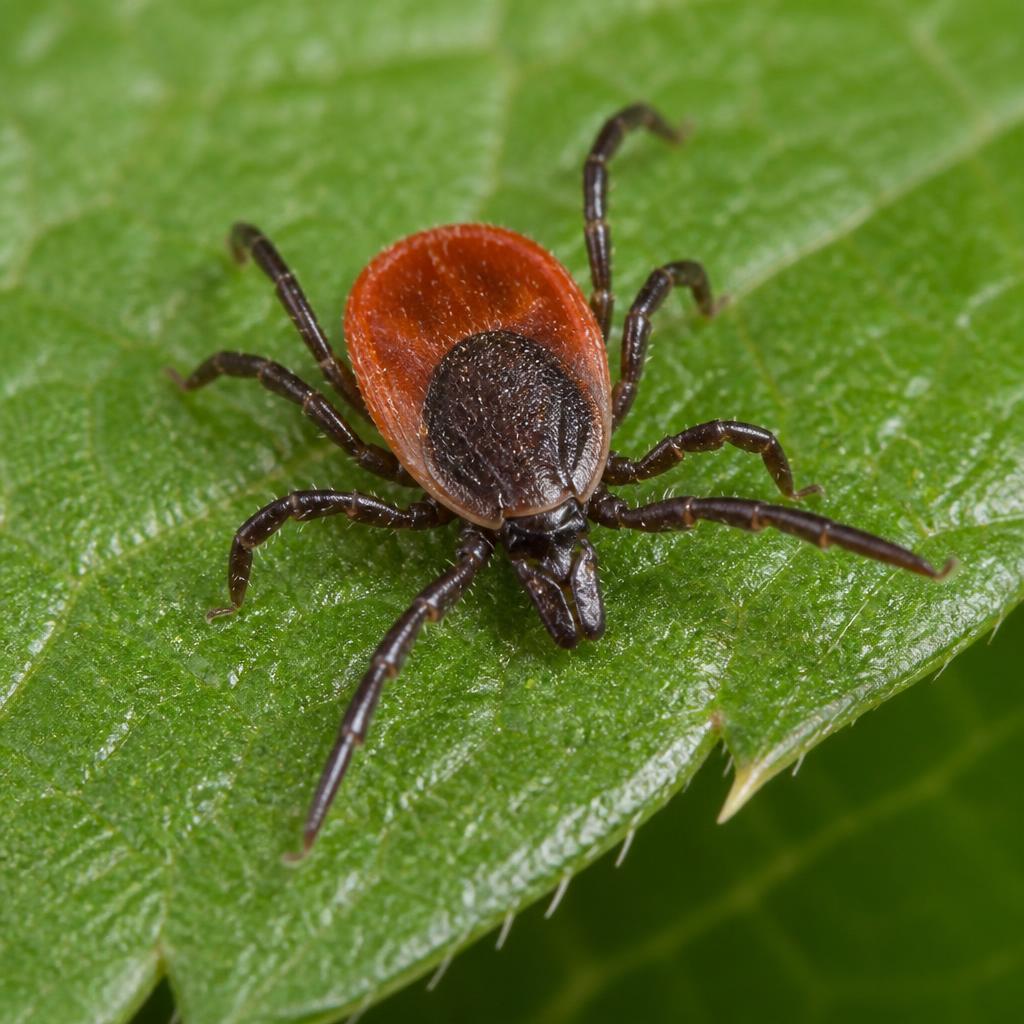
Blood Feeder
Deer Tick (Black-legged Tick)
Ixodes scapularis
Biology
Ixodes scapularis, commonly known as the deer tick or black-legged tick, is an arachnid belonging to the family Ixodidae, or hard ticks. Adults typically measure 2.5-3.5 mm unengorged, with females displaying a distinctive reddish-brown opisthosoma and a black scutum, while males are entirely black. Their two-year, three-host life cycle involves distinct larval, nymphal, and adult stages, each requiring a blood meal from a different host. Larvae hatch in late summer, feed once, overwinter, molt to nymphs the following spring, feed, and then molt to adults in the fall, which actively seek hosts through the next spring. Optimal development and survival occur in humid environments with temperatures between 5-30°C, and they are particularly susceptible to desiccation in low-humidity conditions.
Behaviour
This tick exhibits a characteristic questing behavior, climbing onto vegetation and extending its forelegs to ambush passing hosts — a strategy known as 'ambush predation.' While not truly social, their life cycle can lead to localized aggregations, especially during questing periods in preferred habitats. Dispersal primarily occurs via host movement, with ticks detaching once engorged, dropping off to molt or lay eggs. Feeding ecology is crucial to their public health impact; larvae and nymphs often feed on small mammals like white-footed mice (Peromyscus leucopus), acquiring pathogens such as Borrelia burgdorferi, while adults primarily feed on white-tailed deer (Odocoileus virginianus), which serve as reproductive hosts but are not competent reservoirs for Lyme spirochetes. This species is the primary vector for Lyme disease, anaplasmosis, and babesiosis in North America, with disease transmission typically occurring after 24-48 hours of attachment, allowing pathogen transfer from tick salivary glands.
Habits
Deer ticks prefer harborage in environments offering high humidity and ample leaf litter, typically found in wooded areas, forest edges, and transitional zones between forests and open fields. Their foraging patterns are dictated by host availability and environmental conditions, questing most actively during daylight hours when temperatures and humidity are favorable, often climbing 18-24 inches on blades of grass, shrubs, and low-lying vegetation. Seasonal movements involve a surge in nymphal activity from May to July and adult activity peaks in fall (October-November) and spring (March-May). Conducive conditions for heavy infestation include undisturbed natural areas adjacent to human habitation, high deer populations, and accumulated leaf litter. Signs of infestation for pest management professionals include observing questing ticks on vegetation, increased reports of tick bites, and confirmation of tick presence on domestic animals or wildlife within the service area.
Control methods
- 1Wear permethrin-treated clothing in tick habitat
- 2Tuck pants into socks; perform tick checks
- 3Maintain 3-ft mulch barrier between lawn and woods
- 4Treat yard perimeter with acaricide in spring
- 5Remove leaf litter and rodent harborage
- 6Use tick prevention on pets year-round
Tailored to Deer Tick (Black-legged Tick)
IPM Procedure Checklist
Inspection
- Survey interior and exterior for evidence and conducive conditions
- Document findings with photos and a site map
- Place monitors to confirm activity
Identification
- Confirm Deer Tick (Black-legged Tick) (Ixodes scapularis) — not a look-alike
- Note life stage and risk level: Severe
- Capture clear photos and samples for the record
Action Thresholds
- Zero-tolerance: act on first confirmed sighting
- Notify client and document the trigger event
- Prioritize health and regulatory risk in the plan
Prevention
- Exclude entry points and harborage
- Improve sanitation and moisture control
- Modify habitat around the structure
Control Methods
- Wear permethrin-treated clothing in tick habitat
- Tuck pants into socks; perform tick checks
- Maintain 3-ft mulch barrier between lawn and woods
- Treat yard perimeter with acaricide in spring
Monitoring & Evaluation
- Service monitors on schedule and trend captures
- Re-inspect for Deer Tick (Black-legged Tick) activity at follow-up
- Adjust tactics based on data; report findings to client