Rodent
Deer Mouse
Peromyscus maniculatus
Biology
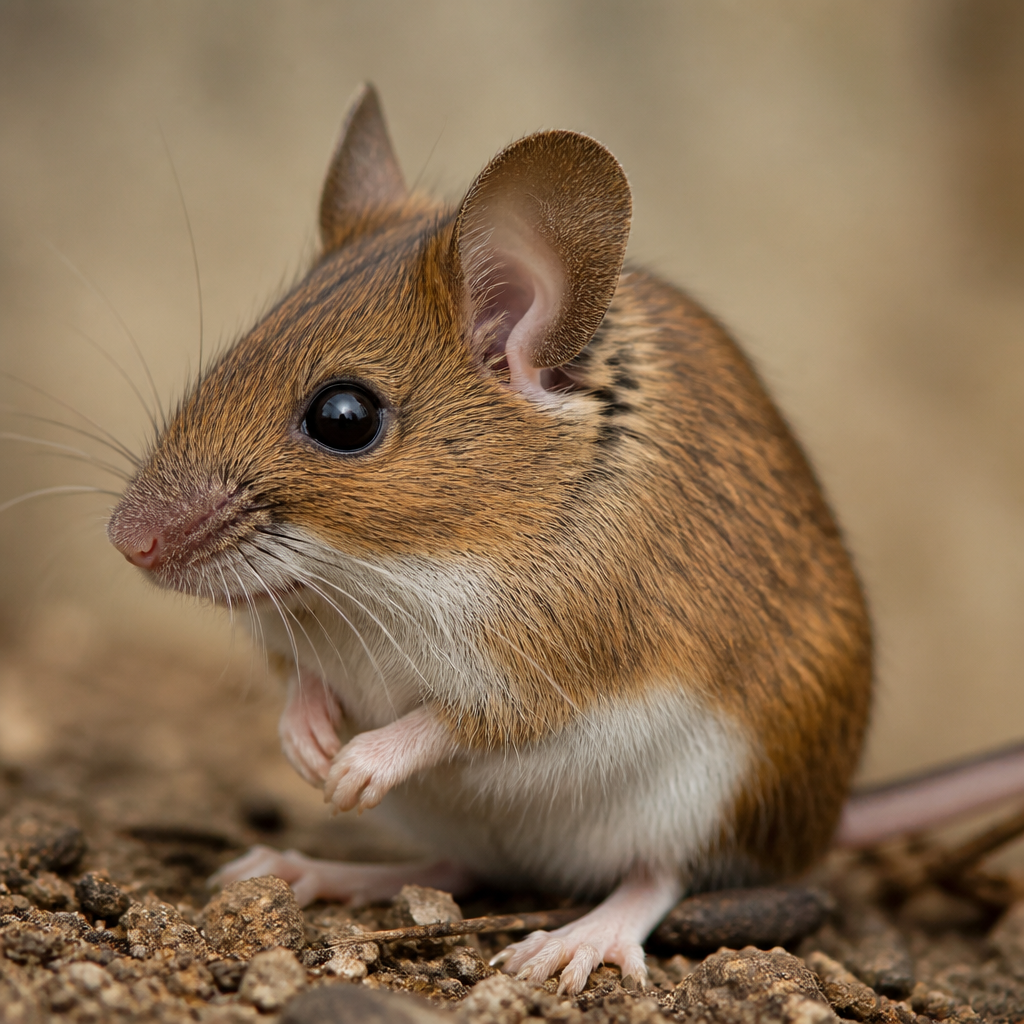
Peromyscus maniculatus, the deer mouse, is a small rodent belonging to the family Cricetidae. Adults typically measure 14–22 cm in total length, with a tail comprising 40–50% of this, and weigh 15–32 grams. They are characterized by distinctly bicolored fur: reddish-brown to grayish-brown dorsally and pure white ventrally, extending to their feet and often to the underside of their tail. Their reproductive capacity is significant, with females capable of producing 3–4 litters annually, each containing 3–7 altricial young, after a gestation period of 22–27 days. Sexual maturity is reached rapidly, often within 7–8 weeks, and their maximum lifespan in the wild is typically 1 year due to predation, though laboratory conditions allow for up to 8 years.
Behaviour
Primarily nocturnal, deer mice exhibit crepuscular activity with foraging peaks at dusk and dawn, though they can be active throughout the night. They are highly agile climbers, making extensive use of vertical structures and vegetation for foraging and evasion. While generally solitary, communal nesting can occur during colder months for thermoregulation. Communication primarily involves olfactory cues, including urine marking and pheromones, critical for territoriality and reproduction. Their diet is omnivorous, consisting of seeds, nuts, fruits, insects, and fungi, which they often cache. Of major concern, deer mice are the primary reservoir for Sin Nombre hantavirus (SNV) – a zoonotic pathogen shed in their urine, feces, and saliva. The virus becomes aerosolized when contaminated materials are disturbed, posing a significant public health risk, particularly for individuals in close proximity to infested areas.
Habits
Deer mice exhibit a broad range of harborage preferences, including hollow logs, rock crevices, abandoned burrows, tree cavities, and, frequently, human structures such as cabins, sheds, barns, and attics. Their foraging range is typically a few hundred feet from the nest, influenced by food availability and predator pressure. Seasonal movements often involve seeking indoor shelter during colder months, where they establish elaborate nests from fibrous materials. Conducive conditions for infestation include accessible entry points (e.g., gaps under doors, utility penetrations >0.25 inches), abundant food sources, and undisturbed areas for harborage. Signs of infestation include characteristic small, dark, rod-shaped droppings (often concentrated where food is hoarded), gnaw marks on structural elements or food packaging, and the presence of cached food items like seeds or nuts in secluded areas.
Control methods
- 1Wet droppings with bleach solution (1:10) before cleanup; wear N95
- 2Snap traps along walls every 2–3 m, baited with peanut butter
- 3Exclusion: seal gaps >6 mm with steel wool + sealant
- 4Tamper-resistant exterior bait stations on rodent runs
- 5Air out closed structures 30+ minutes before entering
- 6Remove harborage: woodpiles, debris, tall grass at perimeter
Tailored to Deer Mouse
IPM Procedure Checklist
Inspection
- Locate runways, droppings, rub marks and gnaw damage
- Identify entry points (gaps ≥6 mm) and harborage
- Place tracking patches or non-toxic monitors
Identification
- Confirm Deer Mouse (Peromyscus maniculatus) — not a look-alike
- Note life stage and risk level: Severe
- Capture clear photos and samples for the record
Action Thresholds
- Zero-tolerance: act on first confirmed sighting
- Notify client and document the trigger event
- Prioritize health and regulatory risk in the plan
Prevention
- Exclude with steel wool, hardware cloth and door sweeps
- Trim vegetation 0.5 m from structure; clear debris
- Secure trash, pet food and stored grain
Control Methods
- Wet droppings with bleach solution (1:10) before cleanup; wear N95
- Snap traps along walls every 2–3 m, baited with peanut butter
- Exclusion: seal gaps >6 mm with steel wool + sealant
- Tamper-resistant exterior bait stations on rodent runs
Monitoring & Evaluation
- Service monitors on schedule and trend captures
- Re-inspect for Deer Mouse activity at follow-up
- Adjust tactics based on data; report findings to client