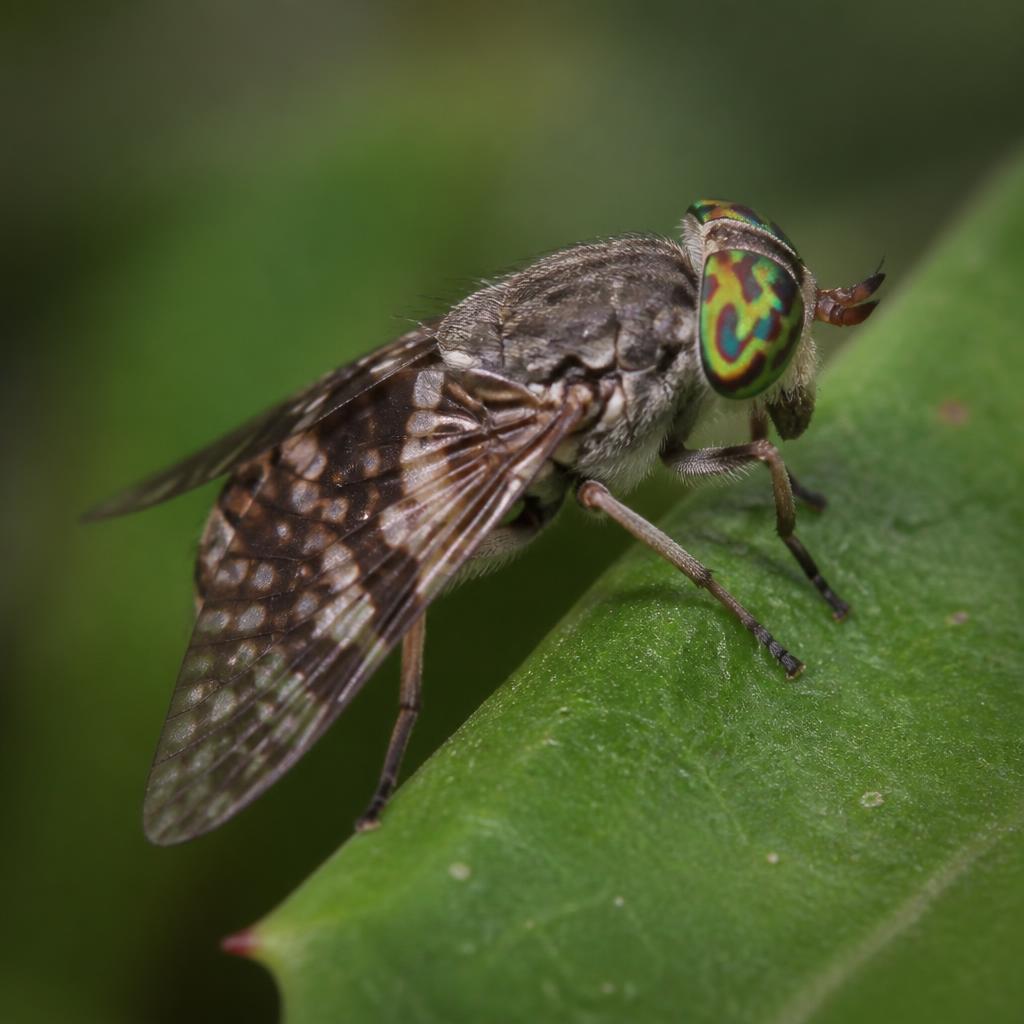
Blood Feeder
Deer Fly
Chrysops
Biology
Chrysops, commonly known as deer flies, are robust, medium-sized flies belonging to the family Tabanidae. They range from 6-12 mm in length, characterized by their iridescent green or gold eyes (often with contrasting bands), dark bands on their wings, and a yellow or black body. Only the female deer fly bites, requiring a blood meal for egg development. Males feed on nectar. The lifecycle initiates with eggs laid in masses on vegetation overhanging water. Larvae are aquatic or semi-aquatic, developing in moist soil or mud along the edges of ponds, streams, or swamps. Larval development is lengthy, often taking one to two years and progressing through 6-11 instars, before pupation in drier soil for 1-3 weeks.
Behaviour
Deer flies are diurnal, with peak biting activity occurring on warm, sunny days, particularly from late morning to early afternoon. They are persistent and aggressive biters, often targeting the head and shoulders, and are attracted to large, dark, moving objects and carbon dioxide. Their flight is strong, direct, and often accompanied by an audible buzzing sound. Females actively pursue hosts, making them a significant nuisance in outdoor recreational areas. Foraging behavior is largely confined to areas near their aquatic breeding sites.
Habits
Deer fly harborage and activity are inextricably linked to aquatic or semi-aquatic environments. They are commonly found in woodlands, marshes, and around various water bodies. Larval development sites are moist soil or mud containing decaying vegetation. Adults rest on vegetation in sunny, sheltered areas near water, waiting for hosts. Conducive conditions include the presence of extensive wetlands, swamps, or slow-moving water bodies with emergent vegetation. Their seasonal activity is pronounced in summer months, coinciding with warmer temperatures.
Control methods
- 1Avoid outdoor activities during peak hours.
- 2Wear light-colored, protective clothing.
- 3Use insect repellents containing DEET.
- 4Install traps for adult flies.
- 5Remove overgrown vegetation near water.
- 6Drain standing water where possible.
Tailored to Deer Fly
IPM Procedure Checklist
Inspection
- Survey interior and exterior for evidence and conducive conditions
- Document findings with photos and a site map
- Place monitors to confirm activity
Identification
- Confirm Deer Fly (Chrysops) — not a look-alike
- Note life stage and risk level: Moderate
- Capture clear photos and samples for the record
Action Thresholds
- Trigger action when monitor counts trend up
- Re-evaluate weekly during active season
- Document trigger criteria in the IPM plan
Prevention
- Exclude entry points and harborage
- Improve sanitation and moisture control
- Modify habitat around the structure
Control Methods
- Avoid outdoor activities during peak hours.
- Wear light-colored, protective clothing.
- Use insect repellents containing DEET.
- Install traps for adult flies.
Monitoring & Evaluation
- Service monitors on schedule and trend captures
- Re-inspect for Deer Fly activity at follow-up
- Adjust tactics based on data; report findings to client