Fly
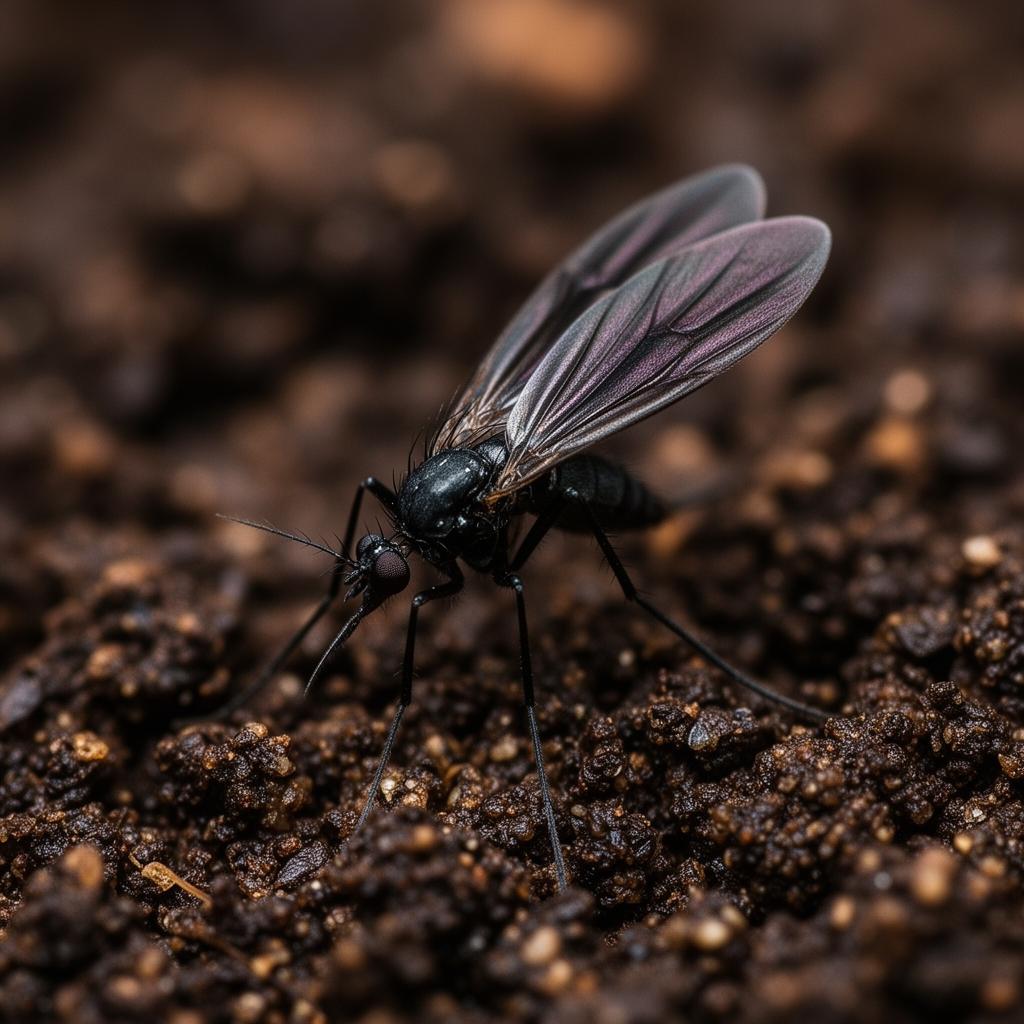
Dark-winged Fungus Gnat
Bradysia impatiens
Biology
Bradysia impatiens, a dark-winged fungus gnat, belongs to the family Sciaridae. Adults are small, delicate flies, typically 2-3 mm long, with slender bodies, long antennae, and dusky wings often with a characteristic 'Y-shaped' vein. The lifecycle from egg to adult usually takes 3-4 weeks at room temperature (20-24°C). Females lay tiny, whitish, oval eggs in moist soil, typically near decaying organic matter or plant roots. Larvae are translucent with a shiny black head capsule, developing through four instars over 10-14 days, feeding on fungi, decaying plant material, and sometimes tender plant roots. Pupation occurs in the soil for 3-7 days.
Behaviour
Adult fungus gnats are weak fliers and are typically observed hovering or walking on the surface of potting mix or plant foliage. Their flight pattern is often erratic and localized. While adults are primarily nuisance pests, the larval stage can cause damage to plant roots, especially in high populations or when conditions are overly moist. They are attracted to high humidity and the presence of fungi and decaying organic matter in soil. Foraging for oviposition sites is driven by these conditions, with females actively seeking moist, fungus-rich substrates.
Habits
Dark-winged fungus gnats are commonly harbored in indoor potted plants, greenhouses, and other environments with consistently moist soil and decaying organic matter. Larval development occurs exclusively in the soil, requiring high moisture levels and a food source of fungi or decomposing plant roots. Adults are frequently seen near the soil surface or flying around plants. Conducive conditions include overwatering of plants, poor drainage, excessive organic matter in potting mixes, and high humidity, which promotes fungal growth. Infestations are often a symptom of underlying moisture issues.
Control methods
- 1Allow soil to dry between waterings.
- 2Improve soil drainage.
- 3Remove decaying plant material.
- 4Use sticky traps for adults.
- 5Apply beneficial nematodes to soil.
- 6Repot plants with fresh, sterile mix.
Tailored to Dark-winged Fungus Gnat
IPM Procedure Checklist
Inspection
- Locate breeding sites: drains, decaying matter, moist organics
- Use tape-over-drain tests and UV/light traps to confirm
- Map dumpster, grease and floor-drain hot-spots
Identification
- Confirm Dark-winged Fungus Gnat (Bradysia impatiens) — not a look-alike
- Note life stage and risk level: Low
- Capture clear photos and samples for the record
Action Thresholds
- Tolerate low-level activity outside sensitive zones
- Act if activity moves indoors or near food
- Review threshold seasonally with the client
Prevention
- Clean drains with enzymatic foam to remove biofilm
- Manage trash, recycling and grease daily
- Screen windows, doors and air curtains at entries
Control Methods
- Allow soil to dry between waterings.
- Improve soil drainage.
- Remove decaying plant material.
- Use sticky traps for adults.
Monitoring & Evaluation
- Service monitors on schedule and trend captures
- Re-inspect for Dark-winged Fungus Gnat activity at follow-up
- Adjust tactics based on data; report findings to client