All pests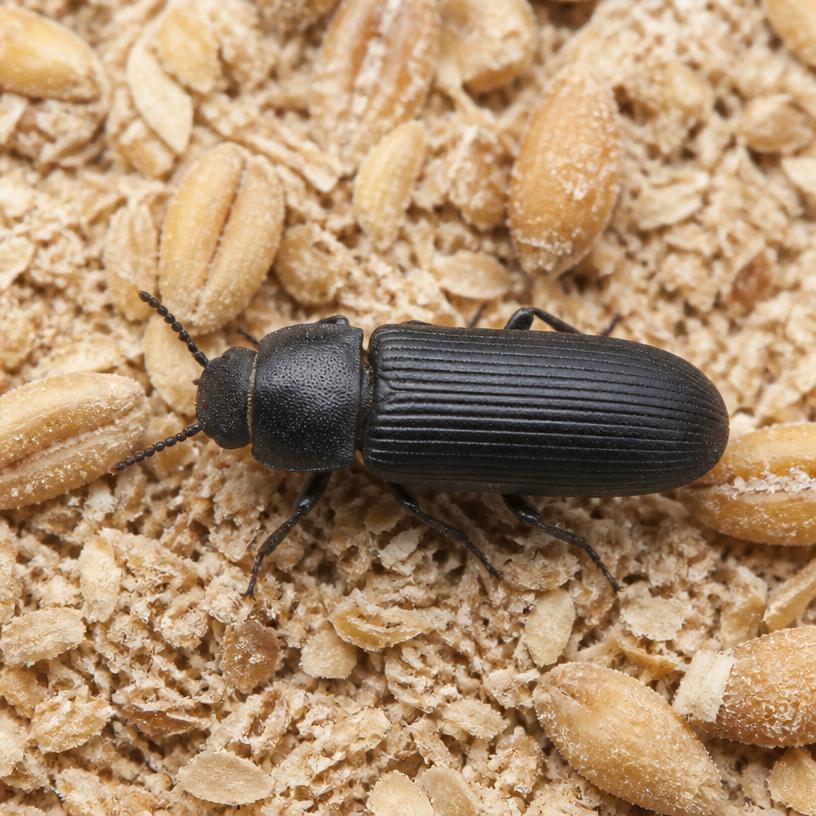 View full procedure
Stored Product Pest
Dark Mealworm
Tenebrio obscurus
Low Risk
Biology
A 13–17 mm dull black darkling beetle with finely grooved elytra, slightly smaller and duller than the yellow mealworm. Larvae are dark brown, hard-bodied and up to 30 mm long, and the life cycle usually takes about a year.
Behaviour
Adults and larvae scavenge damp, mouldy grain, milled products, feed and accumulated debris rather than sound dry grain. Adults are nocturnal, fly to lights and are often the first sign of an unnoticed damp residue somewhere in a building.
Habits
Found in poultry houses, feed mills, damp basements, granaries and animal facilities where spilled feed accumulates and becomes damp. Long-standing wet residues and poor floor drainage are the conducive conditions.
Control methods
- 1Remove accumulated damp feed, litter and spillage
- 2Improve drainage and dry out wet floor areas
- 3Clean under and behind feed bins and equipment
- 4Store feed in sealed containers off the floor
- 5Use light traps to monitor adult activity
- 6Ventilate to reduce humidity in feed rooms
- 7Apply labelled residuals to cracks after cleaning
Tailored to Dark Mealworm
IPM Procedure Checklist
Step 1
Inspection
- Inspect grain, spices, pet food and dry goods for larvae and webbing
- Deploy pheromone monitors near storage and shelving
- Check spillage in seams, cracks and shelf liners
Step 2
Identification
- Confirm Dark Mealworm (Tenebrio obscurus) — not a look-alike
- Note life stage and risk level: Low
- Capture clear photos and samples for the record
Step 3
Action Thresholds
- Tolerate low-level activity outside sensitive zones
- Act if activity moves indoors or near food
- Review threshold seasonally with the client
Step 4
Prevention
- Rotate stock FIFO; reject damaged packaging at receiving
- Store products in airtight containers
- Maintain low humidity and clean storage surfaces
Step 5
Control Methods
- Remove accumulated damp feed, litter and spillage
- Improve drainage and dry out wet floor areas
- Clean under and behind feed bins and equipment
- Store feed in sealed containers off the floor
Step 6
Monitoring & Evaluation
- Service monitors on schedule and trend captures
- Re-inspect for Dark Mealworm activity at follow-up
- Adjust tactics based on data; report findings to client