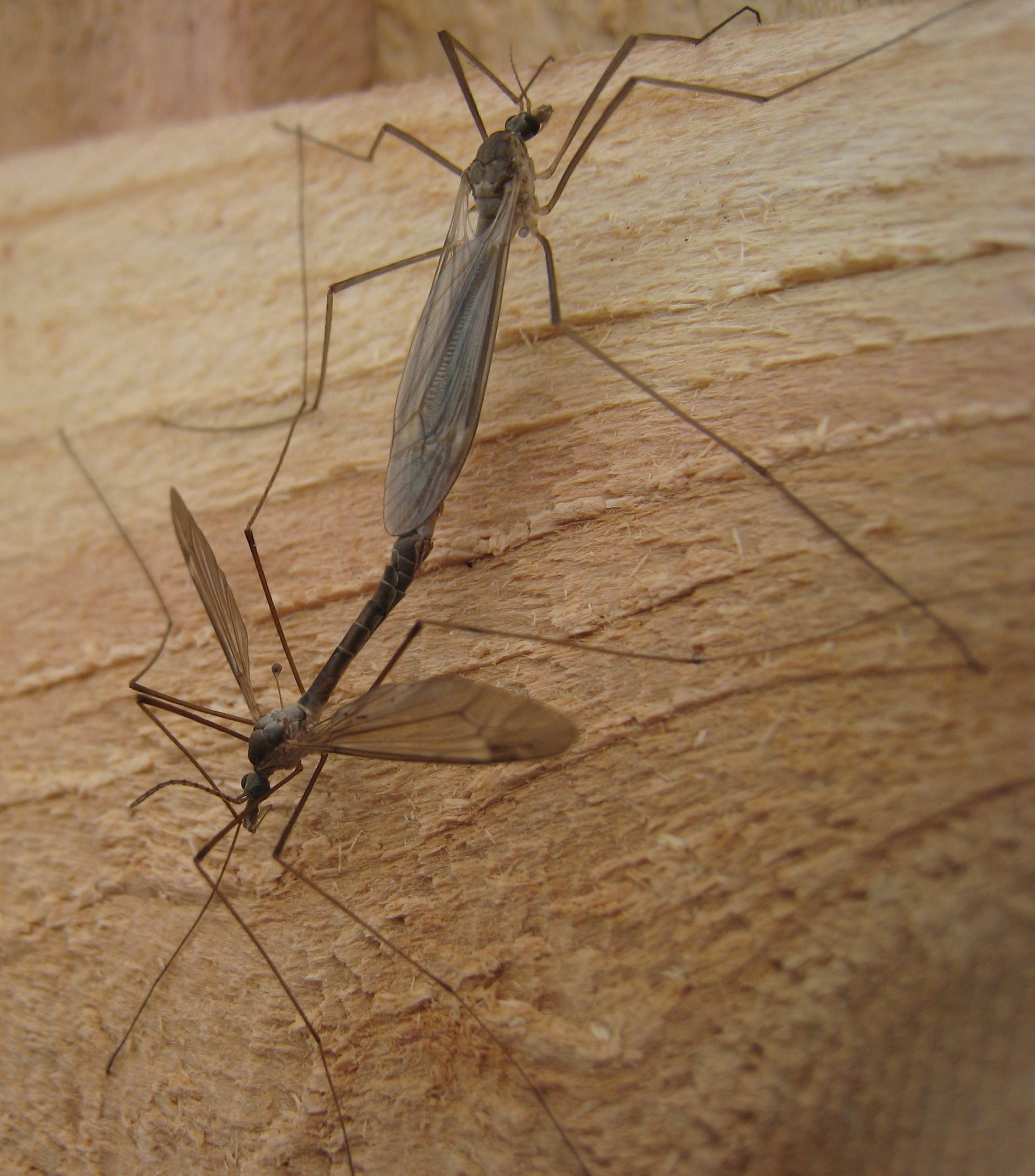
Fly
Crane Fly
Tipulidae
Biology
Crane flies, order Diptera, family Tipulidae, encompass over 15,000 species, ranging significantly in size; some temperate species feature impressive leg spans up to 10 cm, though most are 10-60 mm. The life cycle typically spans a year, with four distinct stages: egg, larva, pupa, and adult. Eggs hatch within 1-2 weeks, developing through four larval instars over several months, often overwintering as late-instar larvae. Pupation occurs in the soil, lasting 1-2 weeks, before adults emerge in spring or late summer. Adult longevity is extremely brief, usually 5-15 days, focused almost exclusively on reproduction, with many species not even feeding.
Behaviour
Though often mistaken for mosquitoes, adult crane flies are harmless, exhibiting nocturnal or crepuscular activity patterns. Their flight is often clumsy and meandering due to their large size and delicate build, making them prone to injury or entanglement. Larvae, known as 'leatherjackets,' are subterranean grazers, primarily feeding on decaying organic matter, plant roots, and sometimes even small invertebrates, exhibiting a generally solitary existence. Defensive mechanisms in adults include autotomy (self-amputation) of their long, fragile legs when grasped, allowing for escape. While adults are benign, heavy larval infestations can cause significant turf damage, impacting lawns, golf courses, and pastures by disrupting root systems.
Habits
Adult crane flies are drawn to artificial light sources at night, frequently congregating around windows, doors, and porch lights. Their natural harborage includes areas with abundant vegetation, especially near sources of moisture like ponds, streams, and damp woodlands, where females lay their eggs in the soil or aquatic environments. Larvae are typically found in moist soil and thatch layers, particularly where turf is stressed or overwatered, with feeding activity most pronounced during cooler, wetter periods of spring and autumn. Signs of infestation in turf include irregular brown patches, sparse growth, and an increase in predatory bird activity as they forage for leatherjackets.
Control methods
- 1Tolerate adults — harmless and short-lived
- 2Maintain healthy aerated turf to limit larvae
- 3Reduce outdoor lighting near doors
- 4Targeted larval insecticide for severe lawn damage
- 5Encourage starlings and ground beetles in yard
- 6Repair window screens to keep adults out
Tailored to Crane Fly
IPM Procedure Checklist
Inspection
- Locate breeding sites: drains, decaying matter, moist organics
- Use tape-over-drain tests and UV/light traps to confirm
- Map dumpster, grease and floor-drain hot-spots
Identification
- Confirm Crane Fly (Tipulidae) — not a look-alike
- Note life stage and risk level: Low
- Capture clear photos and samples for the record
Action Thresholds
- Tolerate low-level activity outside sensitive zones
- Act if activity moves indoors or near food
- Review threshold seasonally with the client
Prevention
- Clean drains with enzymatic foam to remove biofilm
- Manage trash, recycling and grease daily
- Screen windows, doors and air curtains at entries
Control Methods
- Tolerate adults — harmless and short-lived
- Maintain healthy aerated turf to limit larvae
- Reduce outdoor lighting near doors
- Targeted larval insecticide for severe lawn damage
Monitoring & Evaluation
- Service monitors on schedule and trend captures
- Re-inspect for Crane Fly activity at follow-up
- Adjust tactics based on data; report findings to client