Mammal
Coyote
Canis latrans
Biology
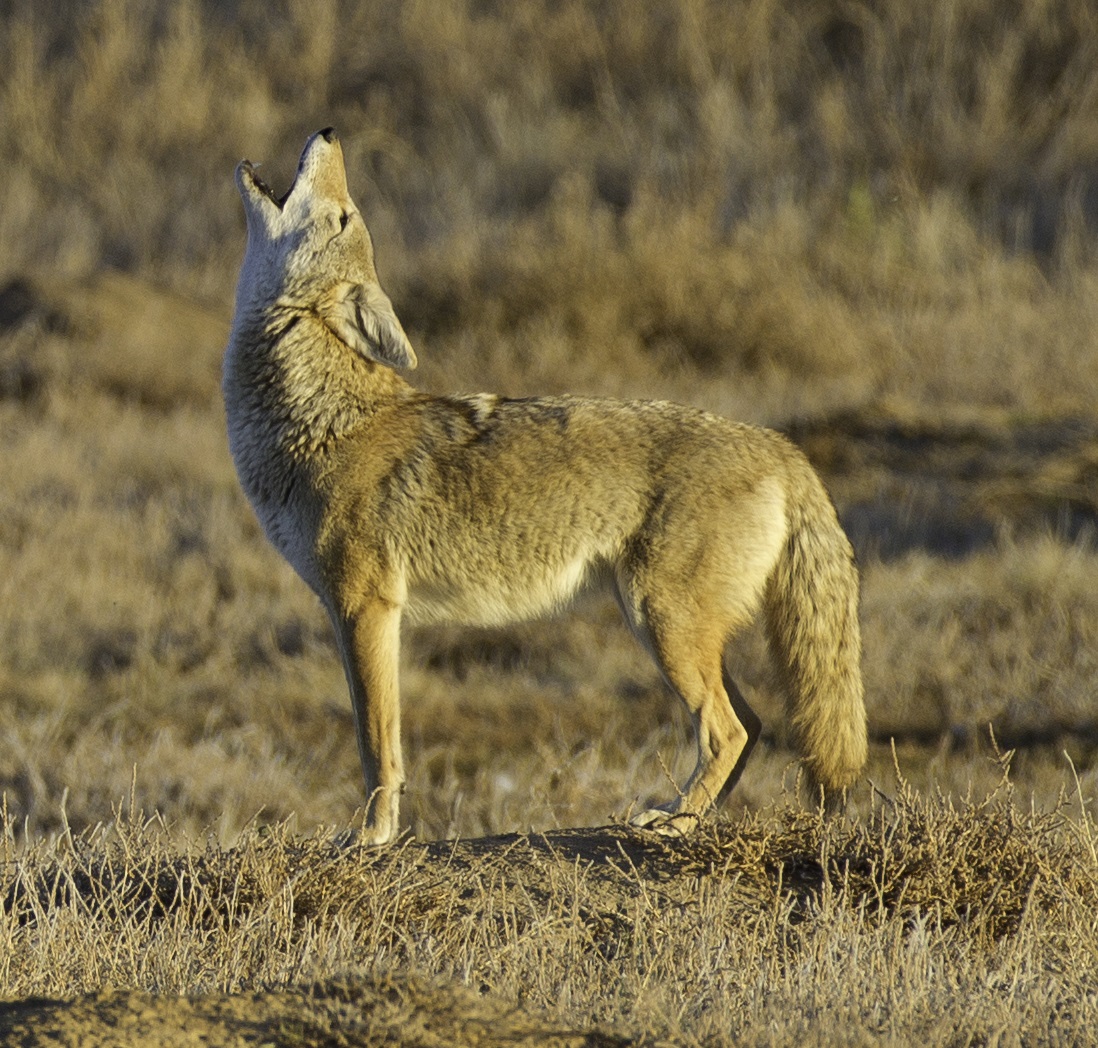
The coyote, Canis latrans (Order Carnivora, Family Canidae), is a medium-sized canid, typically weighing between 9-23 kg and measuring 1.0-1.3 meters in length, including its bushy tail. Pelage coloration varies geographically but is generally grizzled gray to reddish-brown with a lighter underside. Breeding typically occurs in late winter (January-March), with a gestation period of approximately 63 days, resulting in a litter of 3-9 pups. Pups are altricial, born blind and helpless, and are weaned at 5-7 weeks. Sexual maturity is reached at around one year of age, though reproductive success may be delayed in some populations. Longevity in the wild is typically 6-8 years.
Behaviour
Coyotes are highly adaptable canids, exhibiting a variety of social structures depending on resource availability. They can exist as solitary individuals, mated pairs, or in stable packs. Vocalizations are a key component of their communication, including howls, yips, and barks, used for territorial defense, social cohesion, and locating pack members. Diurnal and nocturnal activity patterns are observed, with increased crepuscular and nocturnal activity in areas with human disturbance. Their keen senses of smell and hearing are critical for hunting and detecting threats.
Habits
C. latrans is an opportunistic omnivore with a diet that shifts seasonally and geographically. Primary prey includes small mammals like rabbits and rodents, but they readily consume insects, fruits, berries, and carrion. In suburban and urban environments, they may prey on domestic animals and exploit anthropogenic food sources. Harbors include dense brush, culverts, and abandoned structures. Conducive conditions for their presence include fragmented landscapes, abundant prey populations, and accessible food waste. They are adept at exploiting human-modified environments.
Control methods
- 1Remove all outdoor pet food.
- 2Secure garbage cans with tight-fitting lids.
- 3Clear dense brush and trim low-hanging branches.
- 4Install motion-activated deterrents.
- 5Fence off vulnerable areas.
- 6Educate community on coyote ecology and coexistence.
Tailored to Coyote
IPM Procedure Checklist
Inspection
- Survey interior and exterior for evidence and conducive conditions
- Document findings with photos and a site map
- Place monitors to confirm activity
Identification
- Confirm Coyote (Canis latrans) — not a look-alike
- Note life stage and risk level: High
- Capture clear photos and samples for the record
Action Thresholds
- Zero-tolerance: act on first confirmed sighting
- Notify client and document the trigger event
- Prioritize health and regulatory risk in the plan
Prevention
- Exclude entry points and harborage
- Improve sanitation and moisture control
- Modify habitat around the structure
Control Methods
- Remove all outdoor pet food.
- Secure garbage cans with tight-fitting lids.
- Clear dense brush and trim low-hanging branches.
- Install motion-activated deterrents.
Monitoring & Evaluation
- Service monitors on schedule and trend captures
- Re-inspect for Coyote activity at follow-up
- Adjust tactics based on data; report findings to client