Stored Product Pest
Cowpea Weevil
Callosobruchus maculatus
Biology
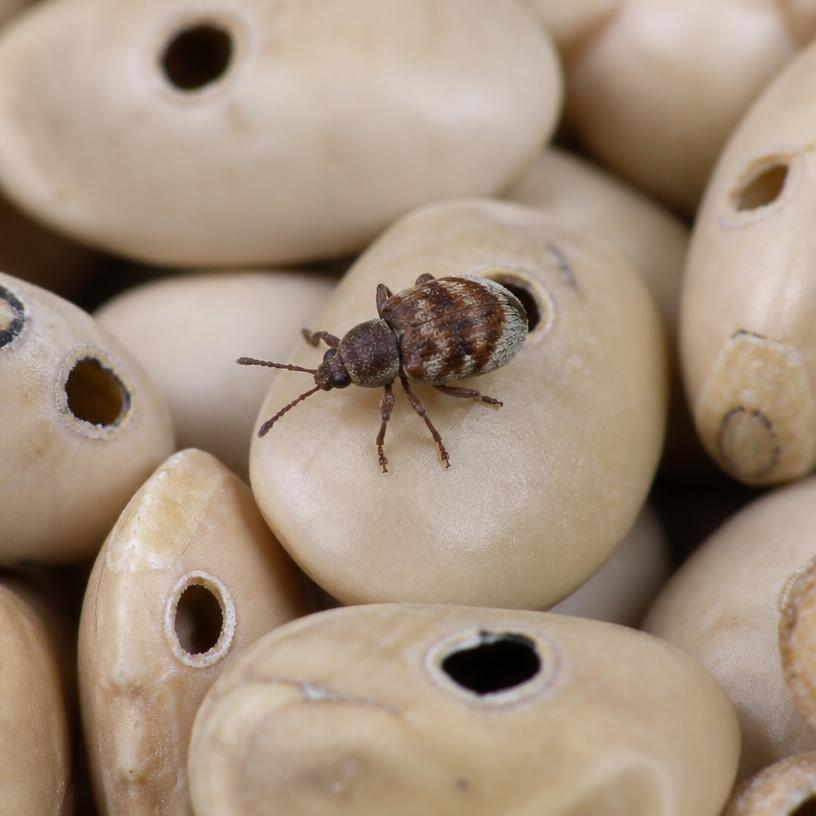
A 2–3.5 mm reddish-brown seed beetle with dark and pale mottled markings, short elytra and an exposed abdomen tip bearing two dark spots. It is one of the fastest-breeding stored pests, completing a generation in as little as three weeks at 30°C.
Behaviour
Females glue eggs directly to the seed coat, and the hatching larva bores straight through the shell into the seed. Populations can destroy a large share of a stored pulse lot within a few months, and adults do not need to feed to reproduce.
Habits
A major pest of cowpeas, chickpeas, mung beans and lentils, especially in warm climates and in imported pulse stocks. Eggs cemented to seed surfaces are the diagnostic sign. Hot storerooms without hermetic packaging allow explosive build-up.
Control methods
- 1Inspect pulses for cemented eggs and round exit holes
- 2Use hermetic storage bags or airtight containers
- 3Freeze or heat-treat incoming pulse lots before storage
- 4Keep storerooms cool and well ventilated
- 5Rotate stock strictly and clear residues between lots
- 6Use pheromone or sticky traps to monitor
- 7Discard heavily infested lots rather than treating them
Tailored to Cowpea Weevil
IPM Procedure Checklist
Inspection
- Inspect grain, spices, pet food and dry goods for larvae and webbing
- Deploy pheromone monitors near storage and shelving
- Check spillage in seams, cracks and shelf liners
Identification
- Confirm Cowpea Weevil (Callosobruchus maculatus) — not a look-alike
- Note life stage and risk level: Moderate
- Capture clear photos and samples for the record
Action Thresholds
- Trigger action when monitor counts trend up
- Re-evaluate weekly during active season
- Document trigger criteria in the IPM plan
Prevention
- Rotate stock FIFO; reject damaged packaging at receiving
- Store products in airtight containers
- Maintain low humidity and clean storage surfaces
Control Methods
- Inspect pulses for cemented eggs and round exit holes
- Use hermetic storage bags or airtight containers
- Freeze or heat-treat incoming pulse lots before storage
- Keep storerooms cool and well ventilated
Monitoring & Evaluation
- Service monitors on schedule and trend captures
- Re-inspect for Cowpea Weevil activity at follow-up
- Adjust tactics based on data; report findings to client