Mammal
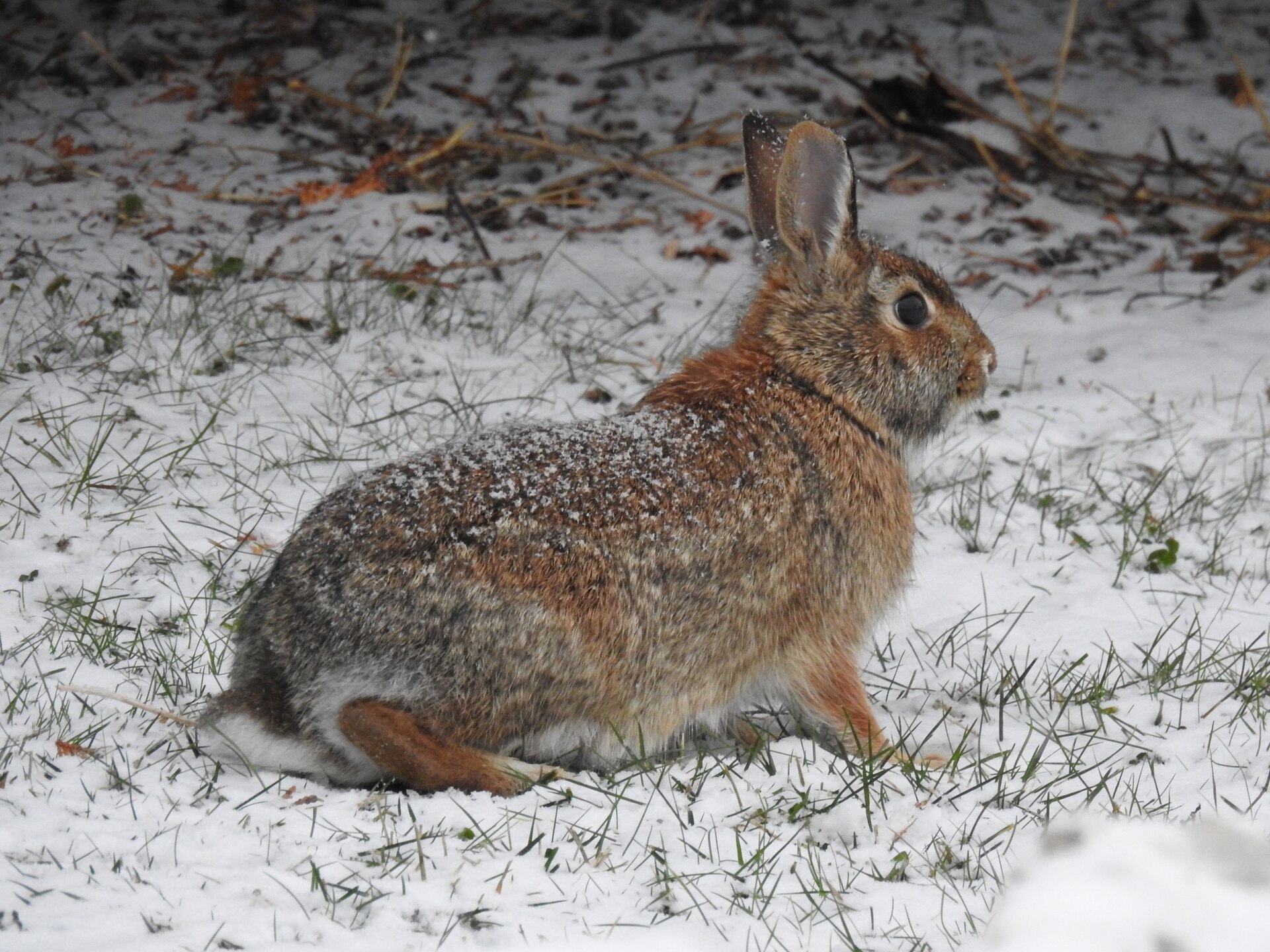
Eastern Cottontail Rabbit
Sylvilagus floridanus
Biology
The Eastern Cottontail Rabbit, Sylvilagus floridanus, is a lagomorph (Order Lagomorpha, Family Leporidae), not a rodent, measuring 38-50 cm in length and weighing 0.8-1.5 kg, characterized by soft grayish-brown fur and a distinctive white 'cotton-ball' tail. Females, known as does, reach sexual maturity at 2-3 months and can produce 3-5 litters annually, typically from March to September, with each litter comprising 3-8 altricial young. Gestation lasts approximately 28-30 days, and neonates are blind and helpless, weighing only 25-30g at birth, maturing rapidly for dispersal within 4-5 weeks. Their lifespan in the wild is short, averaging less than one year due to predation, though individuals in protected environments can live for 5-8 years. Environmental tolerances include a wide range of temperatures, but prolonged sub-zero conditions without adequate shelter or deep snow cover can increase mortality due to food scarcity and energetic demands.
Behaviour
Eastern Cottontails exhibit crepuscular activity patterns, being most active at dawn and dusk, although they may forage nocturnally under moonlight or during periods of high predation pressure. They are largely solitary animals, communicating primarily through scent marking, foot thumping to signal danger, and occasional vocalizations like distress calls. Their feeding ecology is herbivorous and opportunistic, primarily browsing on a wide variety of grasses, forbs, and succulent vegetation, with a crucial shift to woody stems, bark, and buds of trees and shrubs during winter when herbaceous forage is scarce. Defensive behaviors include freezing, rapid zig-zag running, and relying on camouflage, while their structural impact involves girdling young trees and shrubs, consuming garden crops, and potentially introducing ectoparasites like fleas and ticks into human-occupied spaces, though they are not a significant public health vector for serious diseases.
Habits
These rabbits prefer habitats with a mosaic of open grassy areas for foraging and dense cover for refuge, such as brush piles, thickets, fencerows, and overgrown fields, often venturing into suburban landscapes. They do not burrow extensively but utilize shallow depressions called 'forms' for resting and nesting, often lined with grass and fur, which are difficult to detect. Foraging ranges are relatively small, typically less than 1-2 hectares, dictated by food availability and proximity to cover. Conducive conditions for population increase in residential areas include abundant low-lying vegetation, accessible gardens, and minimal predation pressure. Technicians should look for cleanly clipped stems, gnaw marks on bark (especially during winter, characterized by distinct incisor marks 3-6 mm wide), fecal pellets (small, round, and fibrous), and shallow, fur-lined nests in grassy areas, particularly during spring and summer.
Control methods
- 1Install 2-ft tall wire fence buried 6 in. deep
- 2Wrap young tree trunks with hardware cloth
- 3Live-trap and relocate (where legal)
- 4Use repellents on ornamentals (capsaicin, predator urine)
- 5Remove brush piles that provide cover
- 6Encourage natural predators with hawk perches
Tailored to Eastern Cottontail Rabbit
IPM Procedure Checklist
Inspection
- Survey interior and exterior for evidence and conducive conditions
- Document findings with photos and a site map
- Place monitors to confirm activity
Identification
- Confirm Eastern Cottontail Rabbit (Sylvilagus floridanus) — not a look-alike
- Note life stage and risk level: Moderate
- Capture clear photos and samples for the record
Action Thresholds
- Trigger action when monitor counts trend up
- Re-evaluate weekly during active season
- Document trigger criteria in the IPM plan
Prevention
- Exclude entry points and harborage
- Improve sanitation and moisture control
- Modify habitat around the structure
Control Methods
- Install 2-ft tall wire fence buried 6 in. deep
- Wrap young tree trunks with hardware cloth
- Live-trap and relocate (where legal)
- Use repellents on ornamentals (capsaicin, predator urine)
Monitoring & Evaluation
- Service monitors on schedule and trend captures
- Re-inspect for Eastern Cottontail Rabbit activity at follow-up
- Adjust tactics based on data; report findings to client