Occasional Invader
Western Conifer Seed Bug
Leptoglossus occidentalis
Biology
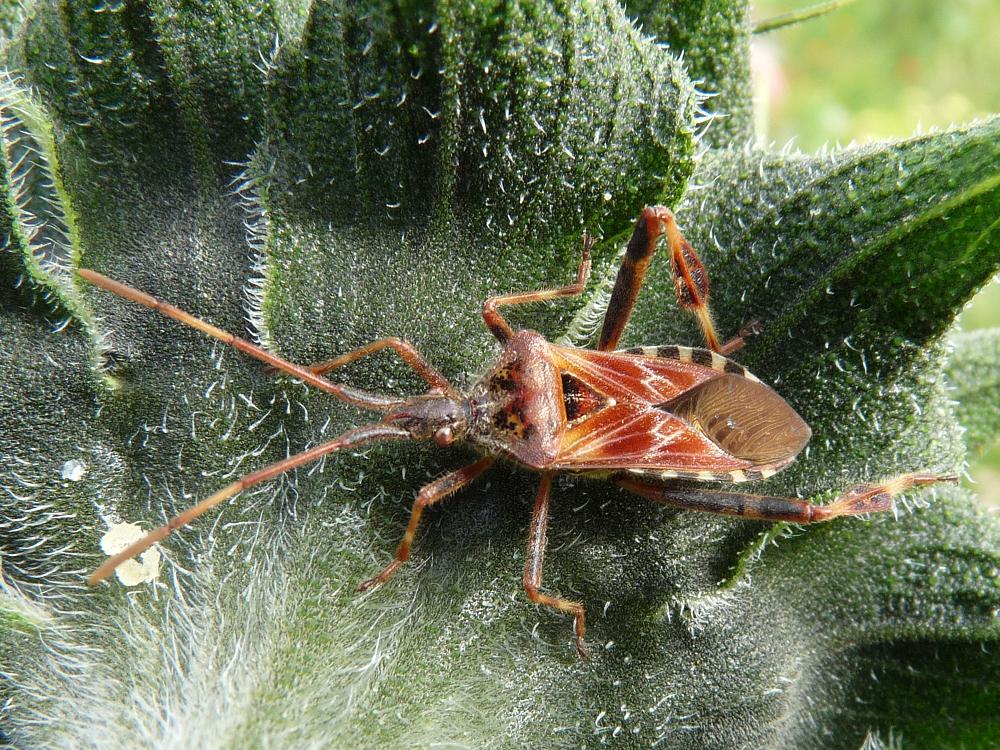
The Western Conifer Seed Bug, *Leptoglossus occidentalis*, belongs to the family Coreidae (leaf-footed bugs) and is characterized by its robust, elongated body measuring 16-20 mm, exhibiting a mottled reddish-brown coloration that aids in camouflage among conifer cones and bark. A diagnostic feature is the distinct white, zigzagging band visible across the hemelytra when the wings are folded, and leaf-like expansions (flares) on the hind tibiae. Its incomplete metamorphosis involves three stages: egg, nymph (five instars), and adult; eggs are typically laid in rows on conifer needles, hatching within 10-14 days, with nymphal development spanning 4-6 weeks through successive molts. Adults can live for several months, with a single generation per year, and exhibit a remarkable tolerance for cold temperatures, which facilitates their overwintering success.
Behaviour
This species primarily exhibits diurnal activity during its feeding and reproductive periods, foraging on developing conifer seeds, particularly those of pines, Douglas fir, and hemlocks, which they access using their piercing-sucking mouthparts. While not social in the strict sense, large aggregations can form during fall invasion events as they seek overwintering sites. They are known for their strong flight capabilities, often accompanied by a distinctive loud buzzing sound, especially when agitated or flying indoors. When threatened, *L. occidentalis* emits a defensive pheromone, a pungent, pine-like odor produced from thoracic glands, which can be off-putting to predators and homeowners alike, though they pose no direct public health threat or structural damage to homes.
Habits
As an occasional invader, *L. occidentalis* demonstrates a strong seasonal migratory habit, moving from conifer hosts to sheltered overwintering sites in late summer and fall, typically from late September through November. These overwintering harborages are predominantly within wall voids, attics, soffits, and other protected crevices of human structures, chosen for their thermal stability away from extreme cold. Foraging during the growing season occurs directly on conifer trees, where they feed on developing cones and seeds. Infestations are often indicated by the presence of buzzing adults around windows and lights, especially on warm, sunny days in fall or during sporadic warm spells in winter, as they attempt to orient towards light and warmth.
Control methods
- 1Seal soffits, fascia gaps and around chimneys
- 2Repair attic and crawlspace screens
- 3Vacuum interior bugs and release outside
- 4Reduce nighttime exterior lights in fall
- 5Trim conifers touching the structure
- 6Spot residual on south walls in October
Tailored to Western Conifer Seed Bug
IPM Procedure Checklist
Inspection
- Inspect exterior perimeter for entry pathways
- Note moisture, mulch and ground-cover near foundation
- Identify aggregation sites on warm walls
Identification
- Confirm Western Conifer Seed Bug (Leptoglossus occidentalis) — not a look-alike
- Note life stage and risk level: Low
- Capture clear photos and samples for the record
Action Thresholds
- Tolerate low-level activity outside sensitive zones
- Act if activity moves indoors or near food
- Review threshold seasonally with the client
Prevention
- Seal foundation cracks, weep holes and utility penetrations
- Pull mulch and vegetation back from the structure
- Improve drainage and reduce exterior moisture
Control Methods
- Seal soffits, fascia gaps and around chimneys
- Repair attic and crawlspace screens
- Vacuum interior bugs and release outside
- Reduce nighttime exterior lights in fall
Monitoring & Evaluation
- Service monitors on schedule and trend captures
- Re-inspect for Western Conifer Seed Bug activity at follow-up
- Adjust tactics based on data; report findings to client