All pests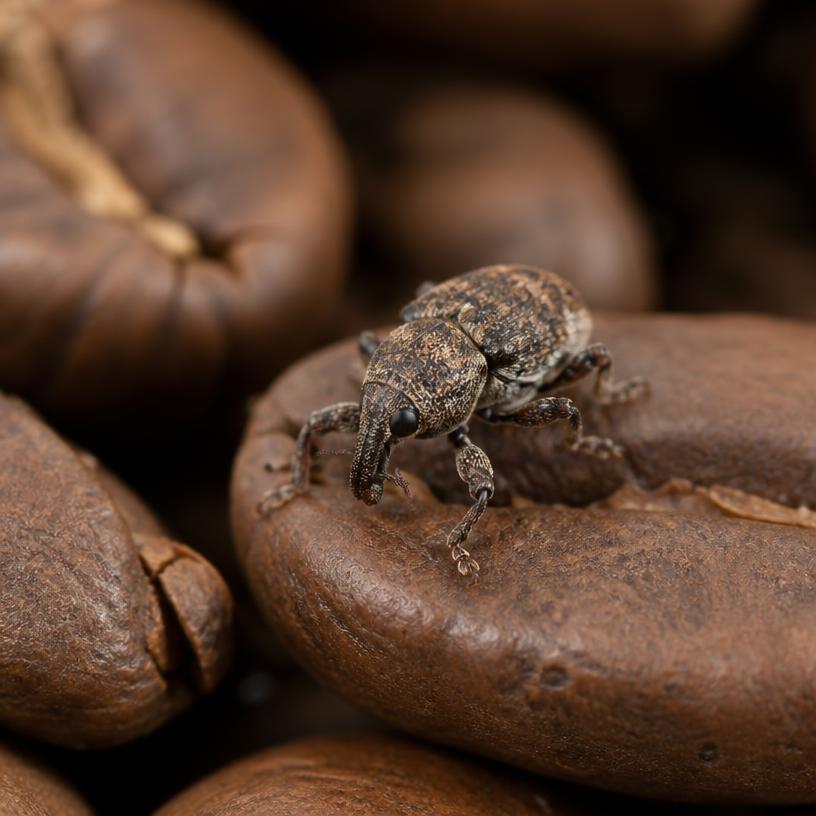 View full procedure
Stored Product Pest
Coffee Bean Weevil
Araecerus fasciculatus
Moderate Risk
Biology
A stout 3–5 mm mottled brown and grey fungus weevil with a short broad snout, banded legs and short elytra exposing the abdomen tip. Development from egg to adult takes about six to ten weeks in stored commodities.
Behaviour
Larvae feed inside dried coffee berries, cocoa beans, nutmeg, dried fruit and seed corn, and the adults chew ragged exit holes. It tolerates fairly high commodity moisture and is often associated with poorly dried product.
Habits
Common in imported coffee, cocoa and spice stocks, and in tropical or humid warehouses. It can also start in the field on drying berries. High commodity moisture and inadequate drying before bagging are the main conducive conditions.
Control methods
- 1Dry commodities thoroughly before bagging
- 2Inspect imported coffee, cocoa and spice lots on arrival
- 3Keep warehouse humidity low and pallets off the wall
- 4Rotate stock and clear spilled beans promptly
- 5Use light traps and inspection sampling to monitor
- 6Isolate and treat or reject infested lots
- 7Consider controlled-atmosphere or heat treatment of lots
Tailored to Coffee Bean Weevil
IPM Procedure Checklist
Step 1
Inspection
- Inspect grain, spices, pet food and dry goods for larvae and webbing
- Deploy pheromone monitors near storage and shelving
- Check spillage in seams, cracks and shelf liners
Step 2
Identification
- Confirm Coffee Bean Weevil (Araecerus fasciculatus) — not a look-alike
- Note life stage and risk level: Moderate
- Capture clear photos and samples for the record
Step 3
Action Thresholds
- Trigger action when monitor counts trend up
- Re-evaluate weekly during active season
- Document trigger criteria in the IPM plan
Step 4
Prevention
- Rotate stock FIFO; reject damaged packaging at receiving
- Store products in airtight containers
- Maintain low humidity and clean storage surfaces
Step 5
Control Methods
- Dry commodities thoroughly before bagging
- Inspect imported coffee, cocoa and spice lots on arrival
- Keep warehouse humidity low and pallets off the wall
- Rotate stock and clear spilled beans promptly
Step 6
Monitoring & Evaluation
- Service monitors on schedule and trend captures
- Re-inspect for Coffee Bean Weevil activity at follow-up
- Adjust tactics based on data; report findings to client