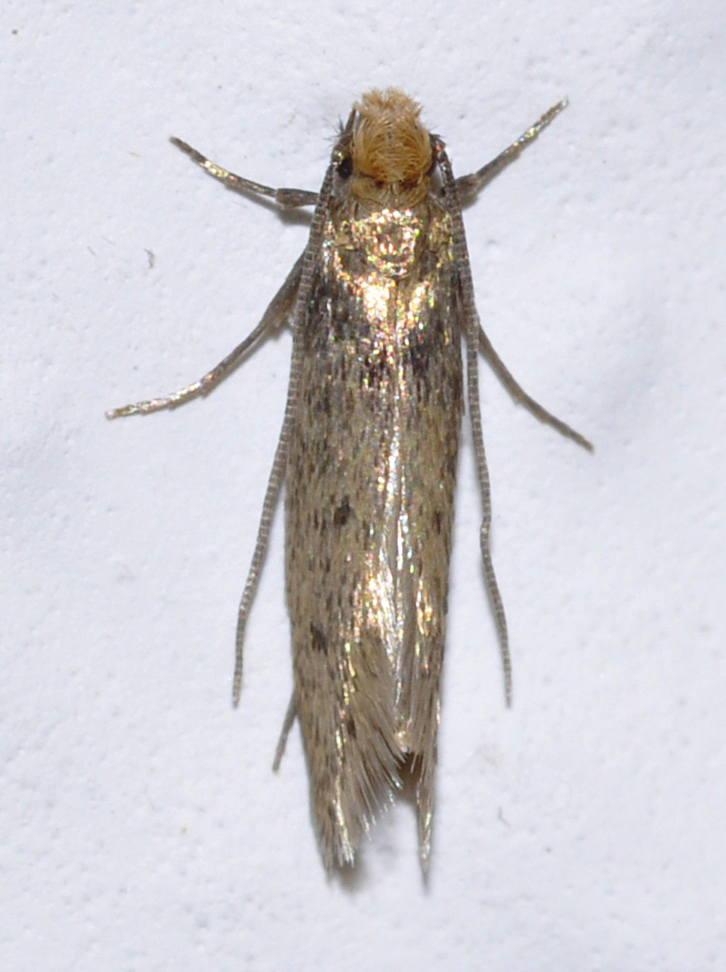
Insect
Webbing Clothes Moth
Tineola bisselliella
Life cycle
Stages of development
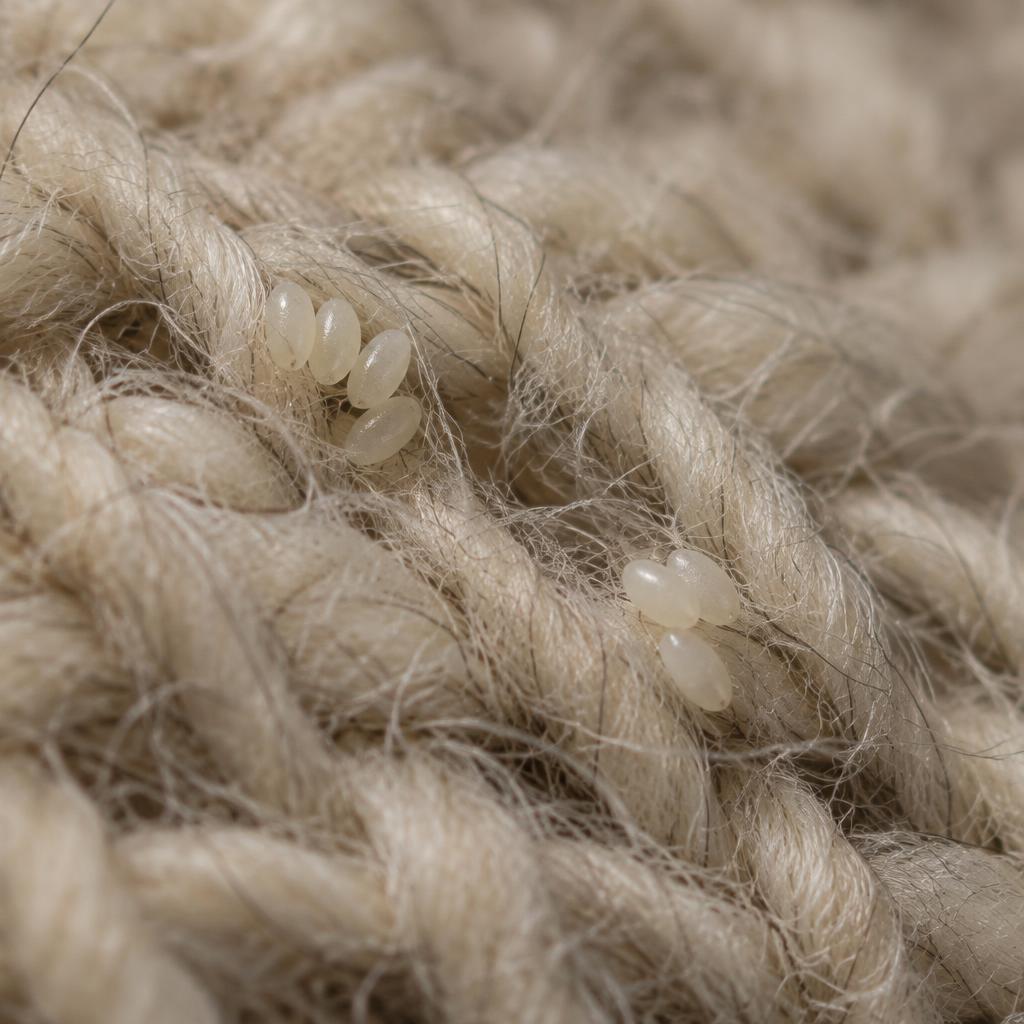
Stage 1 of 4
Eggs on wool
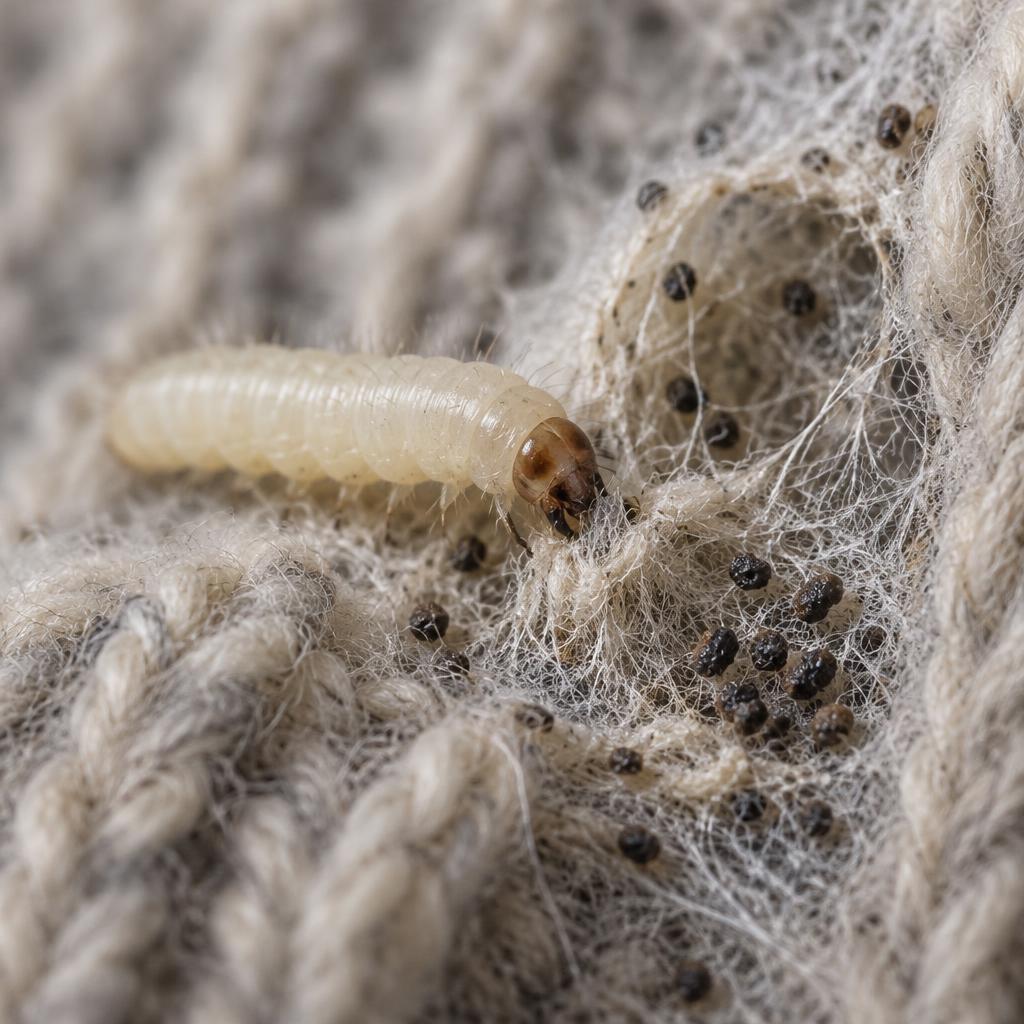
Stage 2 of 4
Larva with webbing
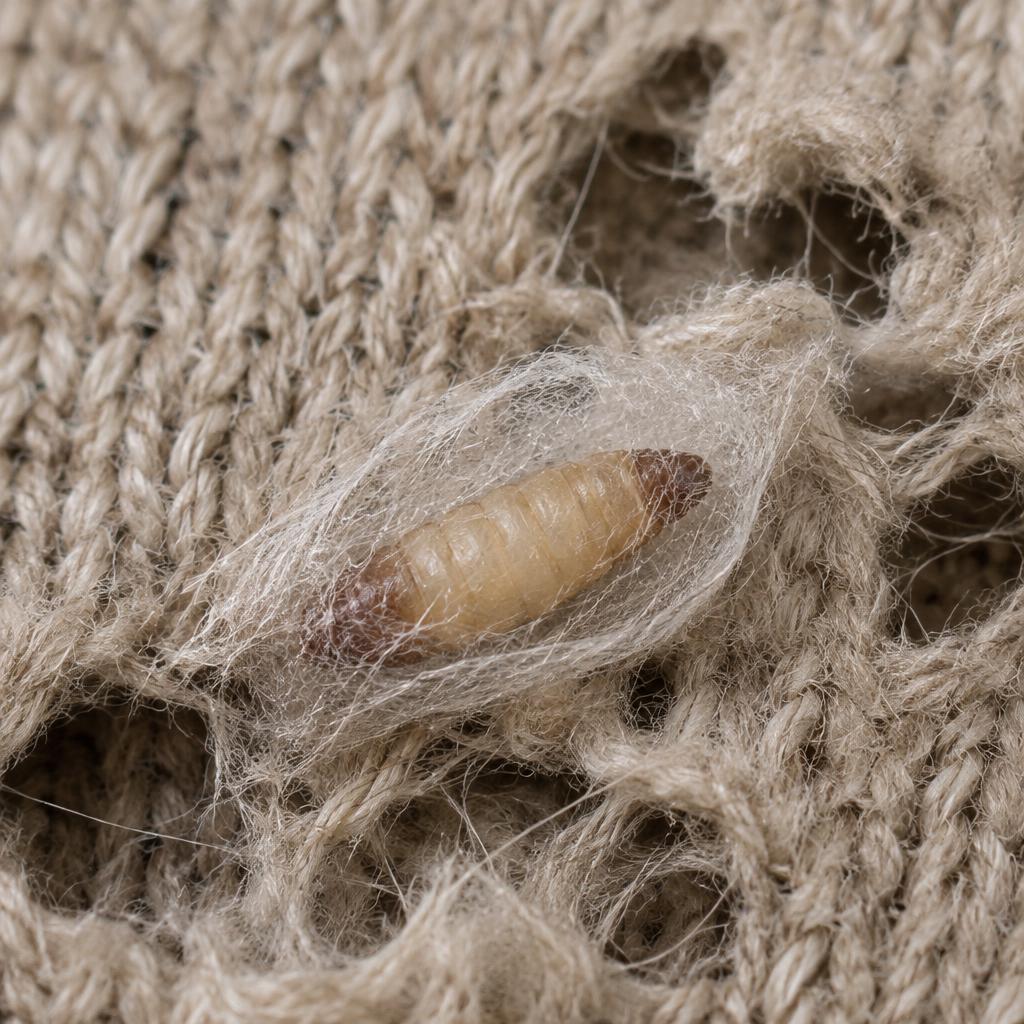
Stage 3 of 4
Pupa in cocoon
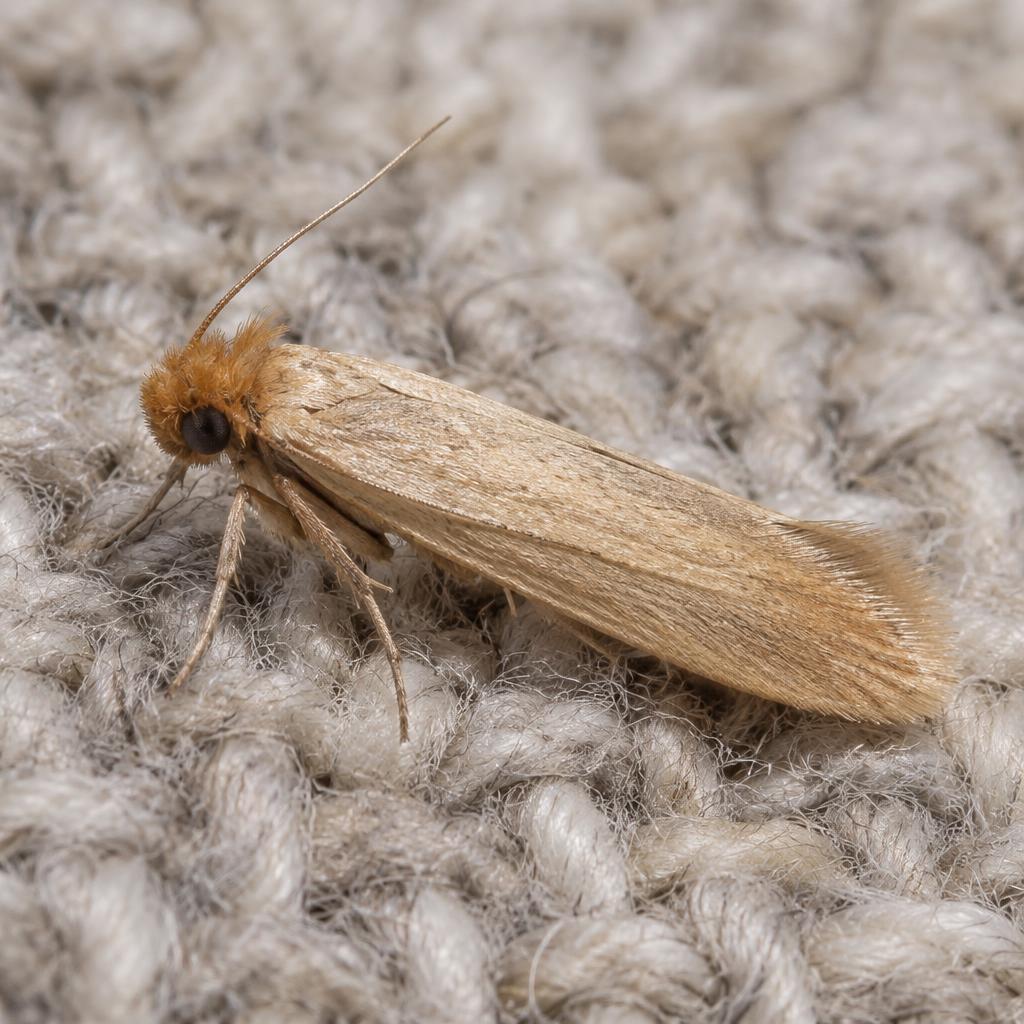
Stage 4 of 4
Adult moth
Biology
The Webbing Clothes Moth, *Tineola bisselliella*, belongs to the family Tineidae within the order Lepidoptera. Adults are slender, approximately 6-8 mm in length with a wingspan of 10-14 mm, and are characterized by shiny, golden-buff forewings lacking distinct markings, and a prominent reddish-golden hair tuft on the head. The lifecycle proceeds through egg, larval, pupal, and adult stages, with eggs hatching in 4-10 days, larvae developing over 35-250 days depending on environmental conditions and food availability, and pupation lasting 8-40 days. Females lay 40-50 eggs over several days, typically gluing them to the host material, and the entire cycle can complete in 2-3 months under optimal conditions (25-30°C, 70-80% RH), with adults living for about 15-30 days.
Behaviour
This species exhibits primarily nocturnal or crepuscular activity patterns, with adults actively seeking mates in dark, undisturbed areas rather than being attracted to light sources like many other moths. Larvae are the sole destructive stage, exhibiting cryptic feeding behavior within silken tunnels or patches spun directly on the host material, which protects them from desiccation and predation. Dispersal typically occurs through adults flying short distances or, more commonly, through passive transport of infested articles. Pheromones play a crucial role in mate location, with males responding to female-produced sex pheromones. Their feeding ecology is strictly keratinolytic, targeting animal-derived fibers, and their impact is primarily structural damage to textiles, furs, and stored goods, though they pose no direct public health threat.
Habits
Larvae of *Tineola bisselliella* prefer to harbor in dark, undisturbed areas where suitable food sources are readily available, such as closets, attics, storage chests, and behind furniture, often infesting woolens, furs, taxidermy, and feather products. Foraging patterns are localized, with larvae remaining on or within the host material, often creating feeding tunnels or 'sheets' of silk mixed with frass. Infestations are often exacerbated by static, undisturbed conditions, particularly in areas with consistent temperatures and moderate humidity, and are less common in frequently used or cleaned items. Technicians should look for irregular holes in fabrics, silken webbing, fecal pellets (frass) which resemble sand grains, and cast larval skins as primary signs of infestation.
Control methods
- 1Pheromone monitor traps in closets
- 2Dry-clean or freeze (-18°C, 4 days) infested items
- 3Vacuum closets, baseboards and floor edges
- 4Store woolens clean in sealed bags with cedar/lavender
- 5Reduce humidity below 50%
- 6Targeted residual in carpet edges and voids
Tailored to Webbing Clothes Moth
IPM Procedure Checklist
Inspection
- Inspect harborage near food, water and warmth
- Check cracks, voids and appliance interiors
- Place sticky monitors at suspected hot-spots
Identification
- Confirm Webbing Clothes Moth (Tineola bisselliella) — not a look-alike
- Note life stage and risk level: Moderate
- Capture clear photos and samples for the record
Action Thresholds
- Trigger action when monitor counts trend up
- Re-evaluate weekly during active season
- Document trigger criteria in the IPM plan
Prevention
- Seal cracks, plumbing penetrations and wall voids
- Eliminate moisture sources and standing water
- Improve sanitation: sealed food storage, grease removal
Control Methods
- Pheromone monitor traps in closets
- Dry-clean or freeze (-18°C, 4 days) infested items
- Vacuum closets, baseboards and floor edges
- Store woolens clean in sealed bags with cedar/lavender
Monitoring & Evaluation
- Service monitors on schedule and trend captures
- Re-inspect for Webbing Clothes Moth activity at follow-up
- Adjust tactics based on data; report findings to client