All pests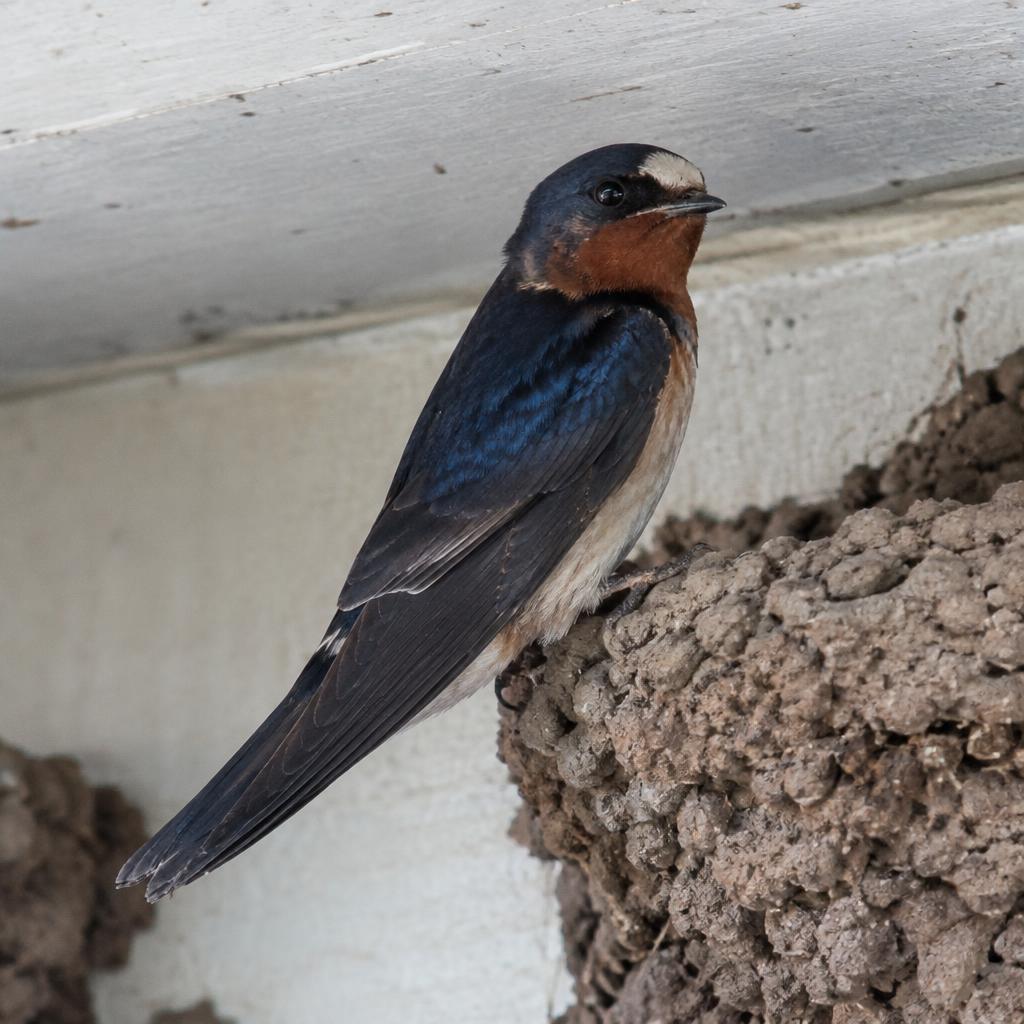 View full procedure
Bird
Cliff Swallow
Petrochelidon pyrrhonota
Low Risk
Biology
Petrochelidon pyrrhonota is a compact swallow with a square tail, pale forehead, dark rusty throat, blue crown, and buff rump. It is famous for building gourd-shaped mud nests in dense colonies on cliffs and, increasingly, on buildings and bridges.
Behaviour
Cliff swallows are colonial nesters; dozens or hundreds of mud gourds may appear under building overhangs, eaves, and bridge abutments. They feed on flying insects and migrate in large flocks.
Habits
Colonies produce significant accumulations of mud, droppings, feathers, and parasites on walls, walkways, and vehicles below. Heavy infestations can accelerate corrosion, clog drains, and create unsanitary conditions in public areas.
Control methods
- 1Exclude with netting or hardware cloth before colonies arrive in spring
- 2Remove unoccupied nests during the non-breeding window
- 3Treat surfaces to make mud adherence difficult
- 4Clean droppings and debris with pressure washing and PPE
- 5Seal overhang gaps and architectural cavities that attract nesting
- 6Follow migratory-bird protections; obtain permits where required
Tailored to Cliff Swallow
IPM Procedure Checklist
Step 1
Inspection
- Identify roosting, loafing and nesting sites
- Document droppings, feathers and damage to structure
- Note food and water sources attracting birds
Step 2
Identification
- Confirm Cliff Swallow (Petrochelidon pyrrhonota) — not a look-alike
- Note life stage and risk level: Low
- Capture clear photos and samples for the record
Step 3
Action Thresholds
- Tolerate low-level activity outside sensitive zones
- Act if activity moves indoors or near food
- Review threshold seasonally with the client
Step 4
Prevention
- Install spikes, netting or shock track on ledges
- Remove standing water and accessible food
- Close openings to attics, vents and signage voids
Step 5
Control Methods
- Exclude with netting or hardware cloth before colonies arrive in spring
- Remove unoccupied nests during the non-breeding window
- Treat surfaces to make mud adherence difficult
- Clean droppings and debris with pressure washing and PPE
Step 6
Monitoring & Evaluation
- Service monitors on schedule and trend captures
- Re-inspect for Cliff Swallow activity at follow-up
- Adjust tactics based on data; report findings to client