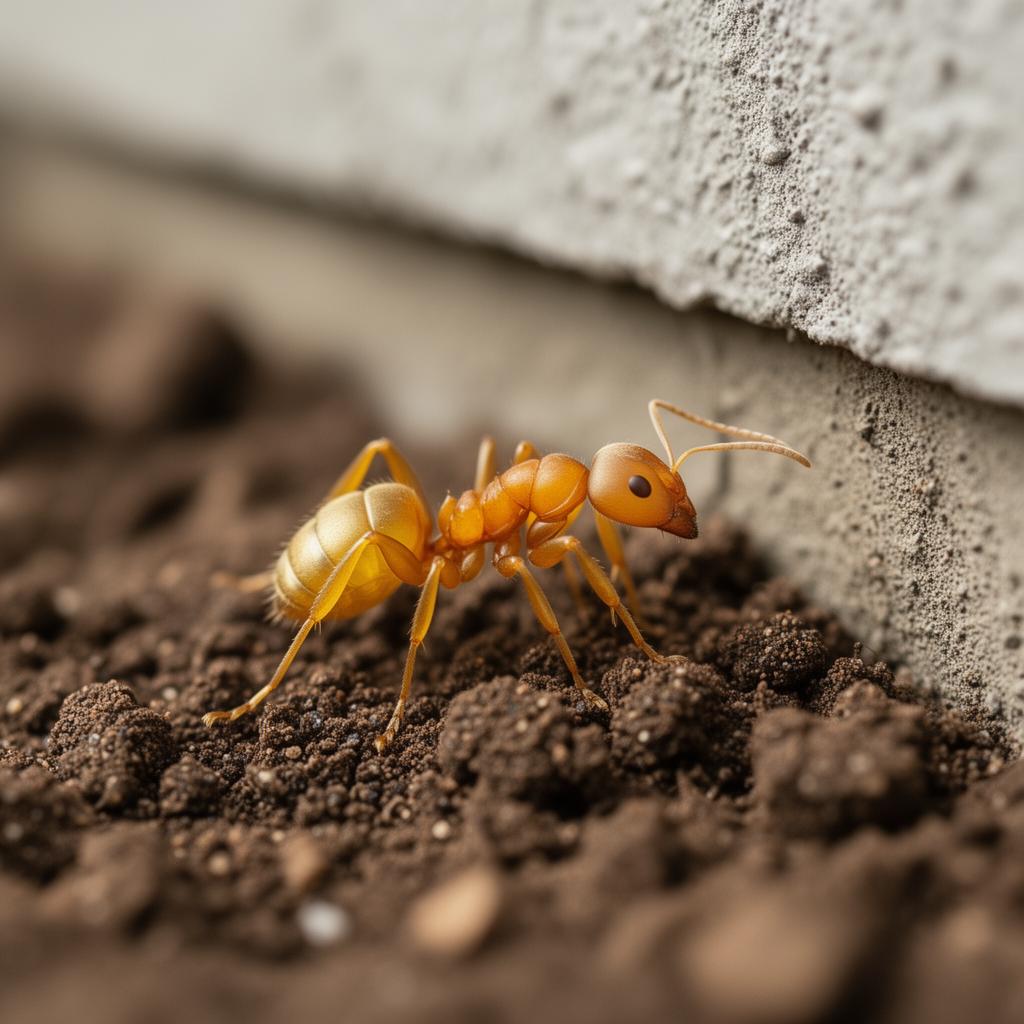
Ant
Citronella Ant
Lasius interjectus
Biology
The citronella ant, Lasius interjectus (Family: Formicidae, Subfamily: Formicinae), is a subterranean species. Workers are typically monomorphic, ranging from 3.5-5.0 mm in length, and are characterized by a yellowish-brown to reddish-brown coloration. They possess a distinct citronella-like odor when crushed, attributed to defensive compounds (citronellal and geraniol) produced in their mandibular glands. Queens are significantly larger than workers, reaching up to 8-9 mm, and are typically darker. Males are alate and smaller than queens. This species undergoes complete metamorphosis (egg, larva, pupa, adult). Colonies are subterranean, often very large (tens of thousands of individuals), and typically monogynous, although polygyny can occur. Nuptial flights usually occur in late summer or early autumn, often after rain events, when alates emerge in large numbers. Developmental timings are poorly documented but are likely similar to other Lasius species.
Behaviour
Lasius interjectus is primarily subterranean, foraging almost exclusively underground or under objects, making surface foraging uncommon. Their diet consists almost entirely of honeydew secreted by subterranean root-feeding aphids and mealybugs, which they actively tend and protect. They rarely forage for other food sources and are not typically attracted to human foods. When disturbed, workers emit a strong citronella odor as a defensive mechanism. They are generally not aggressive but will bite if threatened. Alates are attracted to light and often emerge in large numbers during their nuptial flights, especially in the late afternoon or early evening, a primary point of human interaction with this species.
Habits
Citronella ants construct extensive, deep subterranean nests, typically in moist soil, under rocks, logs, or concrete slabs. Satellite nests may be established within structures, particularly in crawl spaces, basements, or under porches, usually when access to outdoor nests is limited or environmental conditions are favorable. Nests are characterized by numerous tunnels and chambers, often extending several feet deep. Conducive conditions for citronella ant infestations include high soil moisture, proximity to suitable host plants for their symbiotic root-feeding hemipterans, and structural deficiencies that allow access to subterranean areas. Unlike many pest ants, they are not a structural threat in terms of damage but can be a nuisance when alates emerge indoors from accidental nest penetrations.
Control methods
- 1Seal all cracks and openings in foundations.
- 2Improve ventilation in crawl spaces and basements.
- 3Remove wood-to-soil contact and excessive moisture.
- 4Reduce outdoor harborage like leaf litter and logs.
- 5Do not apply insecticides unless alates are emerging indoors.
- 6Use targeted dusts in wall voids if necessary.
Tailored to Citronella Ant
IPM Procedure Checklist
Inspection
- Follow trails to nests, food and moisture sources
- Inspect wall voids, slab edges and exterior soil
- Place non-repellent monitors at trail crossings
Identification
- Confirm Citronella Ant (Lasius interjectus) — not a look-alike
- Note life stage and risk level: Low
- Capture clear photos and samples for the record
Action Thresholds
- Tolerate low-level activity outside sensitive zones
- Act if activity moves indoors or near food
- Review threshold seasonally with the client
Prevention
- Seal entry cracks, utility penetrations and weep holes
- Eliminate honeydew-producing pests on landscape plants
- Store food in sealed containers and clean spills promptly
Control Methods
- Seal all cracks and openings in foundations.
- Improve ventilation in crawl spaces and basements.
- Remove wood-to-soil contact and excessive moisture.
- Reduce outdoor harborage like leaf litter and logs.
Monitoring & Evaluation
- Service monitors on schedule and trend captures
- Re-inspect for Citronella Ant activity at follow-up
- Adjust tactics based on data; report findings to client