Stored Product Pest
Cigarette Beetle
Lasioderma serricorne
Biology
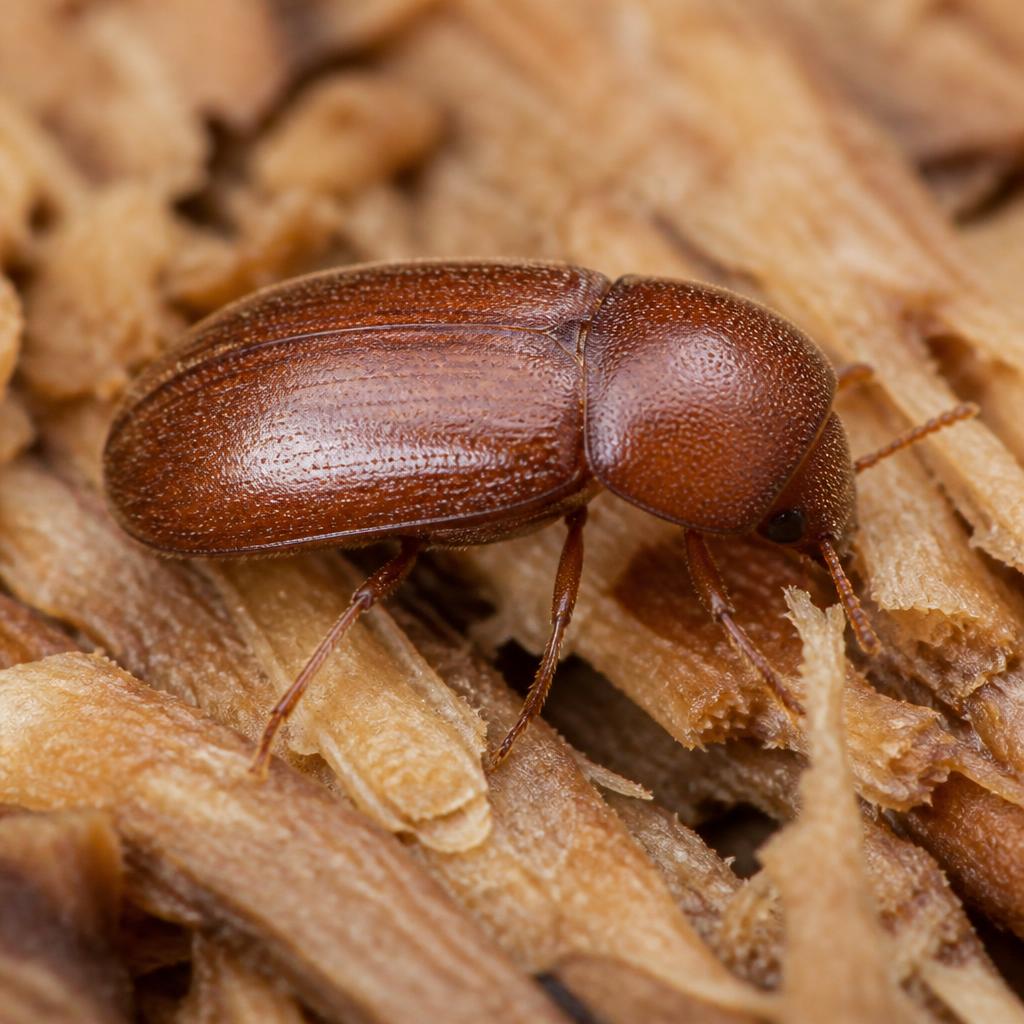
The cigarette beetle, Lasioderma serricorne, belongs to the family Anobiidae (now Ptinidae subfam. Ptininae) and is a small, reddish-brown coleopteran, measuring 2-4 mm in length. Its distinctive morphology includes a pronounced pronotal hood covering the head from above, and antennae that are uniformly serrate, differentiating it from the clubbed antennae of the drugstore beetle (Stegobium paniceum). Females typically oviposit 30-100 white, oval eggs singly or in small clusters directly onto larval food sources over a 2-3 week period. The lifecycle-egg to adult-is completed in 30-50 days under optimal conditions (30-35°C, 60-90% RH), but can extend to several months in cooler temperatures. Larvae undergo 4-6 instars, pupating in silk cocoons incorporating food particles, with adults living for 2-4 weeks without feeding.
Behaviour
Cigarette beetles exhibit primarily nocturnal or crepuscular activity, with adults dispersing readily via flight, particularly at dusk or in low-light conditions, and are positively phototactic, often observed around windows and light sources. Chemical communication plays a significant role in reproduction; females release a potent sex pheromone (serricornin) to attract males, facilitating rapid mate-finding and population growth. The larval stage is responsible for all feeding and subsequent damage, creating frass and silken webbing within infested materials, while adults do not feed but prioritize reproduction and dispersal. This species is prone to rapid population explosions given suitable food and environmental conditions, often leading to widespread contamination and economic losses due to product spoilage and rejection.
Habits
These ubiquitous stored product pests infest a remarkably broad spectrum of commodities, including tobacco products, dried herbs and spices, dried fruits, flour, pet food, birdseed, pharmaceuticals, and even pyrethrum plants and museum specimens. Harborages are typically within the food source itself, with larvae tunneling extensively and pupating within silken cases camouflaged by food particles. Infestation signs include circular emergence holes (1-2 mm in diameter) in packaging, presence of frass, silken webbing, and live or dead beetles within or around susceptible products. Maintaining stringent sanitation, controlling temperature and humidity below optimal ranges (below 18°C or above 65% RH for an extended period), and implementing pheromone traps for monitoring are crucial for early detection and control, with infestations often originating from overlooked spillage or expired products.
Control methods
- 1Discard infested goods and inspect spices, tea and pet food
- 2Store susceptible products in airtight containers
- 3Use pheromone traps for early detection and monitoring
- 4Vacuum and clean shelving — focus on dust pockets
- 5Freeze sensitive items (-18 °C, 1 week) before storing
- 6Apply residual treatments to cracks in commercial storage
Tailored to Cigarette Beetle
IPM Procedure Checklist
Inspection
- Inspect grain, spices, pet food and dry goods for larvae and webbing
- Deploy pheromone monitors near storage and shelving
- Check spillage in seams, cracks and shelf liners
Identification
- Confirm Cigarette Beetle (Lasioderma serricorne) — not a look-alike
- Note life stage and risk level: Moderate
- Capture clear photos and samples for the record
Action Thresholds
- Trigger action when monitor counts trend up
- Re-evaluate weekly during active season
- Document trigger criteria in the IPM plan
Prevention
- Rotate stock FIFO; reject damaged packaging at receiving
- Store products in airtight containers
- Maintain low humidity and clean storage surfaces
Control Methods
- Discard infested goods and inspect spices, tea and pet food
- Store susceptible products in airtight containers
- Use pheromone traps for early detection and monitoring
- Vacuum and clean shelving — focus on dust pockets
Monitoring & Evaluation
- Service monitors on schedule and trend captures
- Re-inspect for Cigarette Beetle activity at follow-up
- Adjust tactics based on data; report findings to client