Rodent
Eastern Chipmunk
Tamias striatus
Biology
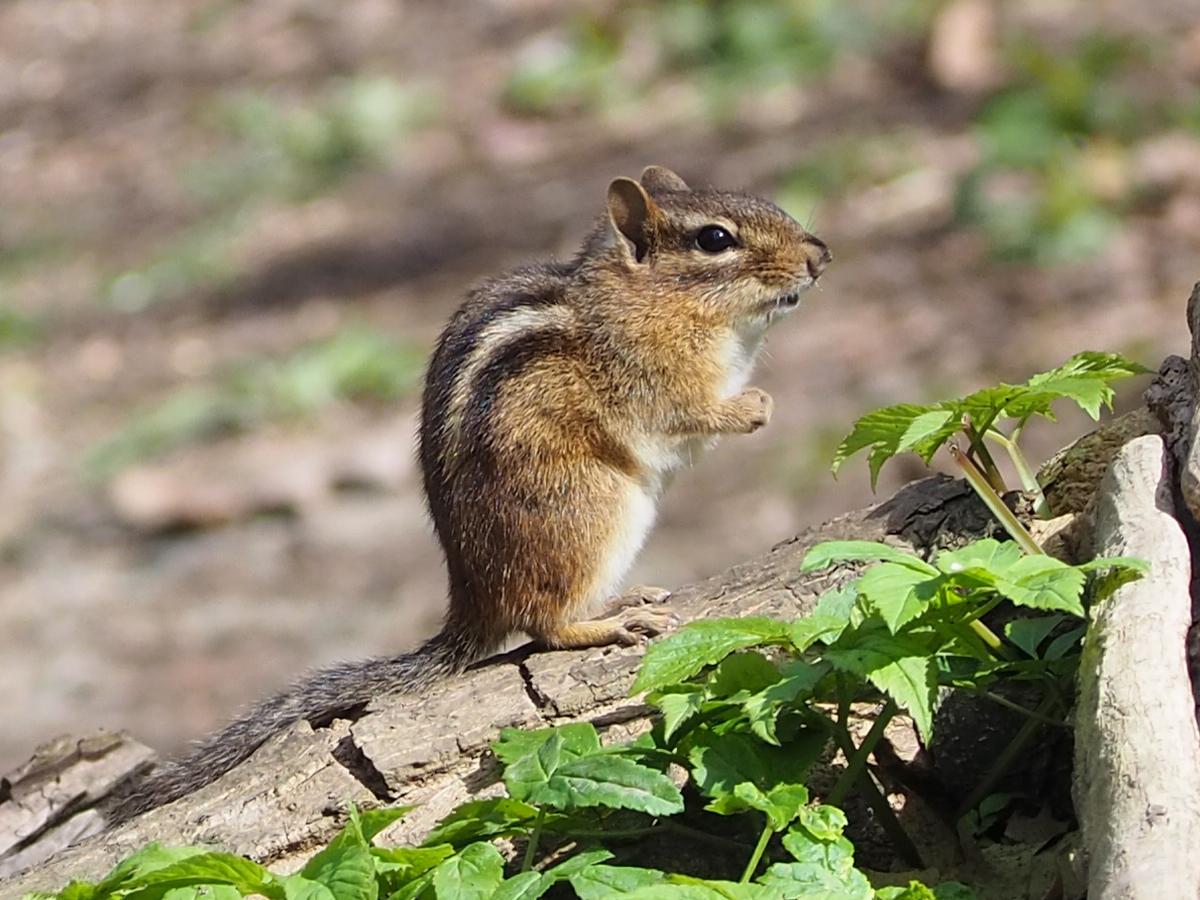
Tamias striatus, the Eastern chipmunk, is a small, striped ground squirrel native to eastern North America. Adults average 20-28 cm in length, including a moderately bushy tail, and weigh 60-120g. They are distinguished by five dark brown stripes alternating with two light brown stripes on their back, extending to the head, and two light stripes above and below each eye. Chipmunks are diurnal and semi-fossorial. They mate in early spring and again in mid-summer, producing litters of 2-5 young after a gestation period of about 31 days. Young are weaned by 6-8 weeks. Lifespan is generally 2-3 years in the wild. They enter torpor or hibernation during the coldest months, waking periodically to feed from their caches.
Behaviour
Eastern chipmunks are voracious foragers, collecting and storing large quantities of nuts, seeds, fruits, fungi, and insects in extensive subterranean burrow systems. Their prominent cheek pouches allow them to carry multiple food items back to their burrows. They are generally solitary and territorial around their burrow entrances. Vocalizations include characteristic 'chip' and 'chuck' calls, often signaling alarm. While primarily ground dwellers, they are adept climbers. In human environments, their burrowing activity can undermine foundations, patios, and retaining walls. Their foraging in gardens can be destructive, and they may enter structures seeking food or shelter.
Habits
Eastern chipmunks preferentially inhabit deciduous forests, mixed woodlands, and forest edges, particularly those with abundant undergrowth, fallen logs, and rocky outcrops. They construct complex burrow systems, typically 5-10 meters in length, with multiple chambers for nesting, food storage, and waste, and several inconspicuous entrances. In residential areas, they adapt well to gardens, parks, and suburban yards, often burrowing under porches, patios, retaining walls, sheds, and foundations. Conducive conditions include ample ground cover (shrubs, leaf litter), abundant food sources (bird feeders, fruit trees), and easily penetrable soil for burrowing. Entry into structures is often opportunistic through small gaps or open doors.
Control methods
- 1Seal all points of entry into structures.
- 2Remove food attractants like birdseed.
- 3Trim shrubs and ground cover away.
- 4Install exclusion barriers on foundations/decks.
- 5Use live traps for removal.
- 6Fill in active burrow entrances.
Tailored to Eastern Chipmunk
IPM Procedure Checklist
Inspection
- Locate runways, droppings, rub marks and gnaw damage
- Identify entry points (gaps ≥6 mm) and harborage
- Place tracking patches or non-toxic monitors
Identification
- Confirm Eastern Chipmunk (Tamias striatus) — not a look-alike
- Note life stage and risk level: Low
- Capture clear photos and samples for the record
Action Thresholds
- Tolerate low-level activity outside sensitive zones
- Act if activity moves indoors or near food
- Review threshold seasonally with the client
Prevention
- Exclude with steel wool, hardware cloth and door sweeps
- Trim vegetation 0.5 m from structure; clear debris
- Secure trash, pet food and stored grain
Control Methods
- Seal all points of entry into structures.
- Remove food attractants like birdseed.
- Trim shrubs and ground cover away.
- Install exclusion barriers on foundations/decks.
Monitoring & Evaluation
- Service monitors on schedule and trend captures
- Re-inspect for Eastern Chipmunk activity at follow-up
- Adjust tactics based on data; report findings to client