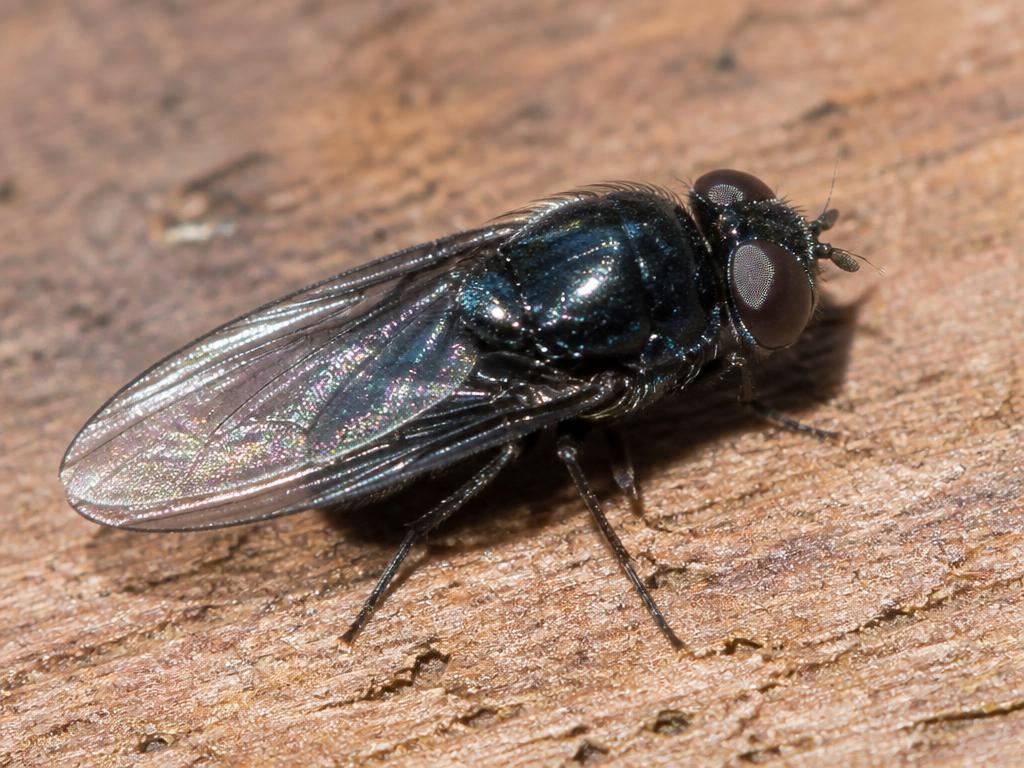
Fly
Cheese Skipper
Piophila casei
Biology
Piophila casei (family Piophilidae) is a small, glossy blue-black fly, 3.5-4.5 mm long, with iridescent wings and pale-yellow face and legs. Females lay 100-500 eggs directly on high-protein, high-fat substrates such as cured meats, aged cheese, smoked fish, and carrion in advanced decay. Larvae are slender, tapering, cream-colored maggots reaching 8-10 mm; they are famous for 'skipping' — anchoring the mouth hooks to the posterior spiracles, arching the body, and releasing to launch up to 15 cm. Development from egg to adult takes 12-18 days under warm conditions, with pupation occurring away from the food source.
Behaviour
Adults are secretive, running rapidly over surfaces with short, jerky flights rather than sustained flying, and are strongly attracted to fermenting protein odors. Larvae burrow deep into the substrate, tunneling within cured hams and hard cheeses where surface inspection misses them. Larvae are of medical significance because ingestion of infested food can cause accidental enteric myiasis with abdominal pain and nausea; the larvae can survive stomach acid. In forensic entomology, P. casei colonizes remains during later decomposition stages and is used to estimate extended post-mortem intervals.
Habits
This is a stored-product and food-processing pest of curing rooms, smokehouses, cheese caves, delicatessens, pet-food plants, and rendering facilities, and it also colonizes carrion, poorly maintained bone meal, and neglected mortality-disposal areas. Conducive conditions include exposed aging protein products, poor rotation, high humidity, temperatures above 20°C, and cracked or porous product surfaces that allow oviposition. Sanitation gaps such as trimmings left on floors, residue in drains, and uncovered waste bins sustain populations year-round indoors.
Control methods
- 1Cover, wrap, or case-harden curing products to block oviposition.
- 2Discard and dispose of any infested product in sealed containers.
- 3Deep-clean drains, floor cracks, and equipment where residue accumulates.
- 4Hold storage rooms below 10°C or use controlled-atmosphere storage.
- 5Install insect screening and air curtains on processing rooms.
- 6Monitor with sticky and light traps to detect early adult activity.
Tailored to Cheese Skipper
IPM Procedure Checklist
Inspection
- Locate breeding sites: drains, decaying matter, moist organics
- Use tape-over-drain tests and UV/light traps to confirm
- Map dumpster, grease and floor-drain hot-spots
Identification
- Confirm Cheese Skipper (Piophila casei) — not a look-alike
- Note life stage and risk level: Moderate
- Capture clear photos and samples for the record
Action Thresholds
- Trigger action when monitor counts trend up
- Re-evaluate weekly during active season
- Document trigger criteria in the IPM plan
Prevention
- Clean drains with enzymatic foam to remove biofilm
- Manage trash, recycling and grease daily
- Screen windows, doors and air curtains at entries
Control Methods
- Cover, wrap, or case-harden curing products to block oviposition.
- Discard and dispose of any infested product in sealed containers.
- Deep-clean drains, floor cracks, and equipment where residue accumulates.
- Hold storage rooms below 10°C or use controlled-atmosphere storage.
Monitoring & Evaluation
- Service monitors on schedule and trend captures
- Re-inspect for Cheese Skipper activity at follow-up
- Adjust tactics based on data; report findings to client