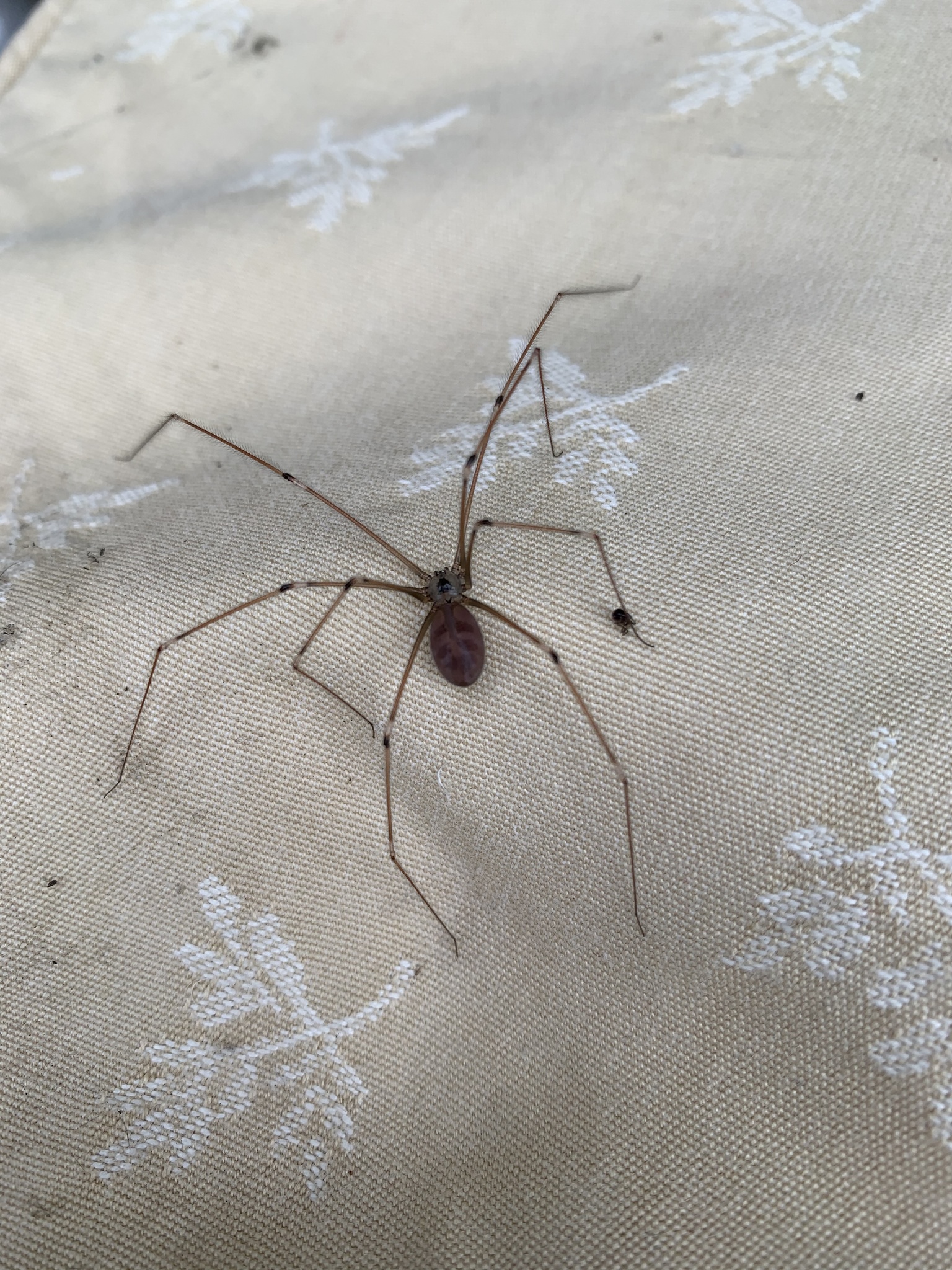
Spider
Cellar Spider
Pholcus phalangioides
Biology
Pholcus phalangioides, commonly known as the cellar spider or daddy long-legs spider, belongs to the family Pholcidae. Adult body length ranges from 7–10 mm, with the characteristic extremely long, slender legs extending their span to an impressive 50–70 mm, making their overall appearance quite delicate. Females produce multiple egg sacs throughout their lifespan, each containing 20–60 eggs, which they meticulously hold and carry in their chelicerae until hatching. Development from egg to adult takes approximately 9–12 months, and individuals can live for 1–3 years, favoring environments with relatively stable temperatures between 15–25°C and moderate to high humidity (60–80% RH).
Behaviour
Cellar spiders exhibit a primarily nocturnal hunting strategy, though they remain active within their webs during the day. They are solitary creatures, showing no evidence of communal living or complex social structures. Their dispersal is typically passive, often carried by air currents or inadvertently introduced by human activity, rather than active long-distance migration. When disturbed or threatened, they display a unique defensive vibration behavior, rapidly gyrating their bodies within their web to create a visual blur, an effective tactic to confuse predators and obscure their exact location. Their predatory diet is broad, including various insects and other spiders, even medically significant species like black widows (Latrodectus spp.) and brown recluse spiders (Loxosceles reclusa), which they skillfully incapacitate with their silk before envenomation.
Habits
These spiders prefer cool, dark, and damp environments, making basements, crawlspaces, cellars, and undisturbed ceiling corners ideal harborages. Their foraging involves constructing irregular, three-dimensional tangle webs, often in upper corners or recessed areas, from which they hang inverted awaiting prey. Unlike many web-building spiders, they do not typically leave their web to hunt, relying on vibrations in their silk to detect prey. Technicians should look for the characteristic messy, non-sticky webs, often accompanied by dead insect carcasses or molted exoskeletons entangled within, as primary signs of infestation. Conducive conditions include high humidity, lack of air circulation, and abundant insect prey, often exacerbated by cluttered environments providing ample undisturbed harborage sites.
Control methods
- 1Knock down webs with a vacuum or duster regularly
- 2Reduce humidity in basements and crawlspaces
- 3Seal cracks and foundation gaps
- 4Tolerate at low levels — controls other spiders
- 5Glue monitors in storage rooms
- 6Address insect prey to remove the food source
Tailored to Cellar Spider
IPM Procedure Checklist
Inspection
- Inspect undisturbed corners, voids and stored items
- Identify webs, egg sacs and prey debris
- Note conducive insect prey populations
Identification
- Confirm Cellar Spider (Pholcus phalangioides) — not a look-alike
- Note life stage and risk level: Low
- Capture clear photos and samples for the record
Action Thresholds
- Tolerate low-level activity outside sensitive zones
- Act if activity moves indoors or near food
- Review threshold seasonally with the client
Prevention
- Reduce clutter and seal cracks around the structure
- Switch exterior lights to yellow / sodium to reduce prey
- Install door sweeps and screen vents
Control Methods
- Knock down webs with a vacuum or duster regularly
- Reduce humidity in basements and crawlspaces
- Seal cracks and foundation gaps
- Tolerate at low levels — controls other spiders
Monitoring & Evaluation
- Service monitors on schedule and trend captures
- Re-inspect for Cellar Spider activity at follow-up
- Adjust tactics based on data; report findings to client