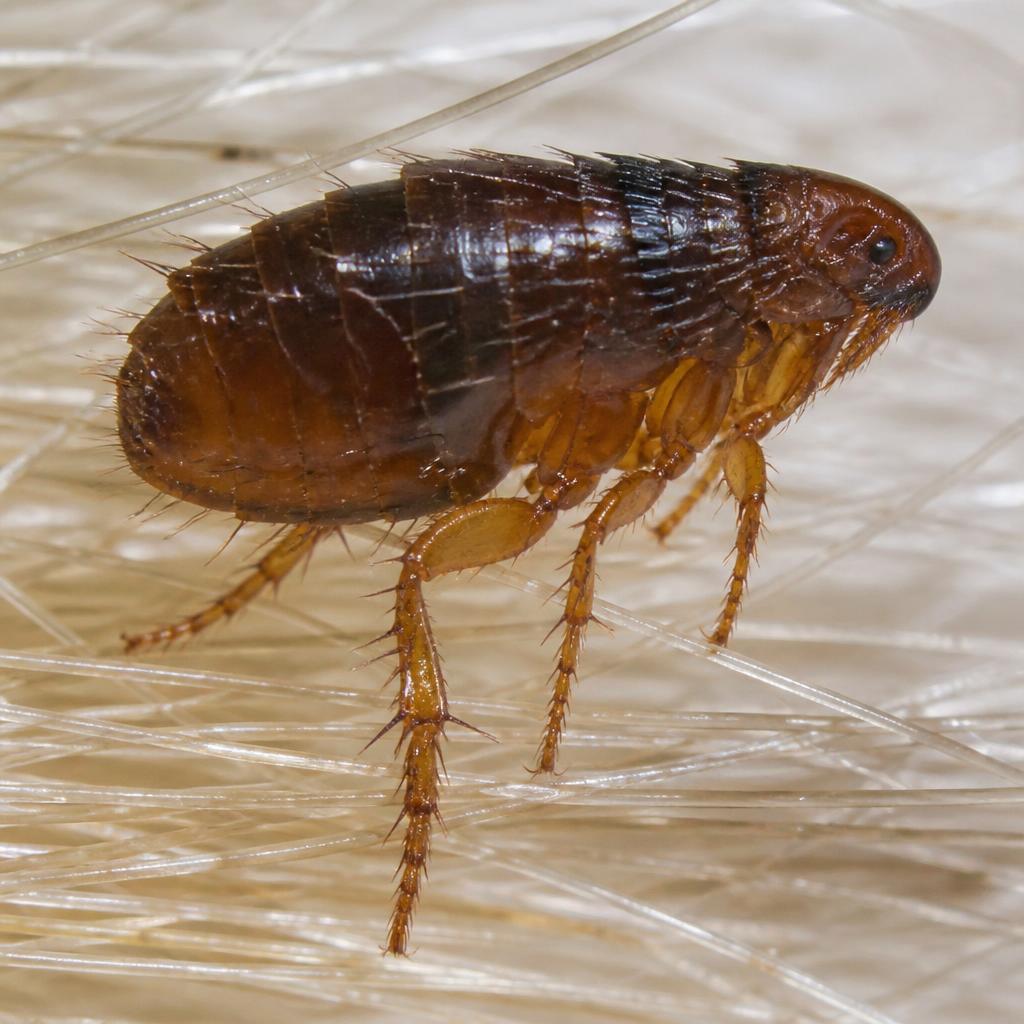
Blood Feeder
Cat Flea
Ctenocephalides felis
Life cycle
Stages of development
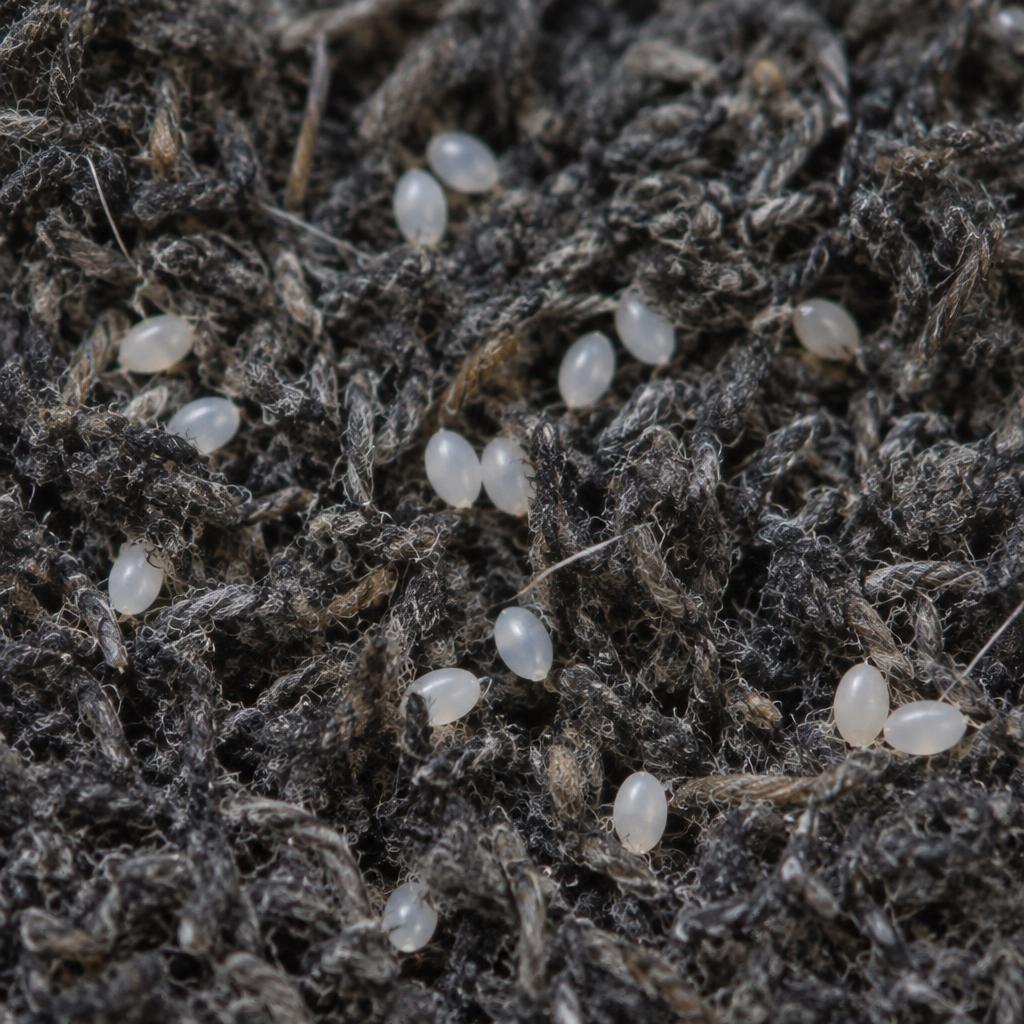
Stage 1 of 4
Eggs in carpet
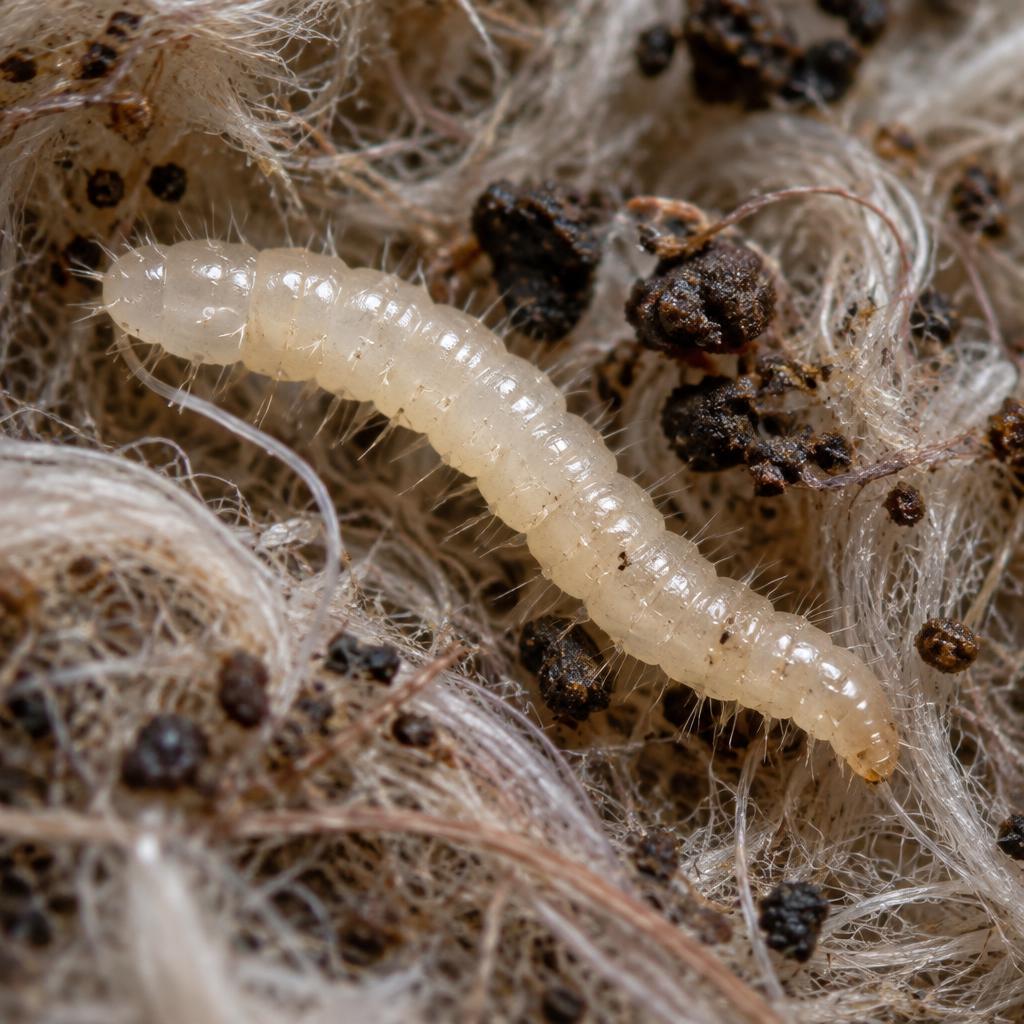
Stage 2 of 4
Larva
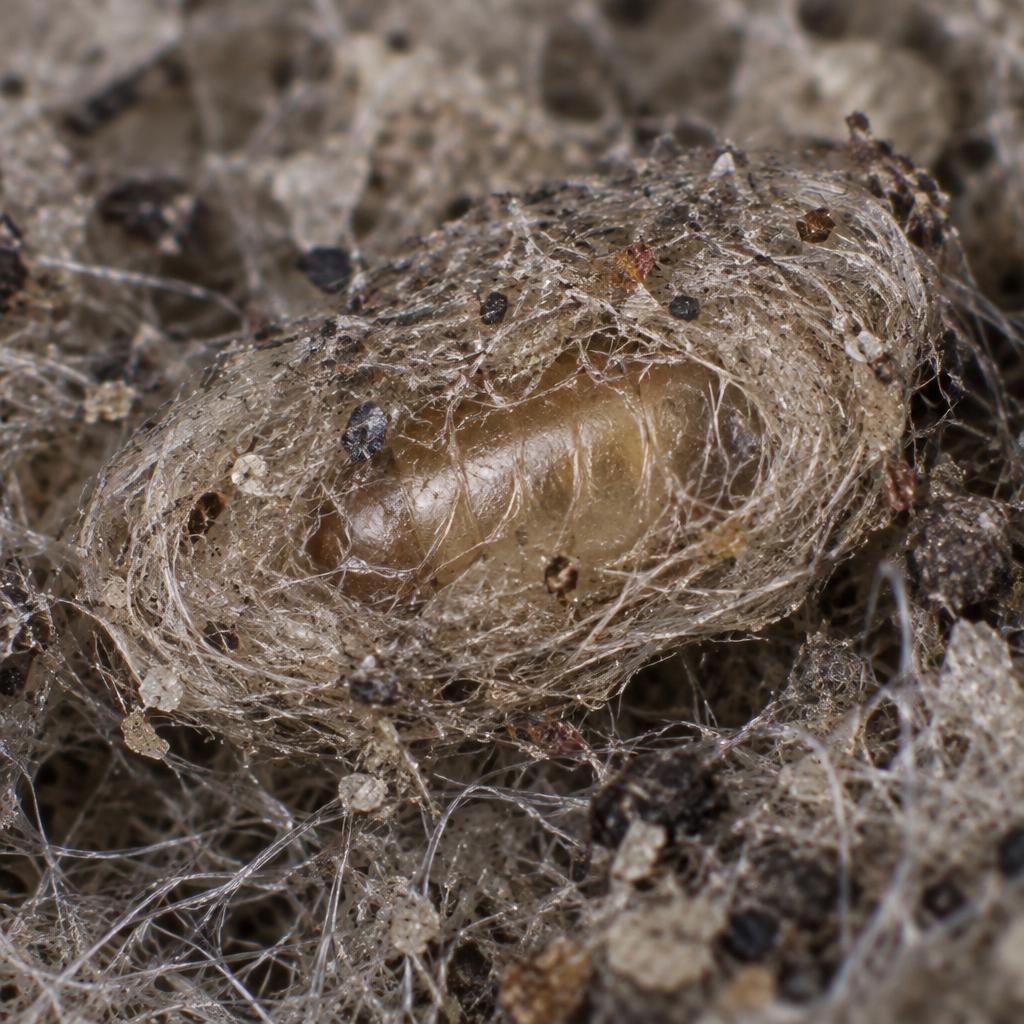
Stage 3 of 4
Pupa in cocoon
Stage 4 of 4
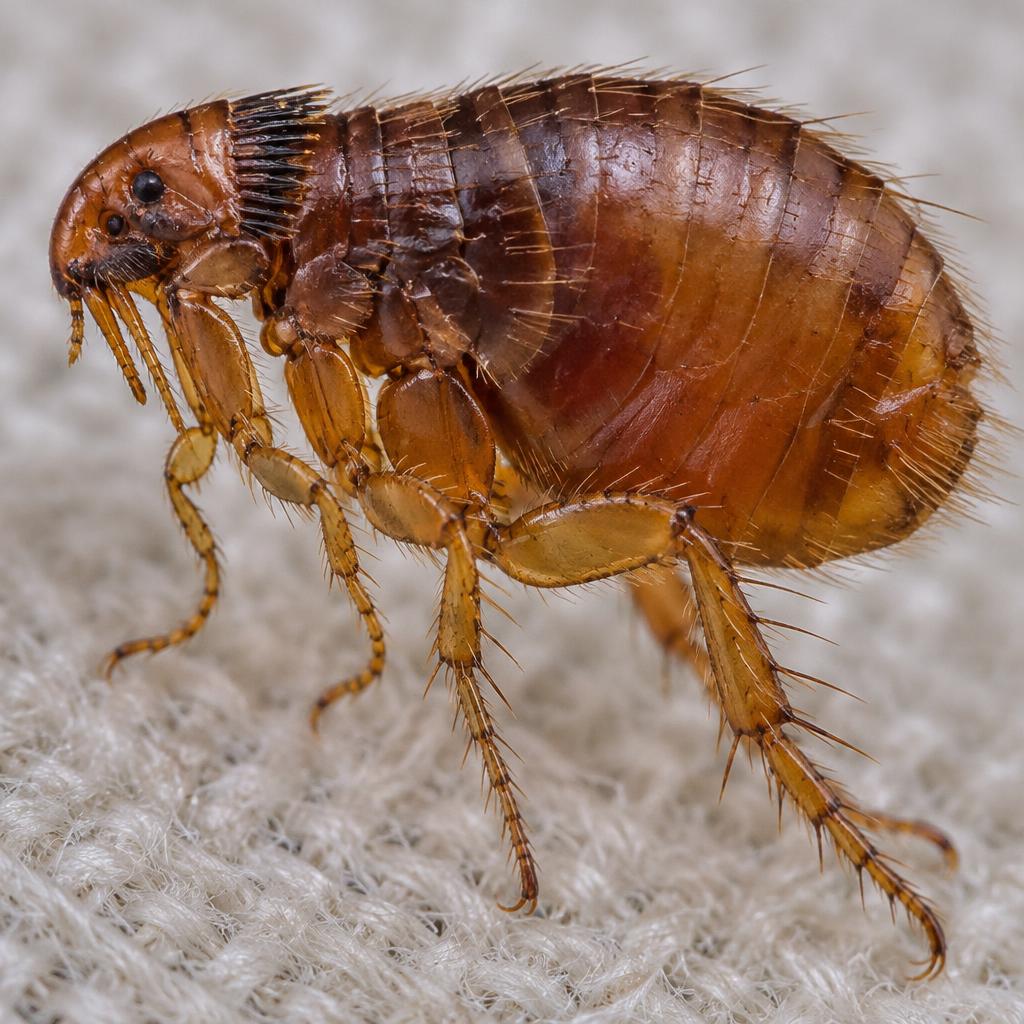
Adult flea
Biology
The cat flea, *Ctenocephalides felis* (Siphonaptera: Pulicidae), is the flea encountered in well over 90% of residential and veterinary cases, on cats, dogs, and wildlife alike. Adults are 1.5–3.2 mm, wingless, laterally flattened, shiny reddish-brown, with both genal and pronotal combs and enormously developed hind femora for jumping. Development is complete metamorphosis: eggs, three larval instars, pupa in a silken cocoon, and adult. A blood-fed female lays 20–50 eggs per day, up to 2,000 in her lifetime; eggs are non-adhesive and fall from the host into carpet, bedding, and soil. At 27°C and 75% RH the whole cycle finishes in 17–26 days, but pre-emerged adults can remain quiescent in the cocoon for up to five months awaiting host cues.
Behaviour
Adults are permanent ectoparasites — once on a host they feed within minutes and rarely leave voluntarily, mating and defecating partially digested blood ('flea dirt') that drops off and feeds the larvae below. Emergence from the cocoon is triggered by vibration, warmth, and exhaled carbon dioxide, which is why a home vacant for weeks can produce a sudden mass of hungry fleas the day people return. Larvae are negatively phototactic and burrow deep into carpet pile and cracks, feeding on adult flea faeces and organic debris. Bites are typically clustered on ankles and lower legs, producing intensely pruritic papules, and the flea is the intermediate host of the tapeworm *Dipylidium caninum* and a vector of *Bartonella henselae* (cat scratch disease) and murine typhus.
Habits
About 5% of the population is on the pet; the rest is egg, larva, and pupa distributed wherever the animal rests — pet bedding, upholstered furniture, carpet edges, under beds, and shaded soil, crawl spaces, and porches used by strays and wildlife. Conducive conditions are untreated pets, wildlife or feral cats denning under decks and in crawl spaces, deep carpet and infrequent vacuuming, and warm humid interiors. Inspection uses a flea comb over white paper (flea dirt smears rust-red when wetted), white-sock walk-throughs, and light traps overnight. Any treatment that skips concurrent veterinary on-animal control will fail.
Control methods
- 1Year-round veterinary on-animal adulticide for every pet in the home
- 2Vacuum carpets, furniture and pet resting areas daily; discard bag outside
- 3Hot-wash and high-heat dry all pet bedding weekly
- 4IGR (methoprene or pyriproxyfen) plus adulticide to carpets and harborages
- 5Treat shaded outdoor rest areas, crawl spaces and under decks
- 6Exclude wildlife and feral cats from voids, decks and crawl spaces
- 7Re-treat at 10–14 days to catch adults emerging from pupae
Tailored to Cat Flea
IPM Procedure Checklist
Inspection
- Survey interior and exterior for evidence and conducive conditions
- Document findings with photos and a site map
- Place monitors to confirm activity
Identification
- Confirm Cat Flea (Ctenocephalides felis) — not a look-alike
- Note life stage and risk level: High
- Capture clear photos and samples for the record
Action Thresholds
- Zero-tolerance: act on first confirmed sighting
- Notify client and document the trigger event
- Prioritize health and regulatory risk in the plan
Prevention
- Exclude entry points and harborage
- Improve sanitation and moisture control
- Modify habitat around the structure
Control Methods
- Year-round veterinary on-animal adulticide for every pet in the home
- Vacuum carpets, furniture and pet resting areas daily; discard bag outside
- Hot-wash and high-heat dry all pet bedding weekly
- IGR (methoprene or pyriproxyfen) plus adulticide to carpets and harborages
Monitoring & Evaluation
- Service monitors on schedule and trend captures
- Re-inspect for Cat Flea activity at follow-up
- Adjust tactics based on data; report findings to client