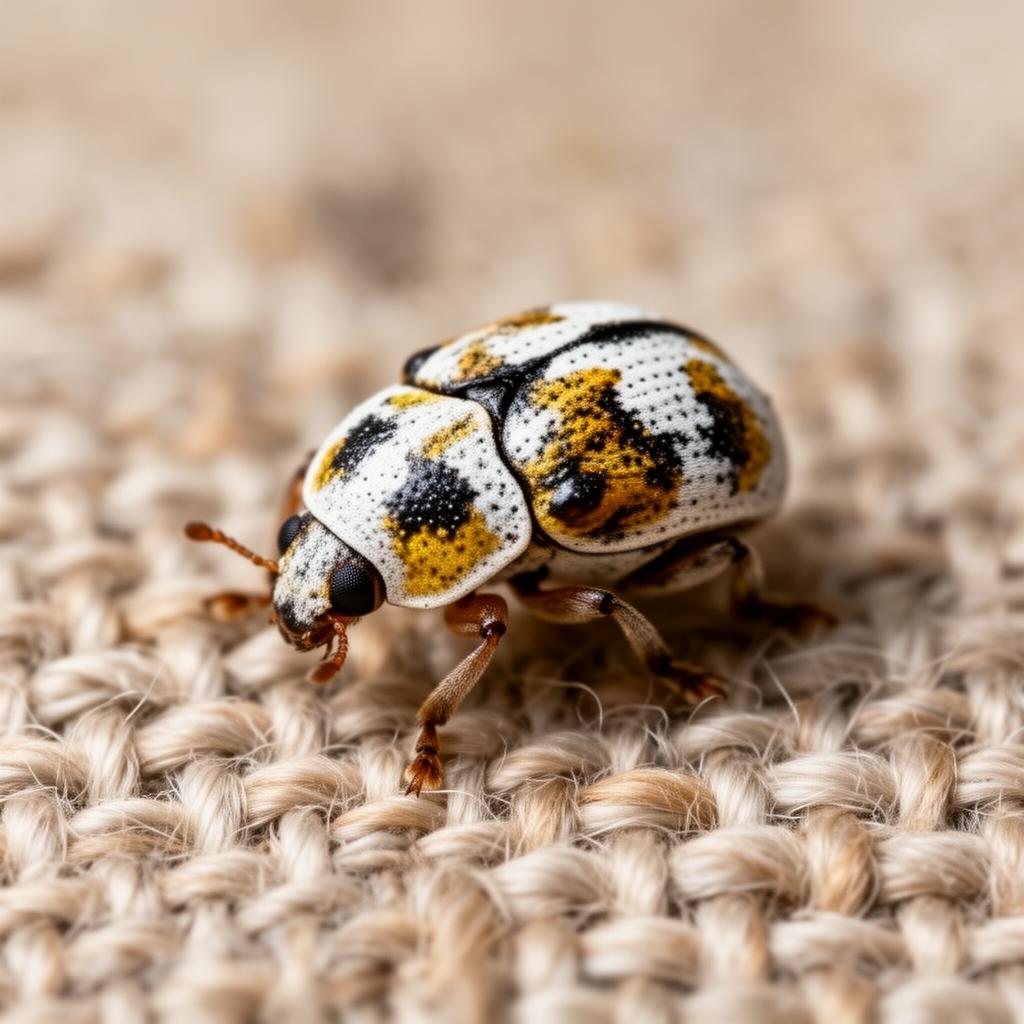
Insect
Varied Carpet Beetle
Anthrenus verbasci
Life cycle
Stages of development
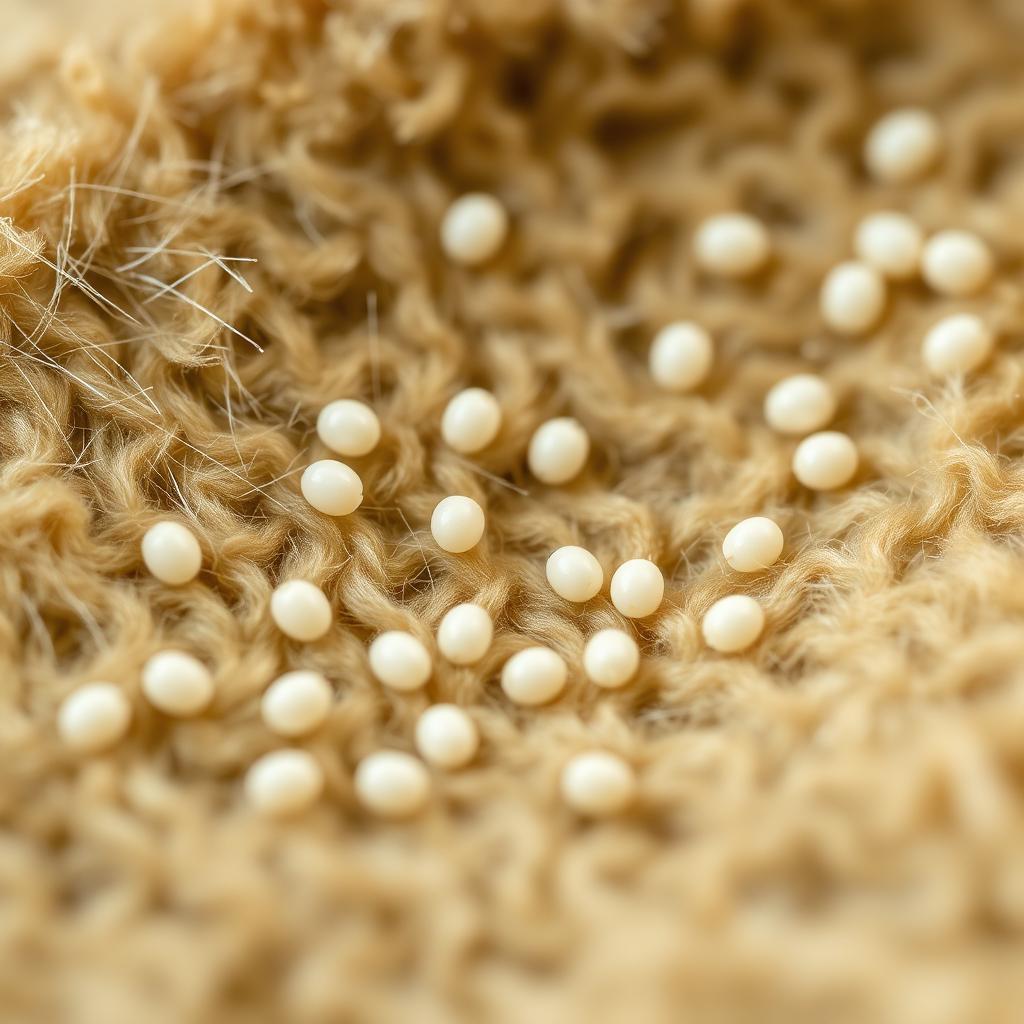
Stage 1 of 4
Eggs on fabric
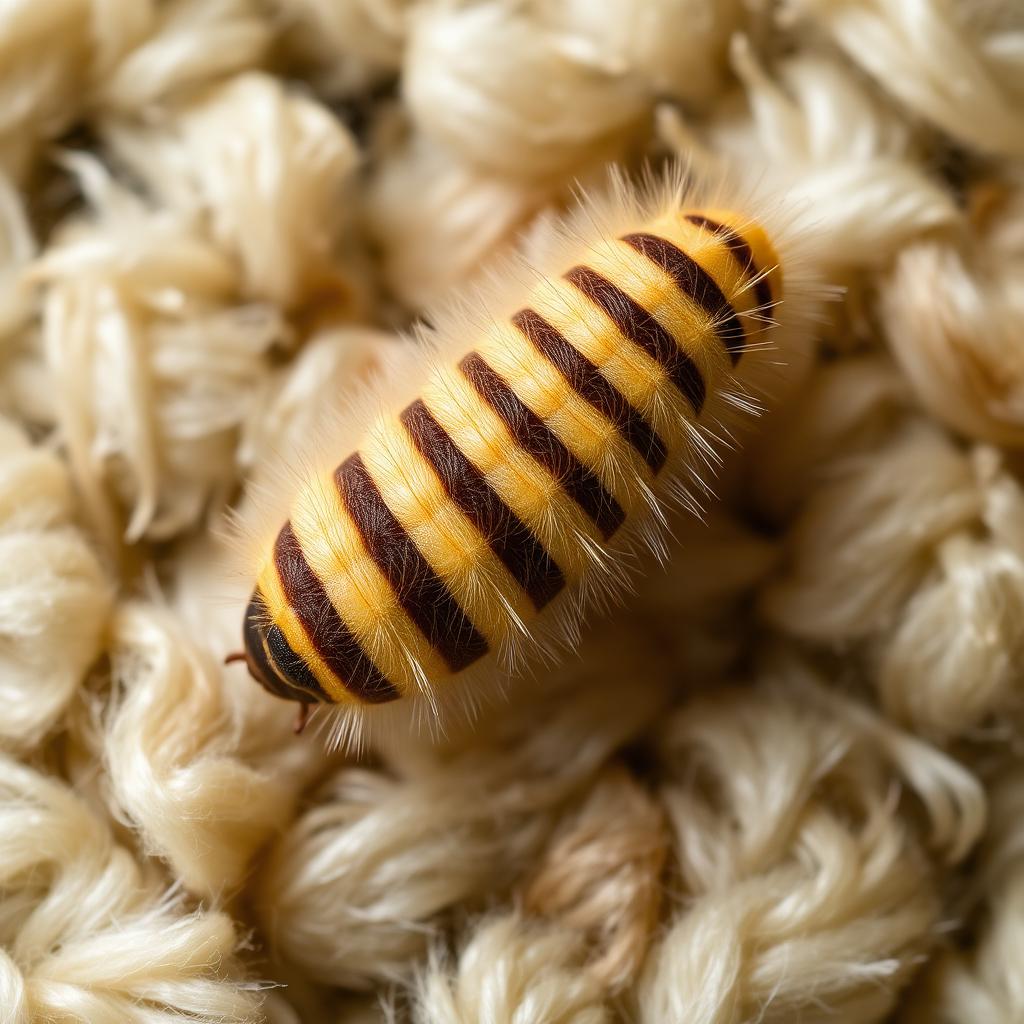
Stage 2 of 4
Larva (woolly bear)
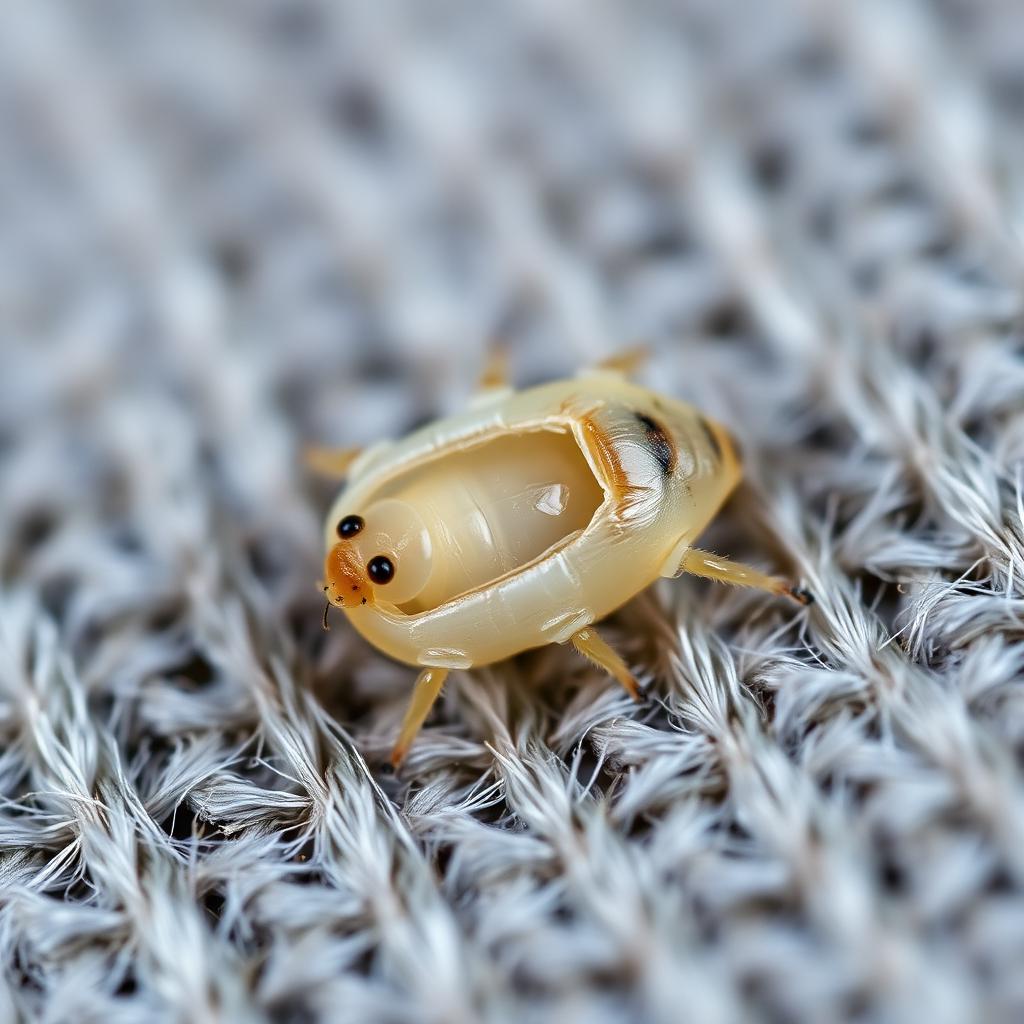
Stage 3 of 4
Pupa
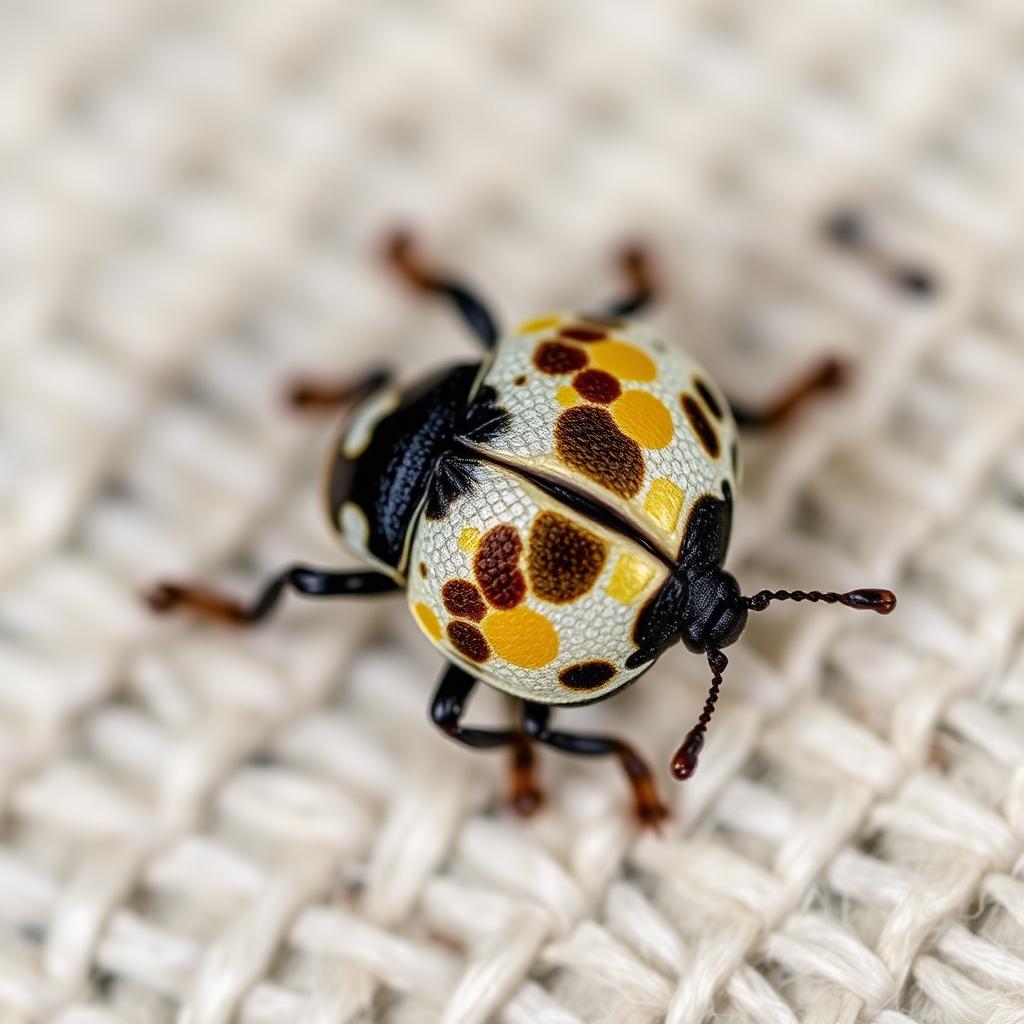
Stage 4 of 4
Adult beetle
Biology
The varied carpet beetle, Anthrenus verbasci, belongs to the family Dermestidae, known as skin beetles. Adults typically measure 2-3 mm in length, exhibiting an oval, somewhat convex body shape with distinctive mottled scales of black, white, and yellow-brown, forming an irregular band across the elytra. The lifecycle duration is highly variable, ranging from 1 to 3 years depending on temperature, humidity, and food availability, with optimal development occurring around 25-30°C and 70% RH. Females lay 20-100 eggs over several weeks, often in cracks or crevices near larval food sources, which hatch in 7-35 days into 'woolly bear' larvae. These larvae undergo 5-16 instars over 60-325 days, growing up to 5 mm long, before pupating for 10-20 days; the larval stage is the primary destructive phase, distinguished by its heavily chitinized, annulated body and numerous hastisetae (barbed hairs).
Behaviour
A. verbasci larvae are essentially detritivores, exhibiting distinct thigmotactic behavior, preferring to remain in contact with surfaces and often burrowing into materials as they feed, which can intensify damage and make detection challenging. They are negatively phototactic, actively avoiding light, and feign death when disturbed, retracting their legs and remaining motionless for several minutes. Larvae secrete digestive enzymes that allow them to process complex proteins like keratin and chitin, essential for their development. While not directly aggressive, their hastisetae can cause skin irritation or allergic reactions (dermatitis) in sensitive individuals upon contact. Dispersal of early instar larvae can occur via air currents, allowing them to readily infest new areas within a structure, while adults are strong fliers and disperse widely out of doors.
Habits
Larval infestations are predominantly found in dark, undisturbed areas offering consistent food sources and protection. Common harborage sites include woolens in attics, stored animal hides in basements, museum collections, taxidermied specimens, insect collections, and accumulations of lint, pet hair, or dead insects under furniture, in wall voids, or air ducts. Foraging patterns are generally localized to areas of primary food concentration, but larvae will disperse radially as food becomes depleted. In temperate regions, adults commonly emerge in spring, seeking pollen and nectar from flowering plants outdoors, such as spiraea or erigeron, before re-entering structures to lay eggs in late summer or fall, often through open windows, vents, or natural openings in building materials. Conducive conditions for infestation include poor sanitation, presence of natural fibers, and prolonged periods of undisturbed storage of susceptible items.
Control methods
- 1Vacuum thoroughly under furniture, edges, vents
- 2Launder or dry-clean infested fabrics; freeze 72 h
- 3Pheromone traps to detect adults near windows
- 4Residual treatment of cracks, carpet edges, closets
- 5Inspect bird/rodent nests in attics — common source
- 6Store woolens in sealed containers with cedar/lavender
Tailored to Varied Carpet Beetle
IPM Procedure Checklist
Inspection
- Inspect harborage near food, water and warmth
- Check cracks, voids and appliance interiors
- Place sticky monitors at suspected hot-spots
Identification
- Confirm Varied Carpet Beetle (Anthrenus verbasci) — not a look-alike
- Note life stage and risk level: Moderate
- Capture clear photos and samples for the record
Action Thresholds
- Trigger action when monitor counts trend up
- Re-evaluate weekly during active season
- Document trigger criteria in the IPM plan
Prevention
- Seal cracks, plumbing penetrations and wall voids
- Eliminate moisture sources and standing water
- Improve sanitation: sealed food storage, grease removal
Control Methods
- Vacuum thoroughly under furniture, edges, vents
- Launder or dry-clean infested fabrics; freeze 72 h
- Pheromone traps to detect adults near windows
- Residual treatment of cracks, carpet edges, closets
Monitoring & Evaluation
- Service monitors on schedule and trend captures
- Re-inspect for Varied Carpet Beetle activity at follow-up
- Adjust tactics based on data; report findings to client