Stinging Insect
Carpenter Bee
Xylocopa virginica
Biology
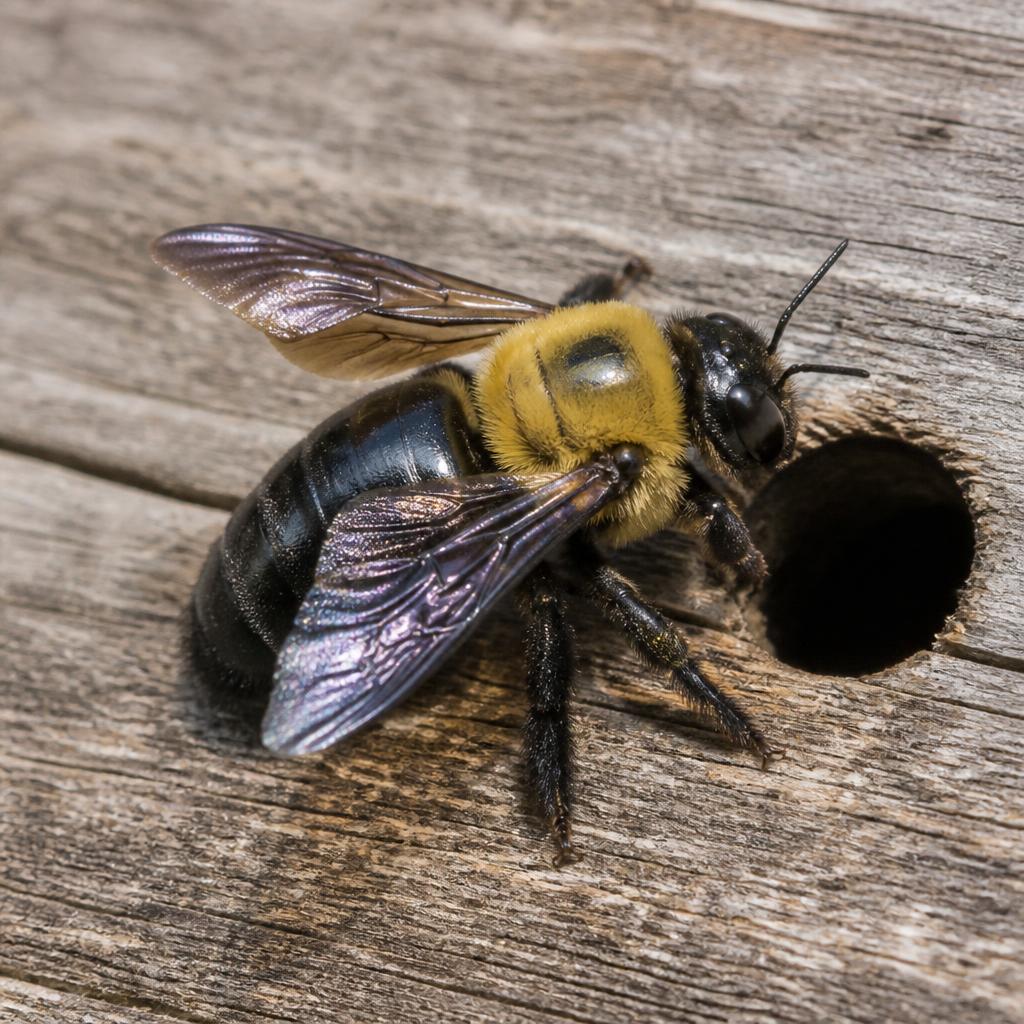
Carpenter bees, primarily Xylocopa virginica in the eastern US, are robust, large-bodied hymenopterans, typically 20-25 mm long, making them among the largest native bees. They are identifiable by their largely black, shiny, hairless abdomen, contrasting with the furry, yellow-banded thorax, distinguishing them from similarly sized bumble bees with entirely hairy bodies. Females live approximately one year, overwintering as adults within abandoned tunnels and emerging in spring to mate and initiate new nest construction or expansion. Larvae develop through four instars over several weeks, pupating within individual cells provisioned with a pollen and nectar mixture, with new adults emerging in late summer.
Behaviour
Though solitary in nesting, carpenter bees can exhibit communal nesting by several females sharing a common entrance hole, each creating and tending her own brood cells within the gallery system. Males are territorial, aggressively patrolling and hovering near nest sites to intercept females, but are incapable of stinging, possessing only intimidating mock-sting displays. Females, while capable of delivering a painful sting, are docile and only sting if directly provoked or handled, posing minimal risk to observers. Their chewing activity can compromise the structural integrity of wooden elements over time, especially with repeated annual use and expansion of galleries, leading to significant cosmetic and functional damage.
Habits
Carpenter bees display a decided preference for excavating perfectly circular 10-16 mm diameter galleries in unpainted, weathered softwoods such as cedar, redwood, cypress, and pine, often targeting fascia boards, eaves, deck railings, and untreated siding. Nest construction typically begins in early spring, with females extending existing tunnels by approximately 15 cm per year, or initiating new ones, sometimes reaching lengths of over 3 meters through repeated expansion. Conducive conditions include exposed wooden surfaces that are not painted, varnished, or regularly treated, as a protective coating deters excavation. Signs of infestation include accumulations of coarse sawdust-like frass beneath entry holes and characteristic buzzing sounds emanating from infested wood, with active galleries often attracting woodpeckers, which cause further damage while foraging for bee larvae.
Control methods
- 1Dust active galleries and plug with wood filler in fall
- 2Paint or stain exposed softwood surfaces
- 3Replace structurally damaged fascia and trim
- 4Install metal flashing on chronic gallery sites
- 5Hang carpenter-bee traps near known activity
- 6Treat eaves, rails and pergolas in early spring
Tailored to Carpenter Bee
IPM Procedure Checklist
Inspection
- Survey interior and exterior for evidence and conducive conditions
- Document findings with photos and a site map
- Place monitors to confirm activity
Identification
- Confirm Carpenter Bee (Xylocopa virginica) — not a look-alike
- Note life stage and risk level: Moderate
- Capture clear photos and samples for the record
Action Thresholds
- Trigger action when monitor counts trend up
- Re-evaluate weekly during active season
- Document trigger criteria in the IPM plan
Prevention
- Exclude entry points and harborage
- Improve sanitation and moisture control
- Modify habitat around the structure
Control Methods
- Dust active galleries and plug with wood filler in fall
- Paint or stain exposed softwood surfaces
- Replace structurally damaged fascia and trim
- Install metal flashing on chronic gallery sites
Monitoring & Evaluation
- Service monitors on schedule and trend captures
- Re-inspect for Carpenter Bee activity at follow-up
- Adjust tactics based on data; report findings to client