Bird
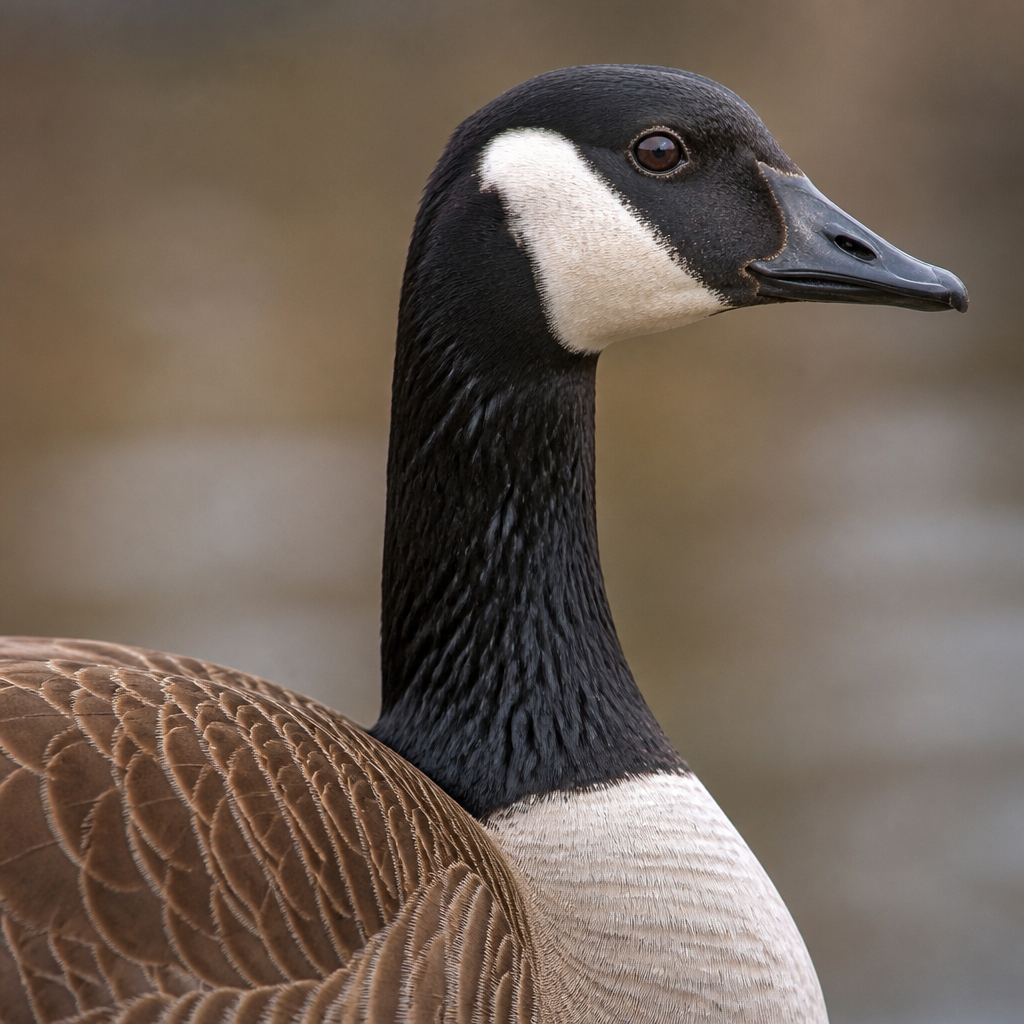
Canada Goose
Branta canadensis
Biology
The Canada Goose, *Branta canadensis*, is a large anseriform bird belonging to the Anatidae family, typically weighing 3-6 kg with a wingspan of 1.3-1.8 m. Adults are characterized by a distinctive black head and neck with a prominent white chinstrap, brown body plumage, and a black tail with white undertail coverts. They are long-lived, often surviving for 10-24 years in the wild, with some individuals exceeding 30 years in captivity. Sexual maturity is reached at approximately two to three years of age, and pairs typically mate for life, though 'divorce' can occur. A single clutch of 4-7 creamy white eggs is laid once annually, usually in April-May, with an incubation period of 28-30 days. Hatchlings, or goslings, are precocial, capable of swimming and feeding shortly after hatching.
Behaviour
Canada Geese exhibit a diurnal activity rhythm, foraging primarily during daylight hours and resting/sleeping near water bodies at night. They are highly social, forming large flocks outside the breeding season, which provides enhanced predator detection and foraging efficiency. During nesting and brood-rearing (typically March-June), adults can become extremely territorial and aggressive, using hissing, wing-beating, and biting to defend nests and goslings against perceived threats, including humans. This aggressive behavior poses a localized public safety risk. Their digestive system is highly inefficient, leading to the deposition of 1-1.5 kg of feces per adult per day, which significantly contaminates recreational areas, stormwater systems, and contributes to elevated nutrient loads in aquatic ecosystems. During non-breeding seasons, large flocks can cause significant damage to agricultural crops through grazing and trampling, impacting yield and quality.
Habits
Favored harborage includes open grassy areas adjacent to still or slow-moving freshwater bodies, such as retention ponds, golf courses, parks, and carefully manicured lawns, which provide clear lines of sight for predator detection and easy access to water. Their foraging patterns involve continuous grazing of short, succulent grasses, consuming up to 0.5 kg of fresh vegetation daily. Flocks will often move between feeding sites and water during the day, covering foraging ranges of several kilometers. Conducive conditions for large resident populations include abundant short-grass forage, accessible freshwater, and a lack of natural predators. Signs of infestation include widespread fecal accumulations, damaged turfgrass, and in breeding season, the presence of large, conspicuous nests, often built on slight elevations near water, and aggressive defensive displays from adult geese.
Control methods
- 1Tall native vegetation buffers (>75 cm) along pond edges
- 2Trained border collies for sustained hazing
- 3Grid wires across small ponds to deny landing
- 4Egg addling under federal/state permits to suppress recruitment
- 5Methyl anthranilate turf repellents on lawns
- 6Avoid feeding; remove supplemental food sources
Tailored to Canada Goose
IPM Procedure Checklist
Inspection
- Identify roosting, loafing and nesting sites
- Document droppings, feathers and damage to structure
- Note food and water sources attracting birds
Identification
- Confirm Canada Goose (Branta canadensis) — not a look-alike
- Note life stage and risk level: Moderate
- Capture clear photos and samples for the record
Action Thresholds
- Trigger action when monitor counts trend up
- Re-evaluate weekly during active season
- Document trigger criteria in the IPM plan
Prevention
- Install spikes, netting or shock track on ledges
- Remove standing water and accessible food
- Close openings to attics, vents and signage voids
Control Methods
- Tall native vegetation buffers (>75 cm) along pond edges
- Trained border collies for sustained hazing
- Grid wires across small ponds to deny landing
- Egg addling under federal/state permits to suppress recruitment
Monitoring & Evaluation
- Service monitors on schedule and trend captures
- Re-inspect for Canada Goose activity at follow-up
- Adjust tactics based on data; report findings to client