Arachnid
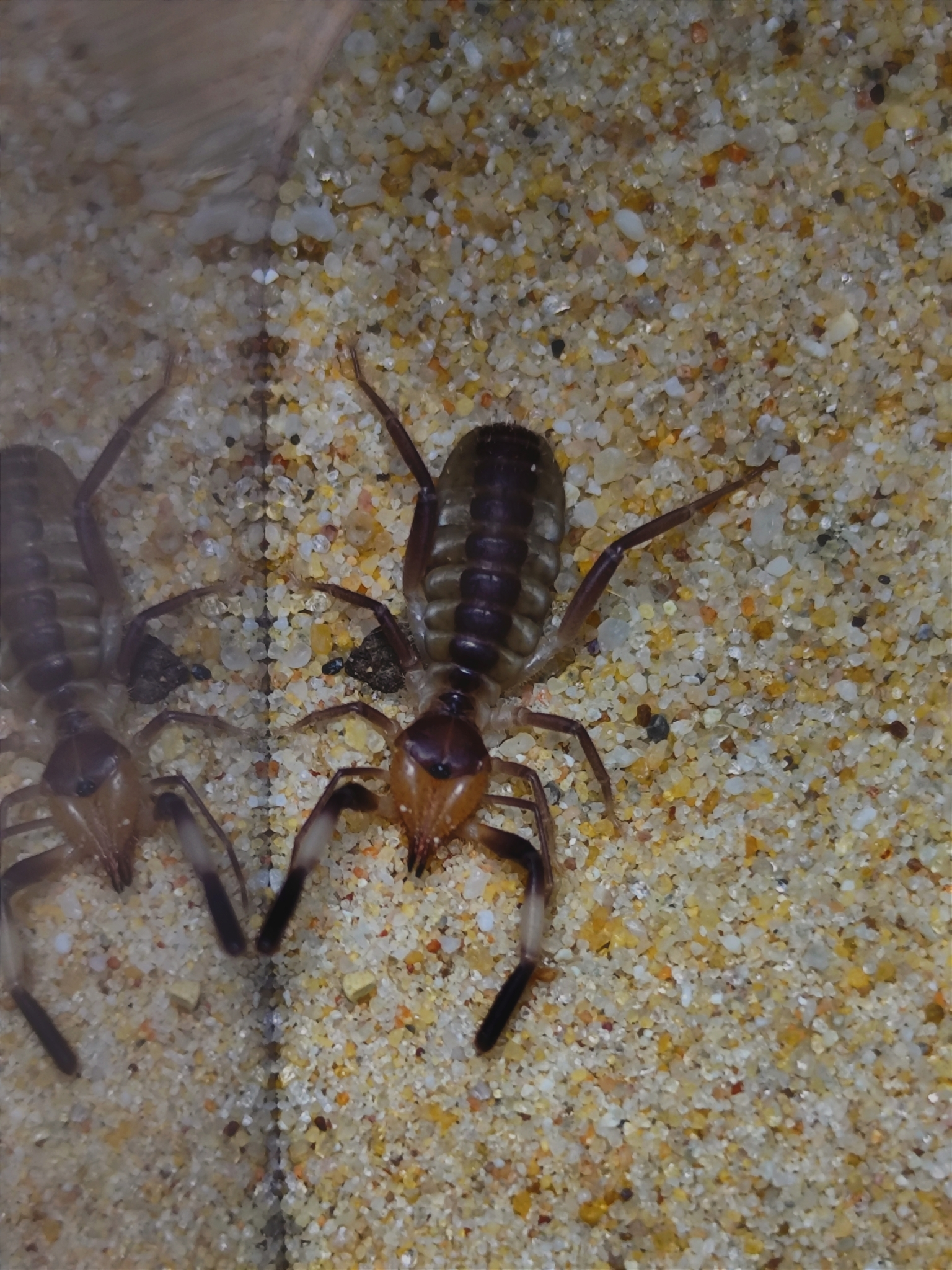
Camel Spider
Solifugae
Biology
Camel spiders, order Solifugae, also known as sun spiders or wind scorpions, are not true spiders or scorpions. They belong to their own order of arachnids. They are characterized by their extremely long legs and massive chelicerae, which can be up to one-third of their body length. Body size ranges from a few millimeters to 70 mm, often tan, brown, or yellowish. They are incredibly fast runners and possess no venom glands or silk glands. Lifespan is typically one year, with females laying eggs in burrows after mating, guarding them until they hatch. They are most active during warmer months.
Behaviour
Solifugae are voracious, opportunistic predators, hunting a wide range of arthropods, lizards, and small rodents. They rely on their speed and powerful chelicerae to capture and tear apart prey. They are primarily nocturnal or crepuscular, though some species are active during the day, especially in hot, arid environments. They derive their 'sun spider' and 'wind scorpion' names from their rapid movements and heat-seeking behavior. Despite their intimidating appearance, they are not aggressive towards humans and will typically flee if disturbed, though they can deliver a painful, mechanical bite if cornered.
Habits
Camel spiders are predominantly found in arid and semi-arid regions globally, including deserts and scrublands. They are burrow dwellers or seek shelter under rocks, logs, or debris during the hottest parts of the day. Their presence indoors is often accidental, occurring when they wander in while foraging or seeking refuge from extreme temperatures. Conducive conditions for indoor encounters include homes adjacent to desert or wilderness areas, unsealed entry points, and cracks in foundations. They do not infest structures but may be a nuisance when encountered.
Control methods
- 1Seal cracks, gaps, and entry points in structures.
- 2Install screens on windows and doors.
- 3Remove outdoor debris and harborage sites.
- 4Reduce outdoor lighting that attracts prey.
- 5Educate occupants on their harmless nature.
- 6Relocate wandering individuals safely outdoors.
Tailored to Camel Spider
IPM Procedure Checklist
Inspection
- Survey interior and exterior for evidence and conducive conditions
- Document findings with photos and a site map
- Place monitors to confirm activity
Identification
- Confirm Camel Spider (Solifugae) — not a look-alike
- Note life stage and risk level: Low
- Capture clear photos and samples for the record
Action Thresholds
- Tolerate low-level activity outside sensitive zones
- Act if activity moves indoors or near food
- Review threshold seasonally with the client
Prevention
- Exclude entry points and harborage
- Improve sanitation and moisture control
- Modify habitat around the structure
Control Methods
- Seal cracks, gaps, and entry points in structures.
- Install screens on windows and doors.
- Remove outdoor debris and harborage sites.
- Reduce outdoor lighting that attracts prey.
Monitoring & Evaluation
- Service monitors on schedule and trend captures
- Re-inspect for Camel Spider activity at follow-up
- Adjust tactics based on data; report findings to client