Stored Product Pest
Cadelle Beetle
Tenebroides mauritanicus
Biology
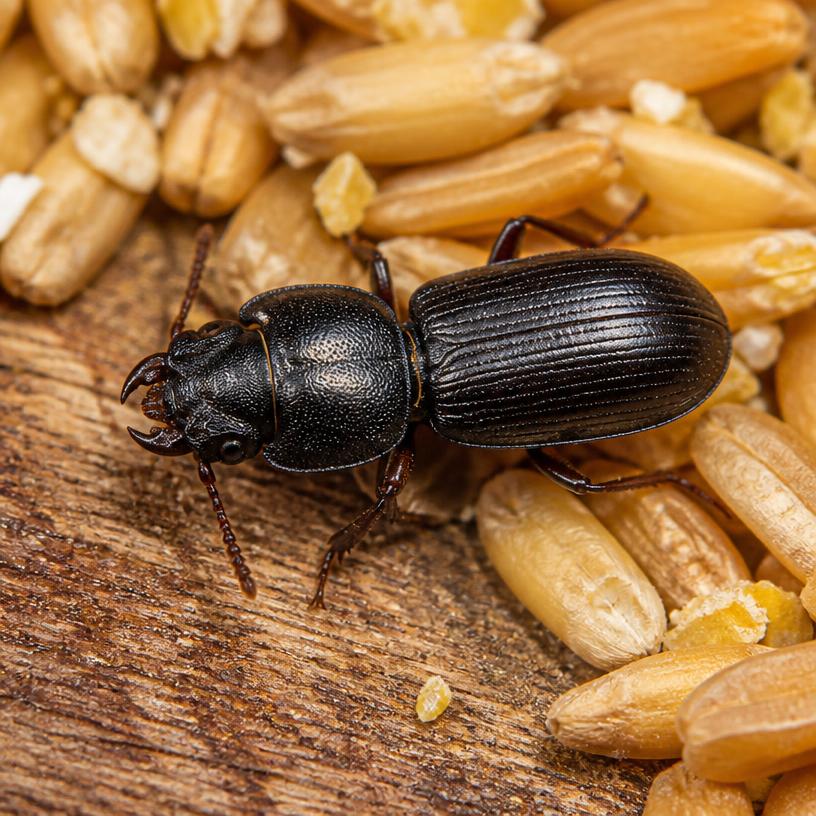
A comparatively large 6–11 mm flattened, shiny black beetle with a distinct narrow waist between the pronotum and elytra and powerful mandibles. Larvae are white with a dark head and two dark hooks on the last segment, and are long-lived — development can take a year, and adults may live over a year.
Behaviour
Cadelles feed on grain, flour, cereals and dried fruit, but are also predatory and will attack other stored-product insect larvae. Larvae bore into wooden bin walls, sacking and mill machinery to pupate, which weakens fabric and creates permanent harbourage.
Habits
Found in flour mills, farm bins, warehouses and older wooden structures where the larval boring habit is best supported. Bolting cloth damage in mills is a classic sign. Conducive conditions include untreated woodwork, long-standing residues and infrequent deep cleaning.
Control methods
- 1Deep-clean machinery, ducts and bolting cloth on a set schedule
- 2Replace or seal damaged woodwork and sacking
- 3Remove residual grain from bin walls and floor cracks
- 4Monitor with pitfall and pheromone traps in mills
- 5Rotate stock strictly first-in first-out
- 6Treat structural voids with labelled residual products
- 7Heat-treat mill sections where feasible
Tailored to Cadelle Beetle
IPM Procedure Checklist
Inspection
- Inspect grain, spices, pet food and dry goods for larvae and webbing
- Deploy pheromone monitors near storage and shelving
- Check spillage in seams, cracks and shelf liners
Identification
- Confirm Cadelle Beetle (Tenebroides mauritanicus) — not a look-alike
- Note life stage and risk level: Moderate
- Capture clear photos and samples for the record
Action Thresholds
- Trigger action when monitor counts trend up
- Re-evaluate weekly during active season
- Document trigger criteria in the IPM plan
Prevention
- Rotate stock FIFO; reject damaged packaging at receiving
- Store products in airtight containers
- Maintain low humidity and clean storage surfaces
Control Methods
- Deep-clean machinery, ducts and bolting cloth on a set schedule
- Replace or seal damaged woodwork and sacking
- Remove residual grain from bin walls and floor cracks
- Monitor with pitfall and pheromone traps in mills
Monitoring & Evaluation
- Service monitors on schedule and trend captures
- Re-inspect for Cadelle Beetle activity at follow-up
- Adjust tactics based on data; report findings to client