All pests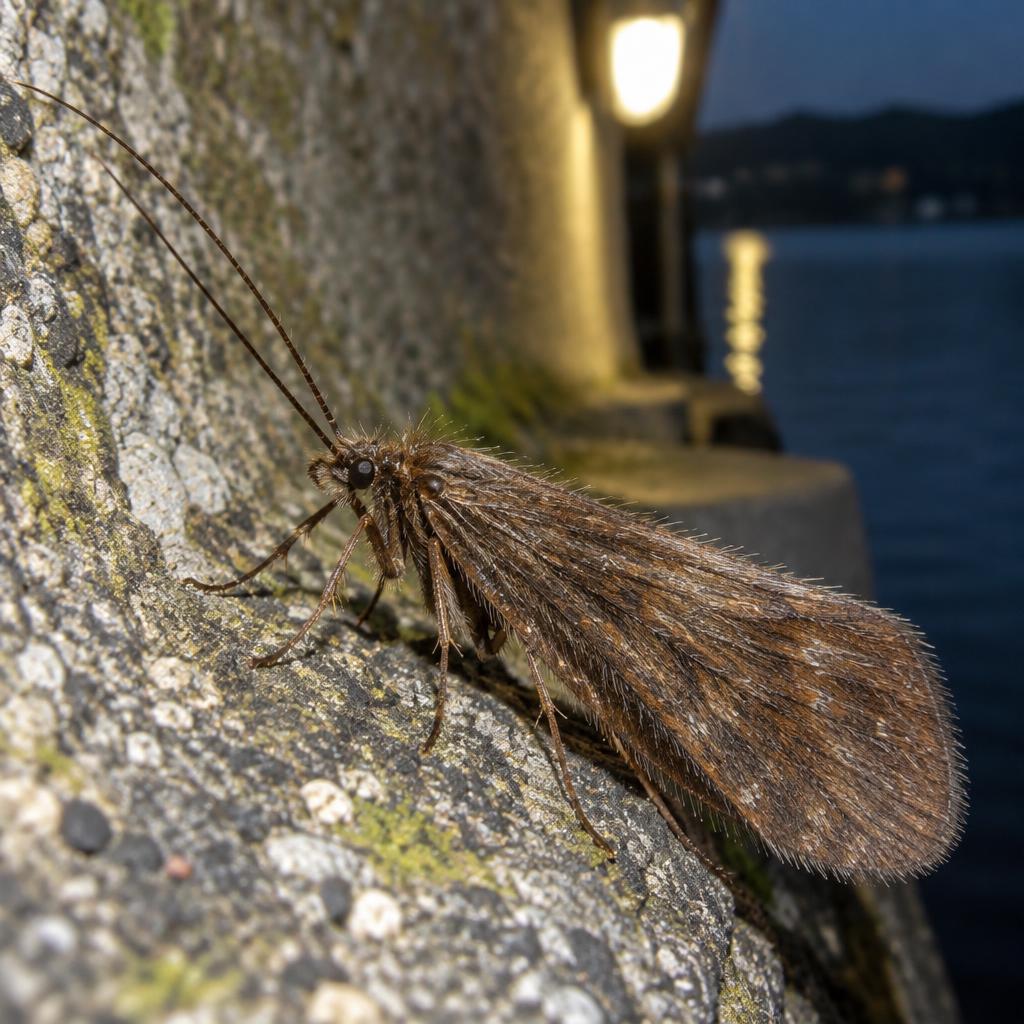 View full procedure
Insect
Caddisfly
Hydropsyche spp.
Low Risk
Biology
Hydropsyche caddisflies are moth-like insects 8–20 mm long with hairy tent-shaped wings and long antennae. Larvae are aquatic, spinning silk retreats and capture nets in flowing water.
Behaviour
Adults are nocturnal, strongly attracted to lights, and gather in dense resting clusters on walls, screens, and signage near lakes and rivers. They do not bite or feed on structures.
Habits
Accumulations of shed wings and scales can trigger asthma and allergic reactions in sensitive people. Clusters stain siding and clog outdoor light fixtures and air intakes.
Control methods
- 1Reduce or shield lighting on waterfront elevations
- 2Use warm amber or motion-activated exterior fixtures
- 3Wash down walls and fixtures to remove scales and debris
- 4Install tight screens on windows, vents, and air intakes
- 5Vacuum indoor clusters rather than crushing them
- 6Protect sensitive occupants with filtration during peak flights
Tailored to Caddisfly
IPM Procedure Checklist
Step 1
Inspection
- Inspect harborage near food, water and warmth
- Check cracks, voids and appliance interiors
- Place sticky monitors at suspected hot-spots
Step 2
Identification
- Confirm Caddisfly (Hydropsyche spp.) — not a look-alike
- Note life stage and risk level: Low
- Capture clear photos and samples for the record
Step 3
Action Thresholds
- Tolerate low-level activity outside sensitive zones
- Act if activity moves indoors or near food
- Review threshold seasonally with the client
Step 4
Prevention
- Seal cracks, plumbing penetrations and wall voids
- Eliminate moisture sources and standing water
- Improve sanitation: sealed food storage, grease removal
Step 5
Control Methods
- Reduce or shield lighting on waterfront elevations
- Use warm amber or motion-activated exterior fixtures
- Wash down walls and fixtures to remove scales and debris
- Install tight screens on windows, vents, and air intakes
Step 6
Monitoring & Evaluation
- Service monitors on schedule and trend captures
- Re-inspect for Caddisfly activity at follow-up
- Adjust tactics based on data; report findings to client