All pests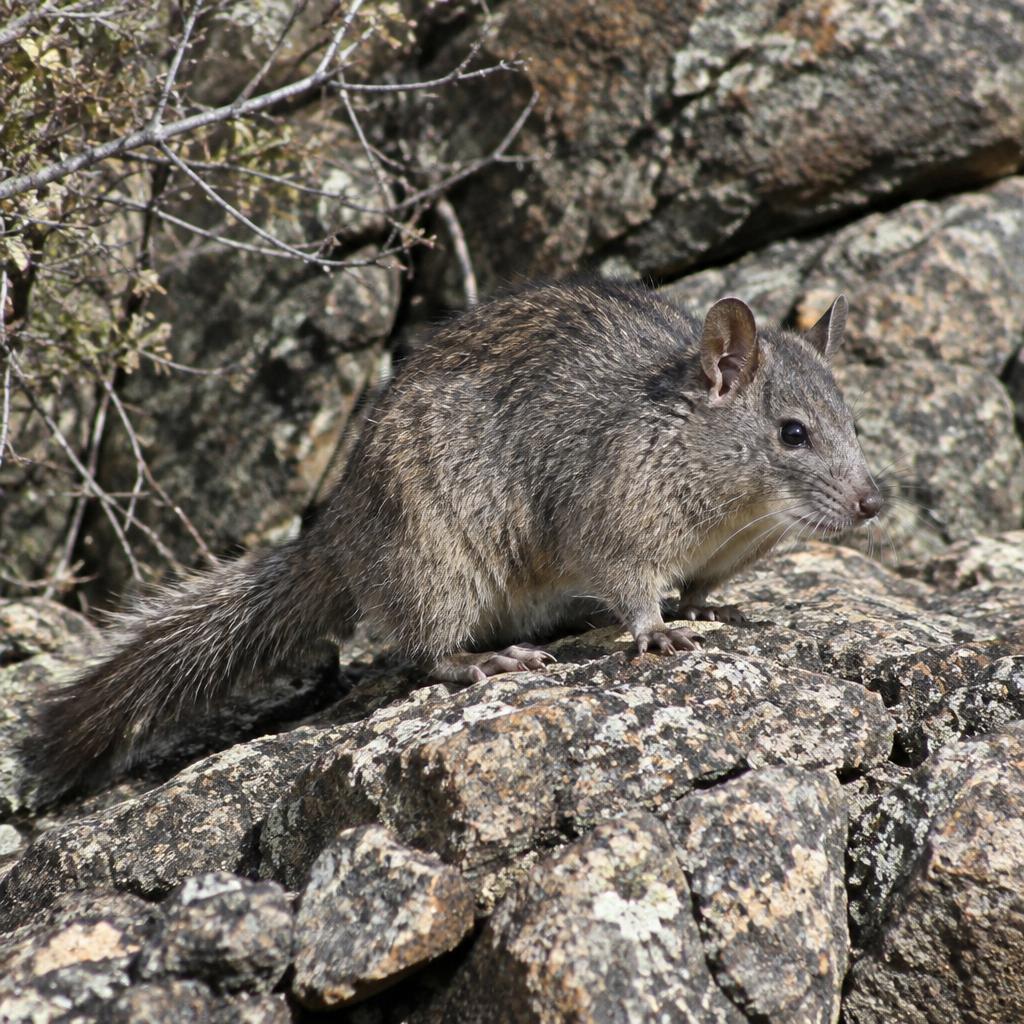 View full procedure
Rodent
Bushy-tailed Woodrat
Neotoma cinerea
Moderate Risk
Biology
Neotoma cinerea is a large woodrat, 30–45 cm total length including a bushy, squirrel-like tail. It has soft gray-brown fur, large ears, and a white belly. It builds above-ground stick houses called middens in rocky areas and forests.
Behaviour
Bushy-tailed woodrats are nocturnal hoarders that collect sticks, twigs, bones, and shiny objects to construct large nests. They feed on vegetation, fungi, and conifer needles. They readily occupy attics, sheds, and outbuildings.
Habits
Indoor infestations produce noisy gnawing, accumulations of sticks and debris, foul odors, and parasite concerns. Their middens can block vents and create fire hazards when built near electrical fixtures.
Control methods
- 1Inspect attics and outbuildings for nests and shiny-object caches
- 2Seal all roof and foundation gaps >1/2 inch with metal flashing or mesh
- 3Remove attractants: pet food, birdseed, unsecured garbage
- 4Use live traps or snap traps baited with peanut butter or fruit
- 5Clean nesting material with disinfectant and respirator-grade PPE
- 6Reduce indoor clutter that provides harborage
Tailored to Bushy-tailed Woodrat
IPM Procedure Checklist
Step 1
Inspection
- Locate runways, droppings, rub marks and gnaw damage
- Identify entry points (gaps ≥6 mm) and harborage
- Place tracking patches or non-toxic monitors
Step 2
Identification
- Confirm Bushy-tailed Woodrat (Neotoma cinerea) — not a look-alike
- Note life stage and risk level: Moderate
- Capture clear photos and samples for the record
Step 3
Action Thresholds
- Trigger action when monitor counts trend up
- Re-evaluate weekly during active season
- Document trigger criteria in the IPM plan
Step 4
Prevention
- Exclude with steel wool, hardware cloth and door sweeps
- Trim vegetation 0.5 m from structure; clear debris
- Secure trash, pet food and stored grain
Step 5
Control Methods
- Inspect attics and outbuildings for nests and shiny-object caches
- Seal all roof and foundation gaps >1/2 inch with metal flashing or mesh
- Remove attractants: pet food, birdseed, unsecured garbage
- Use live traps or snap traps baited with peanut butter or fruit
Step 6
Monitoring & Evaluation
- Service monitors on schedule and trend captures
- Re-inspect for Bushy-tailed Woodrat activity at follow-up
- Adjust tactics based on data; report findings to client